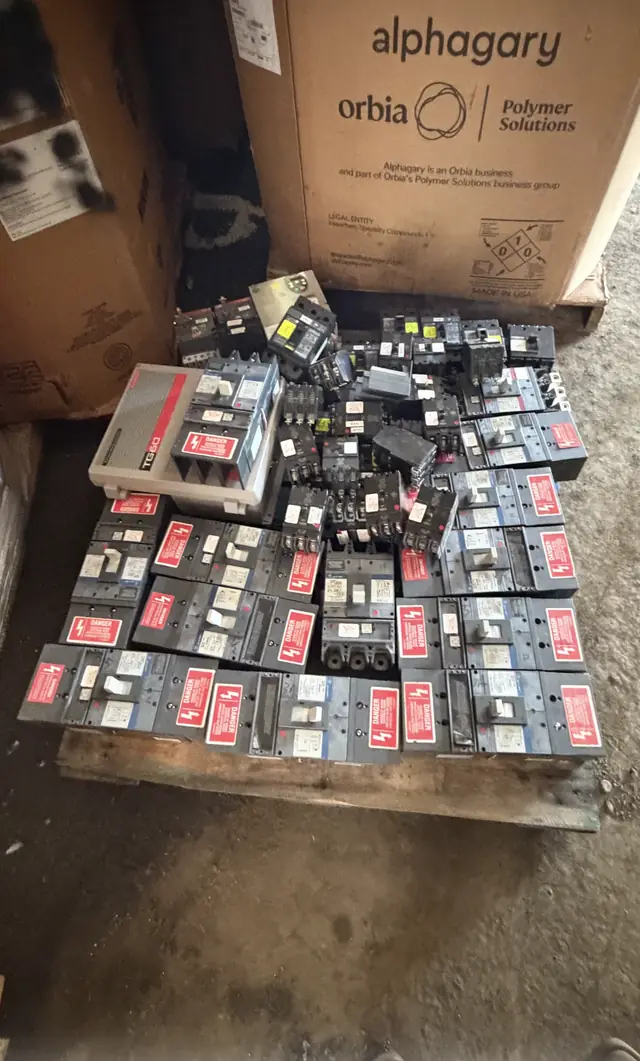
Stop and consult a qualified electrical professional if a breaker shows melting, charring, exposed conductors, or other signs of electrical damage. Follow current manufacturer instructions and the authority having jurisdiction for any removal, testing, or installation steps. Do not perform energized testing unless you are qualified and authorized.
What we review and why original labels matter
We review qualifying Eaton Series C molded‑case circuit breakers (Series C MCCBs) for purchase. This page outlines the information helpful to confirm identity and condition, how to organize and document lots, and the lifecycle/source details that commonly affect consideration. Clear photos of the original Series C label, paired with basic provenance, make it easier to evaluate a submission and determine next steps.
Mentioning Eaton identifies the manufacturer of the equipment being offered; we are not affiliated with Eaton. Any breaker you submit will be evaluated on the visible original Series C label, catalog or serial identifiers, observable physical condition, and any supporting documentation you provide. A web submission is a request for review only and is not an appraisal, offer, acceptance, purchase order, or authorization to ship equipment.
- We review selected items for possible purchase; not every submission is purchased
- Original Series C labels and unaltered identification fields are primary evidence
- Provide lifecycle/source documentation to support provenance and condition
Exact identification fields to capture — include original Series C labels
Accurate identification starts with the breaker’s original Series C label. Photograph and record every readable field printed on the housing and label. Typical fields that help with identification include catalog or part number, ampere rating, frame designation, trip unit type, trip setting or curve markings, serial number or date code, and any manufacturer logos or certification marks shown on the label as printed by the manufacturer.
Do not remove or alter the original Series C label. If a label is partially obscured by paint, tape, or dirt, capture a close‑up that shows the issue and a wider image that places the label in context. Provide a clear front view of the breaker with the handle visible, plus a side or rear image if accessible. Clear identification can reduce follow‑up; unclear or missing labels are common reasons for a delayed or declined review.
- Catalog/part number and Series C designation
- Ampere rating and frame size
- Trip unit type and any trip setting/curve markings
- Serial number, date code, or lot number
- Overall housing photos plus close‑ups of the original label
Frame and condition guidance — what we typically consider
We review a range of frames and conditions and compare what we see against practical acceptance guidelines. Use the outline below to decide which units to submit. These categories are general guidance only; all items are reviewed case‑by‑case and purchase is not implied.
If you submit mixed lots, group and document each frame/condition type so they can be assessed individually. Units with intact original labels and normal indications of service generally move through review more efficiently than units with missing identification or signs of internal damage.
- New‑surplus (boxed with original paperwork): typically reviewed first if the Series C label is intact
- New‑surplus (unboxed): can be reviewed if the original label is intact and there is no evidence of service
- Used serviceable (original label intact, normal wear): commonly considered for purchase review
- Used with cosmetic damage (label intact): may be conditionally reviewed depending on wear and corrosion
- Non‑functional, modified, or missing‑label units: typically excluded unless offered strictly as parts or cores
Lifecycle source and provenance — why origin affects value
Lifecycle source helps establish confidence in identification and condition. Common sources include factory surplus, stockroom excess, and decommissioned inventory from controlled environments. Breakers taken from heavy industrial settings, unknown‑service applications, or units lacking maintenance history may require additional documentation and clearer photos to be considered.
Provide any available provenance such as invoices, packing slips, asset tags, removal dates, inspection summaries, or inventory records. These materials help confirm that original labels correspond to the unit and that the service history is suitable for transparent resale. A lack of documentation does not automatically disqualify a breaker, but it can lengthen the review and limit purchase consideration.
- Factory or warehouse surplus: include packing slips, invoices, or receiving records when available
- Decommissioned from service: include asset tags, removal date, and any maintenance or inspection notes
- Unknown origin: include any test or inspection summaries you already have and emphasize intact original labels
How to photograph, document, and organize lots for efficient review
Organized documentation reduces back‑and‑forth. For each breaker, aim for three core images: a sharp close‑up of the original Series C label, a straight‑on front image showing the handle and faceplate, and a side or rear image that shows terminals or mounting features if visible. If the device has removable accessories with their own labels, capture those labels as well.
If you are submitting lots, include an overview photo of the entire group plus labeled individual images or a numbered inventory sheet matching photos to item numbers. Group units by frame size and condition. Separate new‑surplus items from used service items, and keep items with missing labels or visible damage apart. Clear numbering on temporary tags in the photos helps us reference the correct unit during review.
- Required photos per unit: label close‑up, full‑face, and side/rear view when accessible
- For lots: overall lot image plus numbered individual images linked to an inventory list
- Group by frame and condition; separate units with missing labels or notable damage
Safety limits and common reasons for decline
We do not perform on‑site electrical inspections or energized testing as part of an initial online review. If a breaker shows signs of overheating, arcing, charring, melting, or exposed conductors, stop handling the device and consult qualified electrical professionals. Items with indications of internal alteration or missing required components are less likely to be considered for resale.
Common reasons items are declined include missing or altered Series C labels, thermal or mechanical damage, severe corrosion affecting structural parts, aftermarket modifications, and missing trip units or identification‑critical accessories. Submissions that show these conditions may be excluded from purchase consideration or, in limited cases, considered only as parts or cores.
- Stop and seek qualified help if you see melting, charring, strong odors, or exposed conductors
- Missing, altered, or illegible original labels often prevent acceptance
- Severe corrosion, mechanical damage, or aftermarket modifications reduce acceptability
Next step — prepare a submission for purchase review
When you are ready, prepare a submission that includes clear photos, an organized inventory list, and any lifecycle/source documents you have. Use the submission form on our site to upload images and list quantities, frame sizes, and the exact text of any Series C labels. Include contact information for follow‑up questions. A complete, well‑organized package helps us understand what you are offering and whether we can consider it.
A web submission is a request for review, not an appraisal, offer, acceptance, purchase order, or shipping authorization. After review, we may ask for additional photos, documentation, or prior testing history you already possess. If we express interest, next steps may include conditional acceptance for further evaluation and a request to coordinate inspection or transfer under mutually agreed terms.
- Submission checklist: labeled photos, inventory list, and any provenance documents
- Keep lots sorted and labeled before any shipment or inspection to avoid delays
- Expect follow‑up questions; thorough initial documentation reduces repeat requests