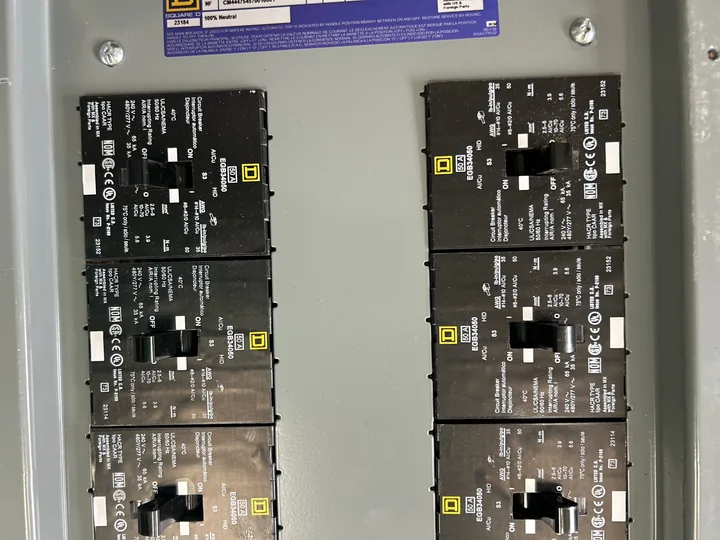
How to describe panelboards and load centers
Read the maker label before grouping similar equipment. Names may include panelboard, load center, interior, main breaker panel, main-lug panel, branch-breaker panel, enclosure, trim, cover, and distribution panel. They do not establish model, condition, or installation suitability. Send complete markings and a clear photo when unsure.
Information that helps us understand the equipment
Start with what is printed on the equipment. Do not guess a model, rating, compatibility, or condition. A complete identification set usually includes:
- manufacturer and complete nameplate
- catalog number and series
- voltage, phase, wires, and ampere rating
- main device or main-lug configuration
- interior, enclosure, trim, and cover identifiers
- installed breaker schedule
- recall or product-notice identifiers when applicable
Describe the lot as it actually exists
A panelboard is more than a cabinet and a collection of breakers. The interior, enclosure, trim, main device, branch devices, labels, and hardware need to be documented as a complete or clearly incomplete set.
A clear submission helps prevent a mistaken preliminary review and saves time for both sides. Useful lot-level information includes:
- whether the equipment is uninstalled
- which components are included
- quantity and packaging
- visible condition and storage history
- safe exterior and accessible nameplate photographs
New surplus, used, untested, incomplete, and damaged are different
Use plain, supportable condition language. Original packaging can be documented, but packaging alone does not prove an unused, authentic, complete, or operational item. Used equipment should include truthful removal and storage details. If a unit is missing hardware, modified, corroded, fire-exposed, water-exposed, fault-exposed, or otherwise questionable, say so before any shipping discussion.
Condition influences eligibility, handling, and value, but no universal price table can account for exact model demand, quantity, completeness, provenance, current stock, freight economics, and inspection results.
What a website review cannot determine
Never remove a deadfront or enter energized equipment to obtain photos. Physical fit does not prove that a breaker is authorized for a particular panel.
A submission is not an offer, acceptance, authentication result, safety assessment, code determination, shipping authorization, or instruction to remove installed equipment. Any next step must be confirmed in writing.
Why exact panelboard or load center data prevents the wrong review
A model-family name can include multiple generations, frame sizes, ratings, mounting styles, control options, and accessories. When a seller writes only “panelboards and load centers,” the reviewer cannot safely assume that visually similar units are interchangeable. Copy each label line as printed, preserve spaces and suffixes, and connect each photograph to one inventory row. If a suffix is obscured, record that uncertainty rather than substituting a nearby unit’s identifier.
For mixed lots, photograph the full group first, then create smaller model groups. Keep packaging, loose hardware, trip units, rating plugs, cradles, covers, manuals, and test documents with the matching line item. This method reduces duplicate questions and prevents a photograph of one complete unit from being mistaken for proof that every unit is complete.
What can make one lot easier to evaluate than another
A consistent lot of clearly identified panelboards and load centers can be easier to review than a larger pile with mixed labels and unknown condition. Quantity, model consistency, completeness, packaging, service history, storage, current demand, documentation, location, and the work required to receive and reconcile the equipment all affect the decision. None of those factors guarantees value, but each can remove uncertainty.
Sellers should disclose deadlines and the reason the equipment is available, such as contractor overstock, a canceled project, distributor excess, facility spares, an upgrade, liquidation, or planned decommissioning. That context helps establish timing and ownership without turning an unsupported story into a condition claim.
A clean submission creates a clean written transaction record
If the panelboard or load center fits the current buying scope, the next communication should identify the reviewed item group and any additional information required. Written terms—not a generic web page—must address the approved quantity, price, included parts, packing, freight or pickup, receiving, inspection, discrepancies, and payment.
Keep a copy of the submitted inventory and pre-shipment photographs. Do not substitute items, add unapproved material, hide defects, or combine different conditions under one line after review. If the lot changes, update the reviewer before anything moves.
Photographing panels and accessories for faster review
High-resolution, well-captioned photographs greatly accelerate a review. Begin with a single full-frame image that shows the entire lot as it sits, then provide separate close-ups of every accessible nameplate, catalog number, and exterior label. Capture visible mounting flanges, trim attachment points, factory or aftermarket identification stickers, and any stamped serial data that appears on the door edge or trim. If interior images are relevant, include them only when the equipment is uninstalled and de-energized and when a qualified person follows manufacturer guidance; do not attempt interior photos of installed or live equipment. For mixed lots, place a unique numbered card in each group so photos map directly to inventory rows and reduce ambiguity during remote review.
File naming and minimal metadata reduce back-and-forth. Use a consistent short prefix tied to your lot reference, then append a sequential image code and the visible identifier (for example LOT456_PANEL_A01_XXXX). Preserve original timestamps when practical and add a short note with each upload that states which inventory row the photo represents and whether any characters on a plate were obscured. For many small parts—covers, trim, bus covers—include an overview image and individual close-ups with a common object for scale. Clear captions and linked photo-to-row references speed pre-screening and limit follow-up questions.
- Full-lot overview photo
- Close-up of each accessible nameplate
- Numbered tag visible in every group photo
Accessory, kit, and spare identification that matters
Interior options and loose accessories often determine a lot’s eligibility for review. Distinguish factory-installed items from field modifications and record printed kit or part numbers from trim, bus carriers, breaker mounts, and accessory plates. Note breaker mounting style (bolt-on, plug-in, or back-fed), CT compartment markings and kit digits, subfeed or main lug configurations, neutral and grounding bar layouts, and any installed surge protective modules or fused bypass components. For modular trip units and electronic controls, list the catalog digits on the device face rather than shorthand model names so remote reviewers can match service parts and rated limits more reliably.
Treat spare pieces and consumables as discrete inventory lines. Photograph and list spare handles, filler plates, factory mounting brackets, spare bus stabs, and new-surplus interior packaging separately with quantities and visible part numbers. Attach scans or clear photos of service manuals, cut sheets, or factory certification pages and indicate which unit each document corresponds to. Separating consumables (screws, clamps, lugs) from complete interiors reduces uncertainty because those small parts can materially affect rebuild or resale economics.
- Trip-unit and control catalog digits
- CT kits, subfeed lugs, and bus identifiers
- Spare hardware and manuals listed separately
Staging, packing, and handling notes that reduce surprises
How items are staged affects preliminary handling assessments. Group complete interiors separately from loose covers and spare breakers; place small parts in clear, labeled bags and attach them to their associated enclosure so a remote reviewer can confirm inclusion. Set heavy buswork and large enclosures on pallets or skids and brace them to prevent tipping during handling; note any non-factory holes, welding, paint overspray, or field-drilled mounting flanges in your lot description. If equipment is stored in racks or on high shelves, indicate shelf location and any access limitations so reviewers understand what handling resources will be required.
When you prepare a pallet or crate summary, provide assembled pallet dimensions, an approximate gross weight, and any special lifting equipment that would be needed. Photograph shrinkwrap and pallet tags or crate labels and record visible external damage to packaging. Remember that submitting photos and a packing plan creates a review path but does not authorize movement, inspection, or shipping without a written agreement. For removal, handling, and any energized work rely on manufacturer instructions and a qualified installer or the authority having jurisdiction rather than web guidance.
- Label pallets with your lot reference
- Bag and tag all small parts to their enclosure
- Photograph shrinkwrap, pallet tags, and crate labels