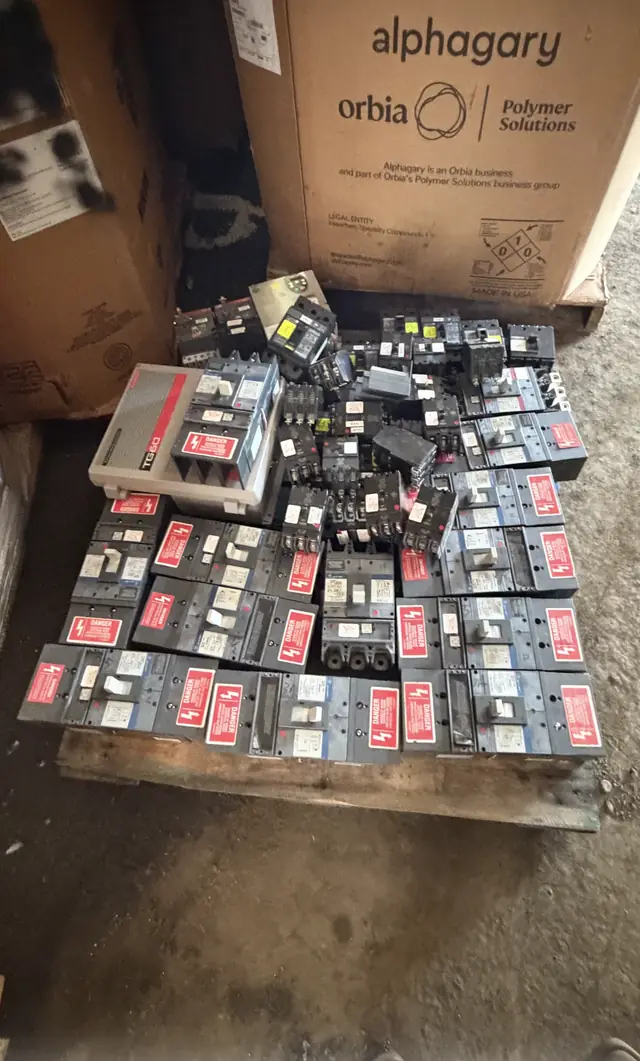
Who buys used and surplus circuit breakers?
Circuit Breaker Buyer reviews qualifying used, new-surplus, obsolete, and surplus circuit breakers for potential purchase. Sellers can submit one identifiable breaker, matching quantities, mixed pallets, or larger electrical-surplus lots. A review is conditional on the exact model, condition, completeness, quantity, ownership, location, logistics, safety concerns, and current buying scope.
Do you buy every circuit breaker?
No. Eligibility depends on exact identity, condition, quantity, completeness, ownership, location, current purchasing scope, safety, product-integrity considerations, logistics, and transaction economics.
What photos should I send?
Send an overall lot view, front view, complete label or nameplate, side or rear view when the item is already safely removed, included trip units or cradles, packaging, and visible defects. Never open energized equipment for a sales photo.
Can you quote from amperage and brand alone?
Usually not responsibly. The complete catalog number, frame, trip, poles, voltage, interrupting rating, mounting, accessories, condition, and quantity may distinguish equipment that looks similar.
Should I ship the breakers after submitting the form?
No. A form submission is not an offer, acceptance, purchase order, or shipping authorization. Wait for transaction-specific written instructions.
Do you pick up everywhere?
No universal pickup promise is made. Location, lot size, equipment, access, timing, freight economics, and written terms determine whether parcel, LTL, truckload, pickup, or another path is appropriate.
What about recalled or counterfeit equipment?
Disclose the concern and stop the ordinary commercial process. An unresolved recall match or suspected counterfeit requires a safety and compliance path rather than an automatic offer.
Can I submit obsolete, untested or mixed-condition breakers?
Yes, those descriptions can be submitted when truthful, but they do not guarantee a purchase. Separate exact model and condition groups, disclose missing parts or exposure, and do not describe an item as tested unless a legitimate record identifies the method, date, technician or organization, and actual unit tested. Mixed-condition lots should not use the best unit as the description for all units.
Obsolete equipment may also require current recall, safety, compatibility, and product-status research before a commercial decision.
Can you tell me how to install, reset or test my breaker?
This seller website does not provide individualized installation, replacement, live testing, or repair instructions. Electrical work can expose people to shock, arc flash, fire, and equipment damage. Follow the manufacturer’s current instructions and use appropriately qualified electrical professionals and the authority having jurisdiction.
If a breaker is hot, smoking, arcing, buzzing, producing an odor, repeatedly tripping, water-exposed, physically damaged, or associated with shocks, treat it as a safety issue rather than a sales lead.
Documentation sellers should have ready
When you prepare breakers for review, having clear provenance and paperwork reduces back-and-forth and helps a reviewer determine whether an item qualifies for further consideration. Sellers should gather original purchase invoices, surplus declarations, or disposition paperwork that tie the specific units to their ownership. If breakers were supplied or maintained under a purchase order or contract with usage restrictions, note those constraints and have the corresponding contract line items or serial-numbered delivery receipts available. For equipment formerly on rent, lease, or part of a bonded project, produce any return authorizations or disposition instructions that clarify title and transferability.
Create a simple, itemized digital inventory that cross-references every photograph to its catalog number, frame type, trip option, and serial number when present. Include clear timestamps and the identity of the person who recorded the information so that an evaluator can match records to physical units without assuming continuity. If an item has manufacturer paperwork such as factory test records, firmware-release notes for electronic trip units, or original accessory part numbers (handle ties, shunt trips, undervoltage releases), attach copies. Do not claim factory-original status or safety compliance without the actual manufacturer or third-party documentation to support that claim.
- Include invoices or surplus/disposition documents when available
- Reference serial numbers and catalog numbers in a spreadsheet tied to photos
- Attach factory or third-party test reports only when they name the exact unit
Labeling, palletization, and packing-list practices that speed review
Organize like-for-like units so they can be assessed without sorting through mixed lots. Place breakers of the same catalog number and trip option on the same pallet or clearly marked area, and affix legible labels showing catalog number, quantity, and visible condition notes (missing accessories, broken handles, exposed bus stabs). When photographing pallets, include a wide shot that shows all labels plus a close-up of a single representative unit’s nameplate. Durable adhesive barcode or printed labels tied to the digital inventory greatly reduce identification errors compared with handwritten tags that may smudge or fall off in transit.
A concise packing list that accompanies a photo set should show the unit count, approximate gross weight per pallet, pallet dimensions, and a short condition code for each group (for example: complete, missing shunt-trip, corroded exterior, drawer-style). If items are packaged with internal filler or special bracing, show one photo of the internal packing arrangement; that helps reviewers assess transport risk for like items without inspecting every box. Never open or attempt invasive inspection of energized equipment to obtain photos — document only from de-energized and owner-controlled conditions and indicate any items you could not access.
- Group identical catalog/trip combinations together on single pallets
- Provide pallet-level packing lists with dimensions and gross weights
- Photograph a representative nameplate and the pallet label together
Disclosures about modifications, repairs, and service history
Honest, specific disclosures about any field modifications or factory retrofits materially affect whether units are considered. Note if trip units have been replaced with a non-original electronic module, if aftermarket accessories were installed (shunt-trip, undervoltage, auxiliary contacts), or if any arc-resistant or door-interlock hardware was added after initial manufacture. For units that were repaired, offer the nature of the repair (bus repair, mechanism replacement, contact reface) and the service provider’s business name and date of service; this allows a reviewer to understand whether the change is a documented maintenance action or an undocumented alteration.
Provide records that link repairs to serial numbers, work orders, or vendor service reports rather than generalized statements. Where calibration, pickup/instantaneous settings, or firmware revisions were part of service, list the specific revision or setting range and include the associated record if it names the unit. Omitting modification history or presenting vague maintenance claims can result in a lot being excluded from purchase consideration until a reliable service history is available. For potential safety concerns, consult the original equipment manufacturer’s current guidance and a qualified electrical professional rather than relying on sales evaluation alone.
- Disclose non-original trip modules, aftermarket accessories, or field retrofits
- Attach work orders or service reports that reference serial numbers and dates
- List firmware revisions or setting ranges when trip units were updated