Used & surplus Any-size lot reviewed Nationwide sellers
REAL EQUIPMENTWe buy identifiable breakers and surplus equipment
BreakersType and family identification
AssembliesPanelboard to switchgear
ProjectsOverstock to decommissioning
DIRECT ANSWER
Circuit breakers and electrical equipment we review.
We review identifiable circuit breakers and selected electrical equipment when the seller can document the manufacturer, model, ratings, quantity, condition, ownership, location, and safe logistics. The list below describes possible buying categories, not guaranteed acceptance.
Circuit breakers, trip units, rating plugs, and cradles
Panelboards, load centers, switchboards, and switchgear
Transformers, transfer switches, safety switches, and busway
Motor controls, contactors, drives, fuses, and project surplus
Send these details
One inventory line for each exact model and condition group
Assembly and component nameplates
Included covers, interiors, cradles, controls, and accessories
Counts, dimensions, approximate weights, and installed status
Safe overview, label, condition, and packaging photos
Common stop conditions
Loose scrap without useful identity
Unsafe, energized, contaminated, or leaking equipment
Material subject to unresolved recall, ownership, or authenticity concerns
Equipment represented as tested without legitimate unit-specific records
QUOTE FACTORS
What affects the purchase review?
01
Identifiable equipment
Factory labels and complete model information let the review follow the actual item.
02
Useful lot structure
Separated model and condition groups are more useful than one mixed photo dump.
03
Documented condition
Truthful packaging, storage, removal, damage, and completeness notes reduce uncertainty.
04
Practical disposition
Some items fit resale review; others may require recycling, recall handling, or another lawful path.
SELLER QUESTIONS
Quick answers before you submit
What electrical equipment do you buy?
We review qualifying breakers and selected distribution, switching, transformer, control, and surplus categories listed on this page. Exact identity and condition determine whether the lot proceeds.
Will a category listing guarantee a purchase?
No. Categories describe review scope. Current demand, identity, condition, completeness, quantity, and logistics still control the decision.
Can I submit a mixed electrical surplus lot?
Yes, if the lot is organized into identifiable groups with counts and photos. Separate unknown, damaged, recalled, or potentially hazardous material.
Priority review categories can include molded-case circuit breakers, low-voltage power and air circuit breakers, drawout breakers and cradles, electronic trip units, rating plugs, lugs, and selected branch, motor-protection, insulated-case, vacuum, or legacy breakers when the lot, condition, expertise, and logistics justify review.
02
Adjacent equipment
Electrical distribution and control equipment
Depending on the actual buying scope, submissions may include panelboards, load centers, switchboards, switchgear, transformers, motor control centers, busway, bus plugs, safety switches, transfer switches, fuses, starters, contactors, drives, and selected industrial controls. Whether a particular model can be purchased depends on its identity, condition, quantity, and the details you send for review.
03
Condition language
Describe condition without overselling it
Useful condition descriptions include factory sealed, new surplus, open box, unused without original packaging, used, untested, incomplete, parts-only, damaged, altered, water-exposed, fire-exposed, fault-exposed, and contaminated. Seller-declared condition is an input—not a warranty, authentication result, testing record, or final acceptance.
04
Automatic escalation
Items that cannot follow the ordinary quote path
Unresolved recalled products, suspected counterfeit items, altered or missing identity labels, leaking or unknown fluids, PCBs, batteries, asbestos concerns, fire debris, contaminated equipment, unsafe installed equipment, or property without clear authority to sell requires human review or a different lawful disposition path. Never ship first and ask later.
05
Positive evidence
Information that can support an eligible review
Clear factory labels, consistent catalog numbers, intact cases, complete components, truthful packaging, countable quantities, known storage, safe removal records, legitimate provenance, original accessories, and useful project documentation can make a submission easier to understand. These facts do not guarantee acceptance, but they give the reviewer something supportable to evaluate.
For older equipment, include revision and date information when present. For assemblies, show the assembly nameplate and major installed devices. For loose breakers, do not claim compatibility with a panel or switchgear lineup unless reliable documentation supports that statement.
06
Conditional categories
Quantity, model and transaction context can change the answer
Small residential branch breakers may need meaningful quantities and clear model consistency. Very large industrial equipment may need site, access, weight, and timing facts before product demand is considered. Obsolete equipment may require recall or safety research. Transformers may introduce fluid and environmental questions. Mixed controls may need enough label detail to separate resale candidates from unidentified material.
That is why this page says what may be reviewed instead of promising to buy every product listed. The quote team must confirm the current scope against the actual submission.
07
documentation-practices
Photographs, filenames and digital metadata that help reviewers
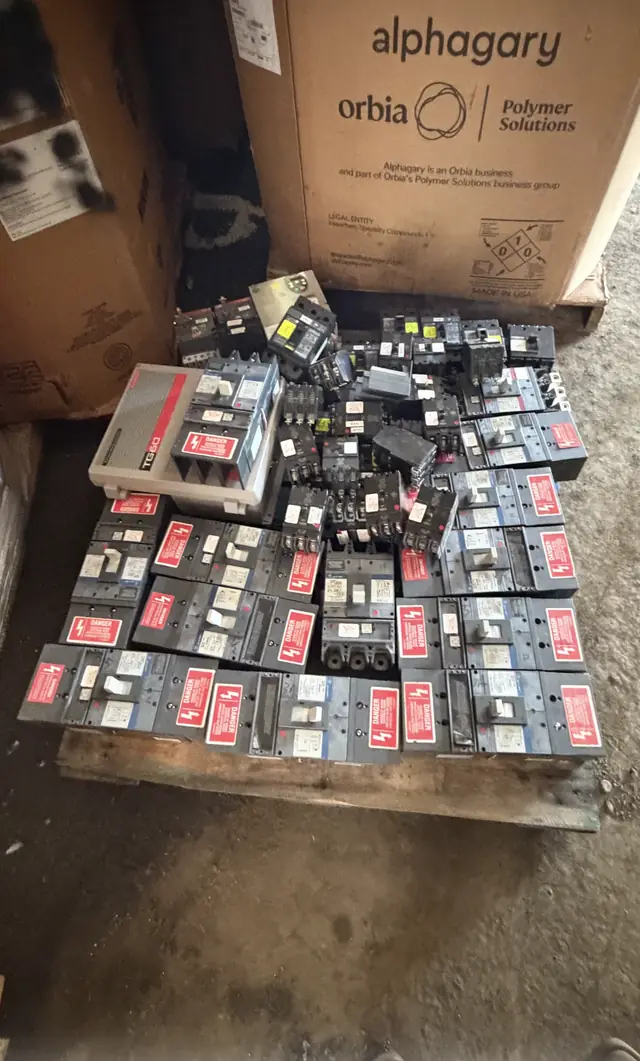
High-quality visual evidence often shortens review cycles. Useful images show the full device face, a close-up of any nameplate or stamped data, and terminal or lug areas where mechanical damage commonly appears. For modular or drawout devices, include photos showing racking position indicators, cradle hardware, and any removable trip modules placed beside the assembly (not installed) so reviewers can see mating surfaces without implying an installation condition. Exterior context shots that reveal storage conditions—dry indoor shelving vs. exposed outdoor stacking—also provide evaluative context without needing a physical inspection.
How the files arrive can matter as much as what they show. Use descriptive filenames that include a maker or catalog number and quantity (for example: "ABB_SaceEmax_E4_ qty-6_01.jpg") rather than generic camera-generated names. Preserve original image metadata (timestamps, GPS where available) and avoid heavy post-processing that removes or obscures detail. If you cannot provide embedded metadata, include a short cover note describing when and where the photos were taken, who took them, and whether items were opened strictly for documentation purposes. These practices help the quote reviewer confirm identity more quickly while keeping the submission within a non-binding review framework.
Include at least one clear close-up of any nameplate or label
Show mounting interfaces, lugs, and accessory locations
Provide filenames with maker, model, and count when possible
08
electronic-trip-data
Trip units, firmware, and electronic identification details
Many newer breakers and protective devices contain electronic trip units, communication modules, or memory that record settings and event history. When available, list model and firmware versions printed on the module, any visible serial or part numbers, and whether the trip unit is removable. Photographs of LCD screens, configuration stickers, or printed-setting sheets can be useful to understand whether a unit might be resold as configured or considered for parts. That said, a reported firmware revision or visible setting is not an operational test result and should not be presented as proof of functionality.
Provide descriptions of what documentation exists for these electronics—calibration stickers, substitution records, or factory download files—because reviewers consider the presence of preserved configuration data differently than undocumented, black-box pieces. Electronic information may influence whether a device is treated as a candidate for resale as-equipped, for refurbishment appraisal, or for parts reclamation. All outcomes are conditional on inspection and compliance checks; submitting these details helps reviewers make a more informed, non-binding assessment rather than a definitive compatibility or safety statement.
Record visible firmware/revision codes and module part numbers
Photograph any event logs or display readouts without energizing
Note whether electronic modules are removable and stored with the unit
09
market-and-lifecycle
Market context, lifecycle signals, and possible disposition pathways
Reviewers incorporate external market signals into their assessments. Factors such as recent manufacturer discontinuation notices, known replacement frame families, aftermarket parts availability, and typical lead times for new equivalents can change how a given lot is evaluated. For example, a widely used frame size with available spares may be more attractive than a rare, undocumented legacy model even if both are in similar physical condition. Quantity consistency across a submission also matters: many small, mismatched residential breakers may not align with typical resale channels compared with palletized lots of identical industrial frames.
Submissions can be routed to a variety of disposition pathways depending on condition, documentation, and marketability: intact resale as surplus, candidate for refurbishment, parts and core reclamation, or referral to specialized handling for suspected contamination or recall screening. Any pathway considered during review is conditional and based on the information supplied; a submission or a set of photographs does not constitute a purchase offer, appraisal, or final acceptance. Providing expanded lifecycle context—manufacture date codes, project decommission notes, or known OEM bulletins—helps reviewers identify the most appropriate, non-binding course of action.
Supply manufacturing or date codes when present
Note known OEM discontinuation or replacement advisories
Indicate whether items are sold in matched lots or mixed quantities
Explore this section
More specific buyer and seller pages
Choose the page that best matches the manufacturer, breaker family, equipment type, or question on the label.