Approval comes before packing or pickup
Do not ship equipment because a website form was submitted. A valid next step identifies the approved equipment and states who is responsible for packing, labels, carrier selection, freight charges, accessorials, pickup coordination, risk of loss, and receiving requirements.
Protect weight-sensitive components
Small breaker lots may be parcel candidates only when the packaging can protect handles, terminals, labels, trip units, and accessories. Use rigid packaging appropriate to the weight, immobilize each item, separate metal contact points, fill voids, and follow the carrier and transaction instructions. A heavy breaker placed loose in a box can damage itself and other items.
Build a stable, documented freight unit
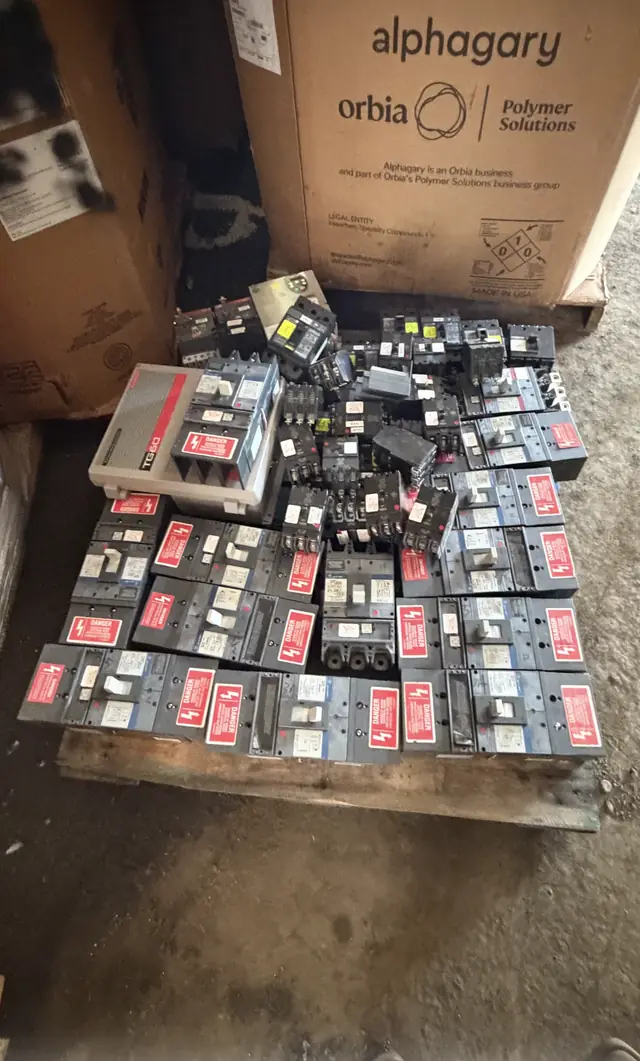
Palletized loads should match the approved inventory, distribute weight safely, keep items inside the pallet footprint, protect vulnerable faces and terminals, and use suitable banding, wrap, corner protection, and labeling. Dimensions, total weight, stackability, loading dock, liftgate, limited-access, and appointment facts should be confirmed before booking.
A location is not automatically a pickup commitment
Pickup, rigging, dismantling, de-energization, disconnection, crane work, insurance, certificates, site orientation, escorts, and schedule are project-specific. Installed equipment requires qualified people and the owner’s site procedures. A service-area page or phone conversation is not authorization to begin work.
Photograph the approved lot before closing the package
When requested, take photographs showing the item groups, labels, visible condition, protective materials, pallet arrangement, and the closed package or wrapped pallet. Keep the carrier label and tracking, bill of lading, pallet count, weight, dimensions, and pickup record. Do not place sensitive paperwork where it becomes visible in public or shared images.
If a package is damaged in transit, preserve the packaging and follow the carrier and transaction instructions. Do not discard evidence, repair items, or combine damaged and undamaged goods before the next step is documented.
Weights, centers of gravity and site constraints require qualified planning
Switchgear sections, switchboards, transformers, and large power breakers can create handling hazards that a general webpage cannot solve. Nameplate or drawing weights, dimensions, center of gravity, lifting points, floor loading, overhead clearance, dock height, forklift capacity, crane requirements, weather exposure, stairs, thresholds, and site security may change the plan.
Only qualified parties with the right equipment, procedures, insurance, and written scope should perform removal or heavy handling. A request for photos or dimensions is not an instruction to move the equipment.
Cross-border and export considerations
Some qualifying circuit breakers and electrical equipment may be subject to export controls, customs requirements, or country-specific import restrictions. Before packaging or arranging transport, identify whether the lot contains regulated components such as batteries, electronic control boards, or parts that could be classified under dual‑use or defense-related export controls. Transaction review should flag any items that require additional paperwork, end‑user declarations, or a commercial invoice that matches the approved inventory; such flags will affect carrier choices, transit routing, and the timeline for release.
International moves often need harmonized system (HS) or tariff codes, clear descriptions of condition, country of origin, and statements about energization or hazardous content. If a qualifying lot is proposed for export, include documentation that describes the item condition, confirms removal of any prohibited consumables where applicable, and lists serial numbers and model designations. Providing complete, accurate information up front reduces the risk of customs holds, unexpected duties, or required rework; it does not guarantee export clearance, which is subject to the importing country’s authorities and any applicable export control licensing.
- Typical documentation to gather: commercial invoice, packing list, HTS/HS codes, and end‑user/end‑use statements where needed
- Declare battery status (installed, removed, type) and any regulated electronic modules
- Anticipate that cross‑border routing, carrier selection, and transit time may change after documentation review
Preservation and packaging for storage and extended transit
When equipment will sit in storage or transit for extended periods, preservation choices affect condition on arrival. For qualifying items that may be reviewed for purchase, consider materials and methods that limit corrosion, moisture ingress, and mechanical shock without changing or testing the equipment. Use preservation approaches appropriate to the component types—terminals and exposed contacts, insulating materials, and enclosure seams—and document what was applied so reviewers know the post‑packaging condition. Note that preserving an item does not substitute for a condition inspection or functional test by a qualified party.
Long‑duration packaging decisions should also consider stackability, pallet integrity, and the potential for repeated handling during multimodal transport. When preparing palletized lots, document how fragile faces and connection points were protected, where weight was concentrated, and whether vibration‑dampening or moisture‑control materials were used. Photographs and a written preservation note included with the packing list help reviewers and carriers understand the measures taken without implying service, maintenance, or certification.
- Include a preservation note on the packing list describing coatings, desiccants, and seals used
- Document any elevation above the pallet deck or blocking to prevent direct floor contact
- Record whether items were bagged from dust and humidity prior to wrapping
Inventory labeling and traceability for lot review
Clear, consistent identification speeds lot review and reduces questions that delay written approval. For each qualifying item, prepare an inventory list with manufacturer name, model designation, serial number (if present), count, gross weight, and outside dimensions. Use visible, non‑destructive labels or tags that match the packing list and photographs so reviewers can reconcile the physical lot against submission materials. Avoid altering serial plates or permanent markings; instead, photograph and list existing identifiers as part of the submission.
Establish a concise condition code or status field on the packing list that indicates whether an item is sold ‘as found’, cleaned, or cosmetically restored for inventory purposes, and include that code in the photographed record. Maintain a basic chain‑of‑custody record—who prepared the lot, who wrapped or palletized it, and time‑stamped photos of the finished freight unit—so reviewers understand the provenance of the submitted items. These steps help evaluate whether a lot qualifies for review and what transport or handling constraints should follow written approval.
- Suggested inventory fields: manufacturer, model, serial, quantity, weight, dimensions, condition code, photo links
- Match visible tags to the packing list; avoid obscuring nameplates or serial numbers
- Time‑stamped photos of the packed pallet or box improve traceability for reviewers