If you find burned insulation, exposed conductors, oil leaks, distorted housings, or other signs of electrical failure, stop and engage appropriately qualified electrical professionals and follow manufacturer instructions and the authority having jurisdiction. Do not perform energized testing unless expressly authorized and qualified.
What sellers should expect
We review qualifying circuit breakers and related electrical equipment for potential purchase. This page explains how receiving inspection and reconciliation work, what findings may trigger an approved payment, the settlement methods that may be available, and how discrepancies and exceptions are addressed. Reading this before you submit helps reduce avoidable delays.
A website submission is not an appraisal, offer, acceptance, purchase order, pickup commitment, or shipping authorization. Qualifying equipment may be submitted for purchase review; not every submission will result in a purchase. Transactions are reviewed according to internal procedures.
- Scope: incoming inspection, reconciliation, and settlement overview
- Intent: describe required identification, documentation, and helpful photos
- Limit: this page does not provide electrical, installation, or safety instructions
Exact identification fields we need from sellers
Provide clear identification for every breaker or lot. Core fields include manufacturer, part number or catalog number, model or frame designation, amperage rating, interrupting rating (kA), trip unit type (thermal‑magnetic, electronic, ground fault, etc.), and serial number or date code when available. Missing or inconsistent identifiers are a common cause of extended review time.
Include any supplemental labels or markings such as UL/CSA file references or customer‑applied tags. If equipment is from a specific job or inventory lot, state the lot ID and the count in that lot. Accurate identification reduces follow‑up questions and supports an efficient transition from inspection to payment reconciliation.
- Manufacturer and full part number or catalog number
- Frame, trip‑unit type, amperage, and interrupting rating
- Serial number or date code and lot identifier (if present)
- Quantity per lot, unit condition summary, and current location
Photos and documentation that materially help inspection
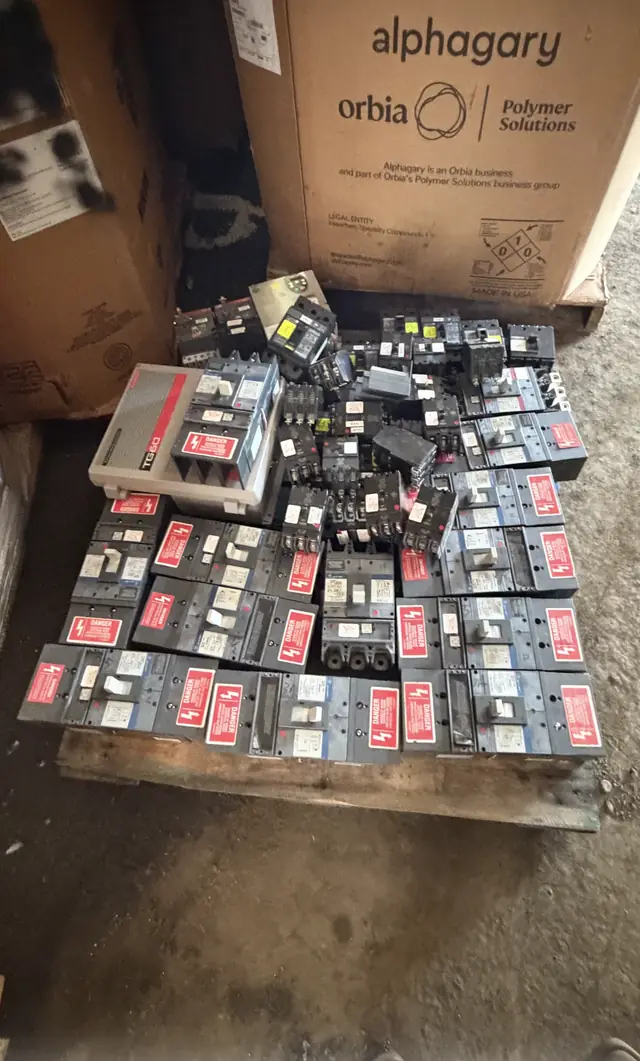
High‑quality photographs of nameplates and overall condition are essential. Provide a close‑up of the nameplate or label that clearly shows the part number and serial/date code, a full‑face photo of the unit, a lot overview (such as pallet or crate), and detail shots of any damage points, missing parts, or aftermarket modifications. Poor or missing photos often cause additional clarification requests before an item can proceed to full review.
Include digital copies of any existing test reports, purchase invoices, original packing lists, or factory inspection certificates when available. If an item is represented as tested or calibrated, include the report header with the tester name, date, and scope of test. Such paperwork is considered during reconciliation but does not replace physical inspection on receipt.
- Close‑up of nameplate/label showing part number and serial/date code
- Full‑face image of each unit plus a lot overview (pallet/crate)
- Close‑ups of damage, missing accessories, or aftermarket work
- Scanned test reports, invoices, and packing lists if present
Receiving inspection and reconciliation scope
Receiving inspection is a reconciliation between the seller’s submission and the items physically received. Inspection is generally non‑destructive and focuses on identity, count, obvious mechanical condition, and documentation. Nameplate data, serial numbers or lot counts, and the presence of attachments or accessories described in the submission are checked and recorded.
Inspection does not include energized testing, installation, or in‑depth engineering analysis. If deeper testing or disassembly is requested as part of a commercial negotiation, it must be specified in writing and mutually agreed before any such work. Findings from receiving inspection form the basis for determining whether an approved payment trigger exists and for any subsequent adjustments.
- Verify identity: nameplate, part number, serial/date code (if present)
- Confirm quantity and lot organization against the submission
- Note visible mechanical damage, missing parts, or aftermarket changes
- Document the existence of test reports or supporting paperwork
Approved payment trigger and payment methods
An approved payment trigger occurs when receiving inspection and reconciliation show that the items received materially match the submission in identity, quantity, and stated condition. When that trigger is documented, settlement may proceed subject to the agreed commercial terms. Qualifying equipment may be submitted for purchase review, but it must clear inspection to be eligible for approval.
Settlement methods may include common options such as bank transfer or check, depending on agreement and any required onboarding. Specific timing and remittance details are communicated during settlement and may vary by transaction.
- Approved trigger: receiving inspection and reconciliation match the submission
- Settlement methods may include bank transfer or check, subject to agreement
- Timing and remittance details are provided during settlement communications
Reconciliations, adjustments, and dispute route
If inspection uncovers differences—wrong quantity, mismatched part numbers, damage not disclosed, or missing documentation—an exception report is generated describing the discrepancy and any proposed adjustment. Typical outcomes include acceptance with a price adjustment, return to seller, disposition by mutual agreement, or escalation for further review. The exception report is the record used to determine whether an approved payment trigger exists and what adjustments, if any, apply.
Sellers may dispute an exception by supplying additional evidence such as higher‑resolution photos, serial number logs, shipping paperwork, or test certificates. Disputes are reviewed and may be escalated internally as needed. Retain original packaging, test reports, and chain‑of‑custody documents until reconciliation is finalized to support efficient resolution.
- Exception report created for any material discrepancy
- Possible outcomes: price adjustment, return, or disposition by agreement
- Dispute path: provide additional evidence; internal review and escalation as needed
Safety limits, exclusions, and how to submit items
Stop and consult qualified professionals if you observe corrosion, exposed conductors, evidence of overheating, mechanical failure, or unknown alterations. Do not ship or attempt energized testing without following manufacturer instructions and using appropriately qualified electrical personnel and the authority having jurisdiction. Items showing signs of unsafe condition may be excluded from purchase review and will be documented in the exception report if received.
To submit items, use the submission portal with the identification fields and photos described above. Provide a clear lot inventory and note any test reports or certificates. Submitting items starts a purchase review only; it is not an acceptance, purchase order, or shipping authorization. After submission, we will respond with next steps for any required shipping arrangements, reconciliation questions, and settlement, as applicable.
- Do not ship items that are unsafe or show signs of electrical damage without professional evaluation
- Submission checklist: identification fields, photos, test reports, lot count, and location
- Submission is a review request; final disposition and settlement depend on inspection