Begin with the nameplate
Manufacturer, family, catalog number, frame, trip rating, poles, voltage, interrupting rating, trip unit, mounting, and accessories are different fields. Our identification guides explain where those details may appear and what they can—and cannot—tell a seller.
Use evidence instead of adjectives
New, used, obsolete, rare, working, refurbished, tested, and good condition are not interchangeable. Condition content should show original photographs, define the business vocabulary, and state what evidence supports each description.
No sales lead is worth unsafe access
Installed or energized equipment is not a photo opportunity. Guides avoid consumer instructions for deadfront removal, conductor work, breaker installation, energized measurement, or repeated resets. Heat, odor, buzzing, smoke, shocks, water exposure, and visible damage route to qualified help first.
Understand the steps behind a legitimate purchase
Resources explain inventory preparation, provisional review, written terms, shipping or pickup, receiving, discrepancies, and payment without promising that every submission becomes an offer.
Use the guide that answers your next question
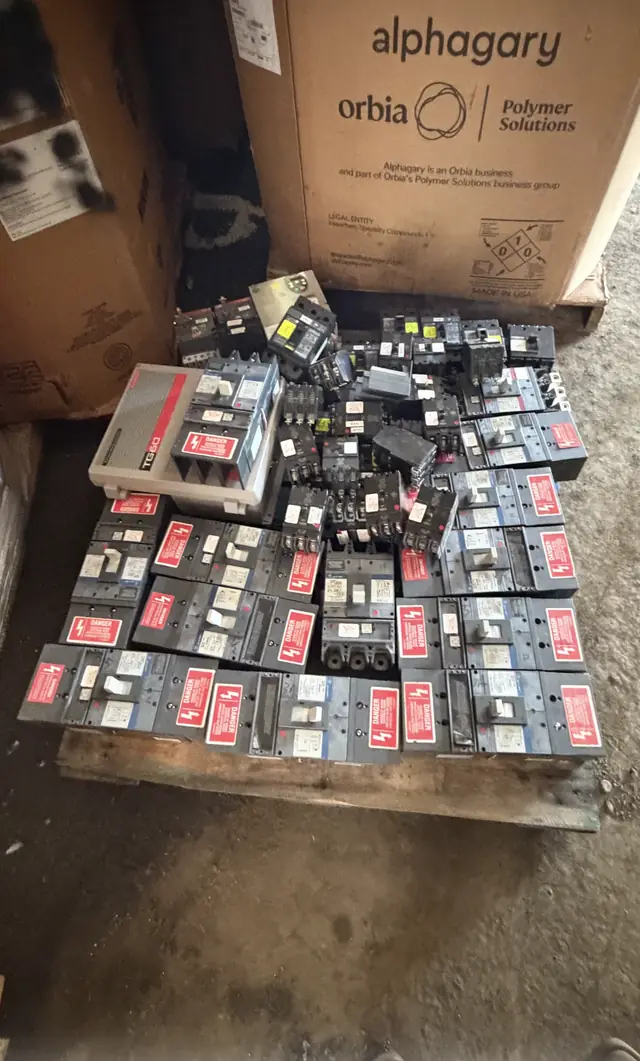
If you have a breaker in hand, start by reading the complete nameplate and taking safe exterior photographs. For a mixed lot, record each model group, count, condition, and location. If you are unsure how condition, included accessories, or freight might affect a review, use the matching guide before sending your list.
Do not open energized gear or remove equipment for a sales photograph. Packing, carrier booking, and pickup instructions are discussed only after the parties agree on transaction-specific written terms.
Confirm product and safety information against its source
Manufacturer product families, safety bulletins, recall records, and carrier requirements can change. Use the exact part number and current manufacturer or regulator document when an item has a possible recall, application restriction, or unusual handling requirement.
A sales guide cannot establish electrical suitability, safe reuse, or compliance. Ask qualified electrical or environmental personnel to address those questions before moving material.
Reading manufacturer date codes and serials
Many manufacturers stamp or label date and batch information in compact, sometimes cryptic formats. Sellers who document that information clearly help a reviewer place items in a production window without needing a physical inspection. Photograph the exact stamp or label in context with the breaker housing so the code and its neighborhood markings are visible together; if a plated tag, label, or molded code sits beneath paint or in a recess, show the full assembly as well as a close-up. Recording any adjacent text such as “MFG,” “Lot,” or short-format numbers reduces back-and-forth just to confirm what a seller meant by a photographed mark.
Date and serial clues can affect perceived lifecycle and traceability but do not by themselves prove performance, warranty, or compatibility. A consecutive serial range for a lot can sometimes help a buyer locate factory test sheets or manufacturing change notices in their own records; noting ranges in a submission—start and end serial—makes that retrieval faster. If you know a product received a service bulletin, a trip unit change, or a kit retrofit at a known date range, state that as provenance rather than as a performance claim so reviewers can follow up using primary OEM sources if needed.
- Photograph full housing plus a separate close-up of the code
- Note start and end serials when multiple units are bundled
- Record any adjacent label text (e.g., “Lot”, “Rev”, or similar)
Document bundles that add provenance for higher‑value items
Certain documents commonly shorten a commercial review cycle for higher-value breakers and assemblies: factory test certificates, dated calibration or relay bench reports, original purchase invoices showing OEM part numbers, and archived maintenance entries that list replacement parts. Collecting an OEM datasheet or family cut sheet alongside any available test paperwork gives a reviewer a compact, verifiable packet to compare against photographed evidence. Presenting this bundle does not guarantee an offer, but it can materially reduce follow-up when items appear to match the paperwork submitted.
Organize digital files so each document is clearly tied to a specific unit or range: use filenames that include the breaker family, frame or catalog reference, and the serial or lot number. If a maintenance log notes a replaced trip unit or an obsolescence-related modification, add a short, timestamped note explaining the entry and redact any unrelated third‑party personal or proprietary information before upload. Clear, indexed documentation helps external reviewers and potential secondary buyers evaluate provenance without needing immediate physical access to every item.
- Include factory test reports, calibration records, and OEM datasheets where available
- Use filenames with family, catalog ref, and serial or lot
- Redact unrelated customer or confidential data before sharing
Protective packing and pallet labeling for stacked warehouse storage
When breakers are stored or prepared for movement within a warehouse, protecting exposed components and preserving identification marks reduces the chance of damage that would complicate a later review. Place rigid separators between handles and bus stabs, avoid abrasive contact between units, and keep small loose accessories grouped and labeled with the related serials. For longer storage intervals, document the storage environment (e.g., humidity control or desiccant use) in the lot notes so reviewers understand any corrosion-control measures that were taken; these notes are informational for valuation and do not imply a safety or performance endorsement.
A clear pallet-level manifest speeds inventory reconciliation during any subsequent commercial review. Attach a visible sheet or pouch that lists the pallet ID, the exact serial ranges or unit identifiers included, a short content description (family + frame), and the preparer’s contact for follow-up questions. Use consistent orientation marks and fragile indicators so handlers can preserve identification plates and photos; consistent labeling reduces handling damage and shortens the time a reviewer needs to confirm what is on a pallet. Remember that providing this information supports evaluation but is not a purchase order, inspection approval, or warranty of condition.
- Separate handles/bus stabs with rigid dividers
- Group small accessories with the unit serials in labeled bags
- Attach a pallet manifest with serial ranges and content summary