This page does not provide electrical or installation instructions. Stop and consult qualified electrical professionals if you detect damage or safety hazards, and follow current manufacturer instructions and local authority guidance.
What this page covers and the critical rule
We review qualifying circuit breakers and related electrical equipment for potential purchase. This page explains what identification information, photos, and packing practices speed a review and preserve the condition evidence buyers need. Follow these guidelines when preparing parcel or LTL shipments so reviews can proceed without unnecessary delays.
The single most important instruction: do not ship any equipment until you receive explicit, written shipping instructions from our logistics team. A submission or inquiry is not an authorization to ship. A website submission is not an appraisal, purchase order, acceptance, inspection, or shipping authorization.
- Gather identification fields and clear photos before packing.
- Describe condition honestly using plain, repeatable terms.
- Wait for written instructions before sending any package.
Exact identification fields to provide
Accurate identification is the foundation of a fast review. Provide every label and marking you can find: manufacturer name as marked, full catalog or model number, frame size or amp rating, trip unit type and settings, number of poles, rated voltage, and any factory option codes or suffixes. Include serial numbers, date codes, and internal part numbers when visible.
If the breaker is part of a larger assembly (draw-out cell, MCC bucket, transfer switch), note the assembly model and location of the breaker within it. If accessories are present — handles, linkage, control modules, shunt trips, undervoltage releases, auxiliary contacts — list them with their markings. If any labeling is missing or partially illegible, say so and include close-up photos of the affected area.
- Manufacturer, full model/catalog number, serial number
- Frame/amp rating, trip unit identity, number of poles
- Voltage rating, factory option suffixes, date codes
- Accessory types and their visible part numbers
- Assembly location if breaker is part of a larger unit
Describing condition: honest, repeatable language
Use straightforward condition categories: new in original packaging, new surplus (original packaging retained), used-working (previously installed and functioned), used-unknown (no functional test records), damaged, or parts-only. Under each category add short factual notes: e.g., 'handle broken,' 'trip tested to open (no further info),' or 'corrosion on terminal bus.' Avoid subjective claims about safety or fit; we will request additional data when required.
Photographic evidence must match your description. If you report a mechanical fault or evidence of overheating, supply close-ups that clearly show the affected area and the breaker nameplate within the same frame. For any water intrusion, thermal damage, or arc-trace, identify when that damage was first observed and whether the unit was energized at the time.
- Clear categories: new, new surplus, used-working, used-unknown, damaged, parts-only
- State discovered defects and when they were observed
- Do not perform energized testing; use qualified personnel for inspection
Approved packaging roles and responsibilities
When preparing a parcel or LTL shipment, establish who is responsible for each packaging role before you start: the packer (entity physically preparing the load), the shipper of record (billing and regulatory contact), and the recipient (party receiving the goods). Each role carries distinct responsibilities: the packer must protect the item to prevent transport damage; the shipper of record must declare proper handling and any regulatory requirements; the recipient should note visible damage at receipt and preserve evidence.
Approved packaging practices include secure internal supports, cushioning to prevent movement, sealed moisture barriers where appropriate, and robust outer cartons or crates sized to the breaker. For palletized LTL shipments, use a pallet rated for the load, stabilize the load with straps and corner protection, and avoid overhanging equipment.
- Packer: physically secures and labels the shipment
- Shipper of record: provides documentation and declarations
- Recipient: inspects on arrival and preserves evidence
- Use crates/cartons sized to prevent movement and provide at least two inches of cushioning
- Include moisture barriers or desiccant for units with exposed internal components
Organizing multiple units and lot documentation
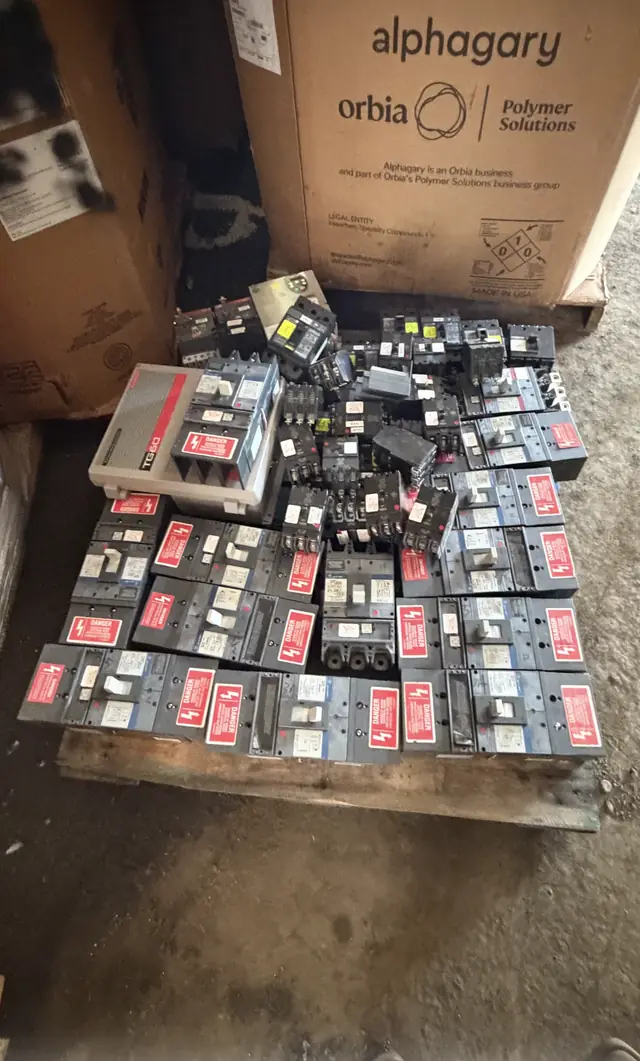
If you are submitting a lot of multiple breakers, create a single inventory sheet that lists each piece with its identification fields, condition statement, and any distinguishing marks. Group identical units together and label each unit with a lot tag or temporary sticker so photos and descriptions can be matched to physical items. For pallet loads, provide a pallet map showing item positions, counts per layer, and total count.
Photograph the entire lot from at least three angles and include a clear overall shot of each pallet or box labeled with the lot number. For mixed lots, separate incompatible items to avoid confusion and show per-unit photos of at least the nameplate and any damage. If any units are non-removable from assemblies, document the assembly model and the position of the breaker within it.
- Single inventory sheet with unit-by-unit ID and condition
- Lot tags or numbered stickers on each unit
- Pallet map showing positions and counts
- Overall lot photos plus per-unit nameplate and damage photos
Damage examples and how to document them
Common damage types that affect review include physical cracks in the case, melted or burned terminals, arc-trace or charring, missing handles or mechanism parts, water staining or corrosion, and impact deformation of bus stabs. For each observed damage type provide close-up photos with a ruler or scale in the frame and a photo that shows the breaker nameplate so the reviewer can link the damage to the specific unit.
Take photos before any temporary repairs or rework. If you have original packing photos that show a unit’s condition prior to your repacking or movement, include them — those original packing photos are often decisive when determining whether damage occurred in service or during handling. Absence of clear original photos or contradictory post-packing images can delay a review or limit acceptance.
- Photograph nameplate and damage in the same frame
- Use a scale or ruler for size reference on damage shots
- Provide original packing photos when available
- Do not alter or clean damaged areas before photographing
Current logistics policy and the submission process
Our current logistics policy requires that you submit identification, condition, and photo documentation for review before any shipping authorization is issued. After we receive your submission, logistics, electrical subject-matter, and compliance reviewers may request further images, mechanical checks, or disassembly photos. Only after those steps — and after written shipping instructions are issued — should you package and tender the shipment.
A submission is evaluated; it does not create a purchase contract or shipping authorization. Prepare a complete packet to avoid delays: the inventory sheet, per-unit photos, original packing photos if available, a short condition statement for each unit, and contact information for the packer and shipper of record. We may refuse to review incomplete submissions or require additional documentation from qualified personnel.
- Submit full ID, photos, and condition notes for pre-shipment review
- Expect review by logistics, electrical SME, and legal/compliance
- Wait for explicit written shipping instructions before sending goods
- A submission is not a purchase order or shipping authorization
Safety limits and compliance reminders
Stop and consult qualified personnel if you encounter warning signs such as strong burning odors, heavy corrosion, loose or charred conductors, visible arcing residues, or evidence of internal melting. Do not attempt energized testing to diagnose breakers for sale. Follow the current manufacturer instructions for removal and handling, and use appropriately qualified electrical professionals and the authority having jurisdiction for any energized work or code interpretation.
Document any safety-related observations clearly and avoid speculative language about causes. When in doubt, preserve the unit in its observed condition and take the photos and documentation described above. Required expert review roles for our process include logistics owner, electrical subject-matter expert, and legal/compliance reviewer; they will advise on safety-related disposition during the review.
- Stop if you see smoke, heavy charring, loose conductors, or melted components
- Do not perform energized testing; use qualified electricians
- Follow manufacturer instructions and authority having jurisdiction
- Preserve the item’s observed condition and document clearly