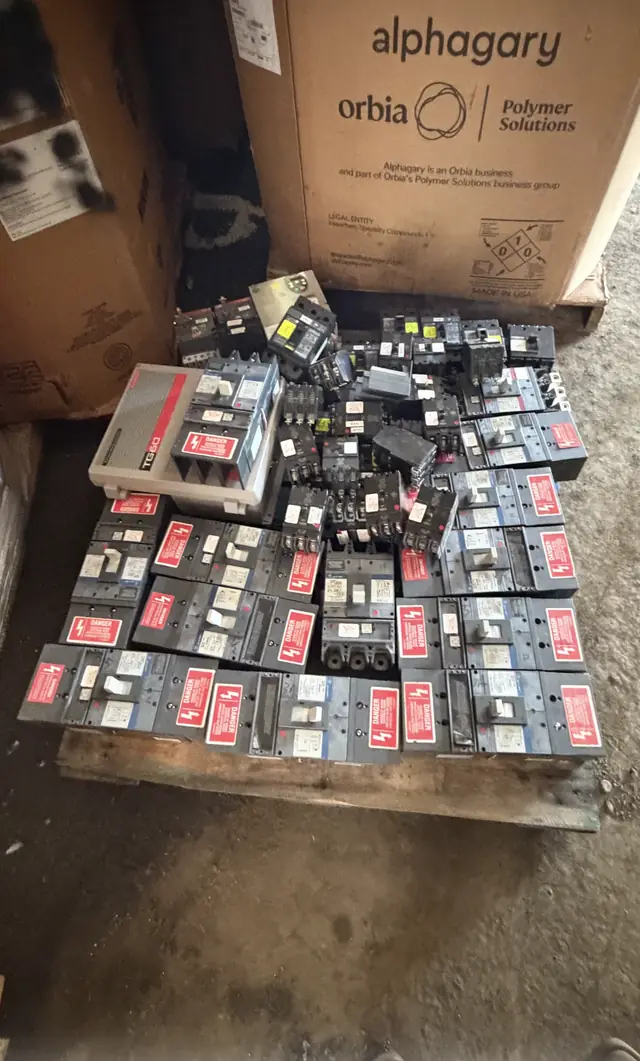
How to describe electrical transformers
Read the maker label before grouping similar equipment. Names may include dry-type transformer, distribution transformer, isolation transformer, control transformer, pad-mounted transformer, liquid-filled transformer, and surplus electrical transformer. They do not establish model, condition, or installation suitability. Send complete markings and a clear photo when unsure.
Information that helps us understand the equipment
Start with what is printed on the equipment. Do not guess a model, rating, compatibility, or condition. A complete identification set usually includes:
- manufacturer and complete nameplate
- kVA rating
- primary and secondary voltage
- phase, frequency, impedance, and temperature-rise fields
- enclosure and cooling type
- fluid type and PCB records when applicable
- dimensions, weight, accessories, and test records if legitimately available
Describe the lot as it actually exists
Transformer identity, logistics, and environmental questions can matter as much as the nameplate. A dry-type unit and a liquid-filled unit should not share the same handling assumptions, shipping plan, or acceptance policy.
A clear submission helps prevent a mistaken preliminary review and saves time for both sides. Useful lot-level information includes:
- quantity and exact ratings
- installed or removed status
- leaks, rust, damage, missing covers, or alterations
- storage environment and ownership history
- safe overall, nameplate, terminal-cover, and condition photographs without opening energized equipment
New surplus, used, untested, incomplete, and damaged are different
Use plain, supportable condition language. Original packaging can be documented, but packaging alone does not prove an unused, authentic, complete, or operational item. Used equipment should include truthful removal and storage details. If a unit is missing hardware, modified, corroded, fire-exposed, water-exposed, fault-exposed, or otherwise questionable, say so before any shipping discussion.
Condition influences eligibility, handling, and value, but no universal price table can account for exact model demand, quantity, completeness, provenance, current stock, freight economics, and inspection results.
What a website review cannot determine
Do not submit leaking, unknown-fluid, PCB-suspect, contaminated, or energized equipment through an ordinary quote path. Contact qualified environmental or electrical personnel first.
A submission is not an offer, acceptance, authentication result, safety assessment, code determination, shipping authorization, or instruction to remove installed equipment. Any next step must be confirmed in writing.
Why exact transformer data prevents the wrong review
A model-family name can include multiple generations, frame sizes, ratings, mounting styles, control options, and accessories. When a seller writes only “electrical transformers,” the reviewer cannot safely assume that visually similar units are interchangeable. Copy each label line as printed, preserve spaces and suffixes, and connect each photograph to one inventory row. If a suffix is obscured, record that uncertainty rather than substituting a nearby unit’s identifier.
For mixed lots, photograph the full group first, then create smaller model groups. Keep packaging, loose hardware, trip units, rating plugs, cradles, covers, manuals, and test documents with the matching line item. This method reduces duplicate questions and prevents a photograph of one complete unit from being mistaken for proof that every unit is complete.
What can make one lot easier to evaluate than another
A consistent lot of clearly identified electrical transformers can be easier to review than a larger pile with mixed labels and unknown condition. Quantity, model consistency, completeness, packaging, service history, storage, current demand, documentation, location, and the work required to receive and reconcile the equipment all affect the decision. None of those factors guarantees value, but each can remove uncertainty.
Sellers should disclose deadlines and the reason the equipment is available, such as contractor overstock, a canceled project, distributor excess, facility spares, an upgrade, liquidation, or planned decommissioning. That context helps establish timing and ownership without turning an unsupported story into a condition claim.
A clean submission creates a clean written transaction record
If the transformer fits the current buying scope, the next communication should identify the reviewed item group and any additional information required. Written terms—not a generic web page—must address the approved quantity, price, included parts, packing, freight or pickup, receiving, inspection, discrepancies, and payment.
Keep a copy of the submitted inventory and pre-shipment photographs. Do not substitute items, add unapproved material, hide defects, or combine different conditions under one line after review. If the lot changes, update the reviewer before anything moves.
Component-level details buyers examine
When reviewers evaluate inventory, they often inspect individual transformer components because those parts influence handling requirements and potential reuse. Useful component-level photographs and notes include the condition of bushings and their porcelain or epoxy bodies, the presence and operation of on-load or off-load tap changers (and the last-known tap position), radiator fins and external cooling surfaces, conservator tanks and breathers on liquid-filled units, nameplate attachment points and legible rivets or stamps, lifting lugs and mounting feet, and any exposed terminal chambers or secondary cutouts. Describe any non-standard additions such as external fans, monitoring sensors, or aftermarket skid frames rather than assuming original configuration.
Visible anomalies can shorten evaluation cycles when they are honestly reported: missing bolting at terminal covers, cracked bushing skirts, evidence of past oil leaks near weld seams, bent radiators, or aftermarket weld repairs should be documented with close-up photos and a short note about when and how the damage occurred if known. Providing these component details does not certify compatibility, operational status, or authenticity; qualifying items may be reviewed further when the submitted component evidence supports a focused preliminary assessment.
- bushing photos (top, side, and flange)
- tap changer nameplate/position and access cover detail
- radiator and fan condition
- conservator, breather, and fill-port views
- lifting and mounting hardware
Documentation and test records that speed review
Technical documentation often accelerates whether an inventory line can proceed beyond an initial web review. Commonly helpful items are dated factory acceptance test reports, routine maintenance sheets, recent turns-ratio and excitation test results, insulation-resistance readings, sweep-frequency response analysis (SFRA) when available, and dielectric or dissolved gas analysis (DGA) data for liquid-filled units. For oil-filled equipment, lab reports showing PCB screening or accredited analytical results can materially affect what additional inquiries a reviewer raises. Providing documentation makes it easier to map a specific serial number or nameplate to a test record and avoids guesswork implied by a single exterior image.
Format and provenance matter: reviewers prefer records that show the unit serial number, the date of the test, the testing organization or technician signature, and equipment-specific parameters rather than generic facility logs. A complete set of paperwork is useful but not mandatory—lots without formal test reports may still be considered if photos and itemization are clear. Any documents provided are used to inform a conditional evaluation; submitting records does not constitute an inspection, warranty, or acceptance of equipment condition.
- factory acceptance test (FAT) reports
- turns-ratio and insulation resistance sheets
- SFRA or vibration reports when present
- oil lab reports and PCB screening
- serial-numbered maintenance logs
Lot staging, access, and records that reduce delays
Large lots and multi-unit consignments can be evaluated faster when sellers stage inventory in clearly identified groups and provide straightforward access information. Helpful lot-level notes include whether units are on pallets, skids, or individually cradled; approximate unit and pallet weights; whether the equipment is indoors, under cover, or curbside; and whether a loading dock, forklift capacity, or crane is required to move an item. For liquid-filled units, note whether they are fully drained or contain remaining fluid and provide any known environmental declarations for the equipment. These details do not authorize removal or transport but help a reviewer judge whether the lot aligns with current purchasing scope and logistical constraints.
A concise, photographed inventory that links each serial-numbered nameplate to a single photo and line-item entry reduces follow-up questions and shortens time to written terms if the lot is eligible. Include a simple reconciliation sheet that lists quantity by exact model, any missing accessories, and any sale-driven timing constraints or destination considerations that might affect acceptance. Remember that an online submission initiates a review process only; qualifying items may be reviewed further and any subsequent steps will be confirmed in writing before material moves.
- staging description (palletized, skidded, floor)
- access notes (dock, forklift, crane) and clearances
- unit and pallet weight estimates
- fluid status declaration for liquid-filled units
- serial-numbered reconciliation sheet with photos