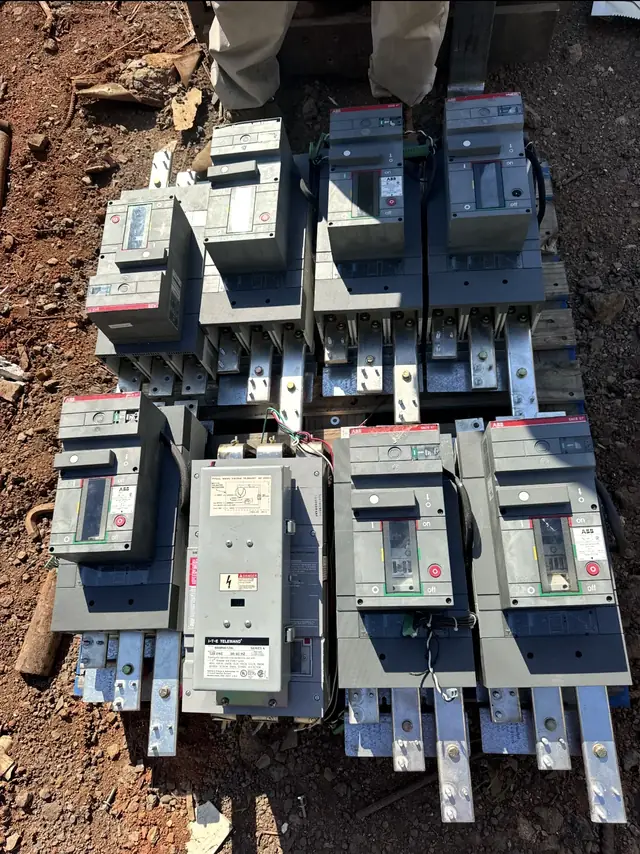
The catalog number usually matters more than the face value
Two breakers with the same ampere rating can differ by frame, trip function, poles, voltage, interrupting rating, mounting, accessories, revision, listing context, and installed-equipment compatibility. A useful review begins with the full label rather than an estimate based on physical size.
Scarcity does not automatically create value
Obsolete equipment may be useful when installed systems need a documented replacement, but age or rarity alone does not prove demand. Current stock, sales history, service base, product status, available alternatives, and safety or recall restrictions can change the commercial outcome.
Missing pieces can change the lot
Condition includes packaging, case and handle damage, terminals, corrosion, heat or arc evidence, water exposure, labels, trip units, rating plugs, cradles, hardware, accessories, modifications, and storage. Seller-declared working condition does not replace documented testing or receiving inspection.
A pallet and a single breaker have different economics
Time to identify, photograph, count, pack, receive, inspect, reconcile, and resell can matter. Larger consistent lots may be easier to process than mixed unidentified inventory, while very heavy or remote equipment can require freight, loading, rigging, or removal planning.
A review is not the final transaction
Any price or next step must be tied to the identified equipment, quantity, condition, included components, timing, logistics, inspection, reconciliation, and payment terms. Never ship against a generic website statement.
Why online asking prices are not a dependable appraisal
A listing price does not show whether an item sold, the final price, the fees, freight, returns, warranty, testing quality, exact revision, authenticity, condition, or how long the inventory remained unsold. A single marketplace result can also mix new, used, reconditioned, untested, incomplete, and mislabeled equipment.
A responsible review uses current evidence available to the buyer, the exact submitted item, and the costs and risks of the proposed transaction. It should preserve uncertainty rather than turning an internet listing into a guaranteed value.
Reduce uncertainty before asking for a stronger answer
Sellers can improve the quality of a review by separating exact model groups, counting accurately, showing complete labels, disclosing defects, keeping accessories together, explaining storage and removal history, and providing practical logistics facts. Legitimate documentation can help when it is traceable to the actual item.
The goal is not to decorate the submission with more words. It is to answer the questions that would otherwise force the reviewer to discount, delay, or decline the lot.
Prioritizing mixed inventories for quicker assessment
Large mixed shipments often slow reviews when every unique catalog and condition must be cataloged. To speed evaluation, buyers typically look first for visible family groups, consistent frames, and repeatable accessory sets that reduce per-unit identification time. For sellers, segregating items into identifiable bins and attaching a brief inventory sheet with counts and dominant catalog numbers cuts administrative back-and-forth. Photo narratives that show representative units rather than every piece also help when the lot is homogeneous, but do not substitute for clear serial or revision information when units are non-identical.
On mixed pallets where many models appear, a buyer may request a short sampling protocol: small sets of units photographed and itemized to infer the rest of the lot. Sellers can prepare a sample subset with numeric tags beside units to indicate sample positions. This approach is not a functional test or acceptance—it's a way to prioritize items for detailed review and to estimate necessary handling, staging space, and potential rework. Qualifying items may move faster through an administrative queue if the initial sample shows consistent identity and condition. Include a short note about packaging style and whether units are crated or banded; that helps estimate handling.
- Group like-of-kind breakers into separate containers.
- Include a one-page inventory showing counts per catalog family.
- Tag sample units numerically for reference.
Timing: when buyers are most likely to act
Market appetite fluctuates with project schedules and unexpected downtime. Planned plant outages, municipal infrastructure upgrades, and manufacturer discontinuation notices can create short-term spikes in interest for specific families. Conversely, industry slowdowns, fiscal-year budget timing, or large OEM restocks may temporarily suppress buying interest. Knowing where your inventory falls relative to typical maintenance windows — for example, summer construction seasons or winter utility prep — provides context but does not guarantee a purchase; it only helps set realistic expectations for lead times and possible hold periods.
Buyers also balance current backlogs and forward demand; an item that matches an active requirement may encourage a quicker review, while the same item boxed without context may sit in queue. If you can indicate intended removal dates, flexibility in timing, or if inventory coincides with a known rebuild or retrofit cycle, that situational detail can be useful for prioritization. All timing notes are informational: they inform the reviewer but do not constitute an offer, approval, or commitment to purchase, inspect, ship, or accept any equipment. Noting which industries originally used the equipment (chemical plant, data center, utility) may also help prioritize interest.
- Seasonal maintenance schedules (outages, shutdowns)
- Procurement windows (end-of-quarter/year budgets)
- Reactive demand (emergency replacements, recalls)
Which documents shorten administrative clearance
Administrative hold-ups often come from incomplete provenance. The documents that tend to shorten administrative review include serial-numbered sales invoices, maintenance logs that reference unit serials, OEM service bulletins or retrofit advisories tied to the catalog, and declared mod histories that explain non-standard features. Export-related paperwork or material declarations for international lots also clarify handling requirements. None of these documents proves operability or authenticity by themselves, but traceable records linked to the physical serials frequently reduce the list of follow-up questions a reviewer must ask. When units have serialized maintenance histories, indicate the time period covered to avoid confusion over partial records.
Providing concise, verifiable records speeds processing but remember that an online submission and its attachments remain informational. A website submission is not an offer, appraisal, acceptance, inspection, compatibility determination, purchase order, shipping authorization, pickup commitment, or completed transaction. Safety, compatibility, and regulatory decisions should follow current manufacturer guidance, inspected documentation, and any necessary review by qualified personnel or the relevant authority having jurisdiction. When available, clearly labeled, serial-linked paperwork helps reviewers focus on the equipment you actually have rather than guessing from a photograph or a short description.
- Serial-linked invoices or purchase orders
- Maintenance/service entries that reference serial numbers
- OEM bulletins, revision notes, or change records tied to units