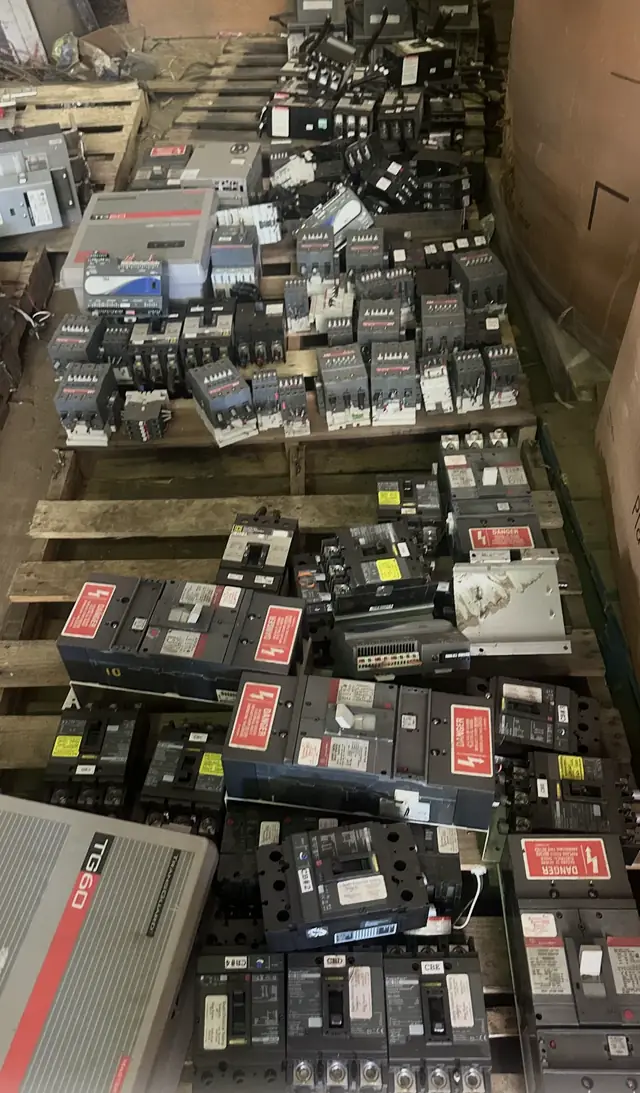
If you observe burning, exposed conductors, or structural damage, stop work and engage a qualified electrical professional. Follow current manufacturer instructions and the authority having jurisdiction. A submission to this site is not an appraisal, safety inspection, purchase order, or shipping authorization.
Why classification matters to sellers and buyers
CircuitBreakerBuyer reviews qualifying MCCBs, insulated-case breakers, and low-voltage power breakers for potential purchase. That review starts with accurate classification. When you label and document each unit correctly it shortens review time, reduces follow-up questions, and increases the chances a unit is considered for purchase review.
This page focuses on how to distinguish these broad families by observable nameplate fields, common functional characteristics, and catalog-style identifiers. Classification here is descriptive, not prescriptive: class alone does not determine whether a specific unit is acceptable for reuse or resale, and submission of items is not an acceptance, purchase order, or inspection.
What classification affects and what it does not
Accurate classification affects inventory grouping, test planning, and market matching. For example, buyers evaluating power distribution gear look for consistent frame sizes, interrupting capabilities, and compatible trip units. Mislabeling an insulated-case breaker as a molded-case unit can lead to incorrect lot pricing and unnecessary technical questions during review.
Classification does not replace an operational test, a full laboratory inspection, or an on-site safety assessment. It is a first-step communication tool: clear class labels plus condition notes and photos let a reviewer estimate interest quickly and request specific tests or documentation if needed.
- Reduces follow-up questions during purchase review
- Groups like items into sensible lots for offers
- Does not certify safety, compatibility, or suitability for installation
Exact identification fields to capture and why they matter
Photograph and transcribe every readable field on the nameplate and nearby labels. Key fields that reviewers look for are model or catalog number, frame or ampere rating, trip unit type, interrupting or breaking capacity, number of poles, voltage rating, serial number, and manufacturing date or code. Capture the physical breaker frame with the nameplate in the same image so orientation and mounting features are visible.
If there is a separate electronic or adjustable trip unit, photograph the trip unit label and any removable modules. For electronic trip units, note firmware or calibration stickers if present. When fields are illegible, provide close-up photos and a short note describing dirt, paint overspray, or corrosion that affects legibility.
- Model/catalog number
- Frame or maximum ampere rating
- Trip unit type and adjustable ranges
- Interrupting rating and voltage
- Serial number and manufacture date
At-a-glance comparison (original)
The following compact comparison highlights typical, observable differences. These are descriptive tendencies sellers can use when sorting inventory. They are not definitive technical specifications for installation or acceptance; use nameplate data first when available.
Read across each row for quick differentiation. If a unit matches multiple cells, document both characteristics and include photos of the frame and trip unit for reviewer assessment.
- Attribute — MCCB — Insulated-case breaker — Low-voltage power breaker
- Typical ampere coverage — 0.1 A up to several thousand amps (frame varies) — Often covers mid-range amperes with larger frame options — Generally used in high-power distribution; higher frames and long-stroke mechanisms
- Interrupting capability — Moderate to high interrupting ratings depending on frame — Designed for higher interrupting ratings with bolted connections and larger contact mass — Highest interrupting capacities in industrial distribution panels
- Trip unit — Thermal-magnetic or electronic — Integrated thermal-magnetic or electronic with removable trip modules — Heavy-duty electronic or hydraulic-magnetic trip units for coordination
- Physical form — Modular molded housing or open-frame variants — Insulated housing with robust end terminals and bus connections — Large draw-out or fixed frames, often requiring switchgear mounts
- Markings and labels — Nameplate lists catalog and frame; may show tap ranges — Clear manufacturer trip-module markings and removable trip unit labels — Large nameplates, heavy duty serials, and switchgear assembly references
Terminology overlap and common sources of confusion
Manufacturers sometimes use overlapping terms for marketing or legacy product lines; a single product plan may be described differently in product catalogs, factory labels, and aftermarket listings. Words like 'insulated' or 'molded' appear in multiple families. When in doubt, rely on the exact nameplate model/catalog number and photograph the entire assembly so a reviewer can trace the designation.
Common confusion arises when a trip unit is removable and interchangeable across frames, or when a breaker has been mounted in third-party hardware. Note any visible modifications, adapter plates, or aftermarket labels. Explicitly describe modifications because a class name alone can be misleading if subcomponents were changed.
- Same catalog series may include both draw-out and fixed frames
- Removable trip modules can blur family boundaries
- Aftermarket adapters or retrofits require clear notation
How to organize lots and document condition for sale review
Group like-for-like: same model/catalog number, identical frame size, similar physical condition, and the same trip unit type. Keep each lot to a manageable size and include a lot manifest with serial numbers and quantities. Separate clearly damaged or non-functional units into their own lots and label them as such.
Condition notes should be honest and concise. Describe whether units power up (if safely verifiable), whether nameplates are legible, and list visible physical damage such as bent terminals or missing handles. Do not attempt energized tests unless performed by qualified electrical personnel and described as performed by such professionals in your submission.
- Group by catalog number and frame size
- List serial numbers and visible condition per unit
- Separate cosmetically damaged or mechanically altered units
Safety limits and what our purchase review is not
Stop and seek an appropriately qualified electrical professional if you find obvious electrical damage, burning, cracking, or missing insulation. Follow current manufacturer instructions for removal, handling, and storage, and do not perform or describe specialized electrical testing unless a qualified professional conducts it. Our purchase review focuses on documentation and observable condition; it is not a safety inspection or installation approval.
Submitting items for review is not an appraisal, offer, acceptance, or purchase order. We may request additional documentation, testing, or transport details after initial review. Do not ship units without explicit authorization, and do not present a submission as proof of fitness for service or compliance with any authority having jurisdiction.
- Qualified professionals should handle removal and energized testing
- Review is document- and photo-based; not an acceptance of safety
- Submission does not authorize shipment or disposal