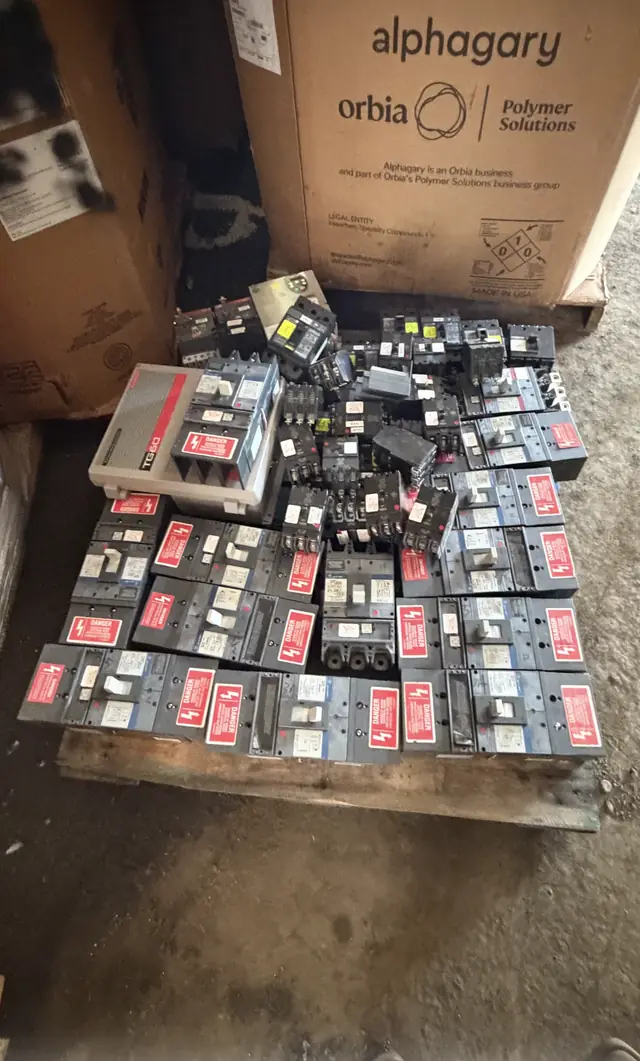
If you encounter burnt, melted, or cracked components, stop and document them. Do not perform energized testing unless you are a qualified electrical professional following manufacturer instructions and local authority guidance.
What we review and how we treat accessory items
We review qualifying trip units, rating plugs, shunt trips, undervoltage and auxiliary releases, operator mechanisms, internal lugs and other breaker accessories for purchase consideration. Accessories are attributes or field‑installable components of breakers — not universal breaker types — so we evaluate them on traceability, completeness, condition and commercial demand before making any purchasing decision.
Submitting these parts is appropriate when you need to sell circuit breaker trip units, rating plugs, or related accessories. Sending clear identification, original accessory labels and any host‑family records supports a faster initial assessment. Qualifying equipment may be submitted for purchase review; a submission is not an appraisal, inspection, acceptance, or purchase order.
- Trip units (electronic and thermal‑magnetic modules)
- Rating plugs and current‑limiting adapters
- Shunt trips, undervoltage releases, auxiliary contacts and handle ties
- Line and load lugs, bus adapters, draw‑out racking kits and mechanical field kits
Exact identification fields we need
Provide every label, tag and marking that identifies the part. Original accessory labels and the host breaker family record are the most helpful single items for rapid, accurate review. Without clear identification we cannot reliably determine demand or traceability, and you will likely receive follow‑up requests for more information.
When preparing a submission list these exact fields and include photos showing them: manufacturer name, part or catalog number, model or trip‑unit type, serial number (if present), date or lot code, AIC (interrupting rating) if printed, frame or host‑breaker family, and any firmware or revision references printed on the module. Also note whether the accessory was factory‑installed, field‑installed per manufacturer instructions, or removed from an enclosure.
- Manufacturer and OEM part/catalog number
- Trip unit model, type (electronic, thermal‑magnetic) and rating plug number
- Host breaker family, frame size and connection style (bolt‑in, draw‑out, plug‑in)
- Serial number or date code and any revision/firmware markings
- Original accessory label photos and the host breaker’s nameplate or family record
Honest, specific condition language and completeness
Accurate, specific condition descriptions reduce back‑and‑forth and support faster evaluations. Use plain terms such as new surplus, unused NIB (new in box), like‑new, serviceable, cosmetically worn, mechanically damaged, corroded, modified, or missing parts. Avoid generic phrases like “works” without supporting evidence; we may request operational history or test records for items described as functional.
Completeness matters. Identify whether mounting brackets, harnesses, pigtails, connector shells, cable clamps, or accessory covers are present. Also include owner‑acceptance evidence when available: surplus tags, decommission paperwork, purchase orders for replacement parts, or asset‑transfer records that show the accessory was removed and cleared by the equipment owner. This traceability helps establish provenance and improves marketability.
- Label items as new surplus, unused, like‑new, serviceable, or unserviceable
- List missing components and any field modifications or repairs
- Provide surplus tags, decommission records or owner transfer documentation when available
Useful photos and how to organize lots
Photographs are the fastest way for us to triage submissions. Provide clear, focused close‑ups of every identification label, the accessory mating surface, connector pins, and mounting points. Include wide shots that show the entire piece and its orientation, plus packaging if the item is new or boxed. If parts were removed from a breaker, include a photo of the original host breaker nameplate or family record when available.
Organize items into lots by identical part number, condition and completeness. For quantity listings add a representative photo for the lot plus a picture showing the total quantity (for example, a pallet or organized tray). Label lot photos with the count and the specific part number so reviewers can confirm quantity and consistency without requesting more images.
- Close‑up of original accessory label and serial/date codes
- Full‑view showing part orientation and overall condition
- Mating surfaces, connector details and any harnesses or mounting hardware
- Wide shot showing full lot or quantity with a reference object for scale
Safety limits, visible warning signs and professional handling
Do not perform energized testing or attempt installations to verify condition unless you are a properly qualified electrical professional and you follow the original manufacturer’s instructions and the authority having jurisdiction. If you see burnt contacts, melting, exposed conductors, cracked insulating bodies, or extensive corrosion, stop and document the damage with photos; do not attempt repairs unless performed by a qualified service provider.
We consider visible safety risks as part of our review — evidence of overheating, contamination, aftermarket modifications that affect isolation, or missing insulation is material to condition and value. If you suspect an accessory was exposed to a fault or arc event, preserve related breaker family records and any incident reports; do not ship potentially compromised items without contacting us first, and consult a qualified electrical professional for removal and safe handling.
- Stop and document if you find burnt or melted components
- Follow manufacturer instructions and use qualified electricians for energized work
- Do not ship items with visible internal damage unless requested by us
How commercial fit and market acceptance affect review
Compatibility with a host breaker family is only one factor in a buying decision. We evaluate commercial fit based on demand for the specific accessory, traceability to an OEM or documented replacement program, overall condition and the presence of original labels and host‑family records. Even correctly marked parts without provenance can be unacceptable for purchase if they show undocumented modifications or missing critical components.
Examples of favorable submissions include OEM rating plugs and trip units with intact labels, documented host breaker family records and complete harnesses. Less marketable submissions include unlabeled modules, parts with non‑OEM markings, or incomplete kits lacking fasteners or electrical interfaces. Qualifying equipment may be submitted for purchase review; final acceptance may depend on this commercial assessment and any technical review.
- High value: OEM‑labeled trip units with host‑family documentation and full harnesses
- Lower value or rejected: unidentified modules, undocumented modifications, or incomplete mounting hardware
- Demand varies by part number, frame, and regional serviceability needs
How to submit items and what to expect after you submit
To begin, prepare a submission with a checklist: part numbers, condition notes, original accessory label photos, host breaker nameplate or family records, quantity and proof of owner acceptance if available. Upload photos and the checklist using the contact form or the submission portal. A clear, organized submission reduces follow‑up questions and supports an efficient initial evaluation.
After we receive a submission, we perform an initial review and may request additional photos, documentation, or a sample. Submissions may undergo technical and buyer review before any purchase is considered. Note: a submission is not an offer, appraisal, safety inspection, compatibility determination, purchase order, pickup commitment, or shipping authorization.
- Include original accessory labels, host‑family records and owner‑acceptance evidence when available
- Organize identical items into labeled lots with representative photos
- Expect requests for additional info or a sample; submissions may undergo technical and buyer review