Equipment we review
- Eaton BR and CH branch-breaker families
- Series C, Series G, and Power Defense MCCBs
- Westinghouse and Eaton Magnum power breakers
- Documented legacy Cutler-Hammer, Westinghouse, and Bryant equipment
Submit original manufacturer‑marked Eaton, Cutler‑Hammer (Series C), Westinghouse and Bryant (Magnum) breakers for purchase review. Learn how to identify, document and organize lots so they can be evaluated accurately.
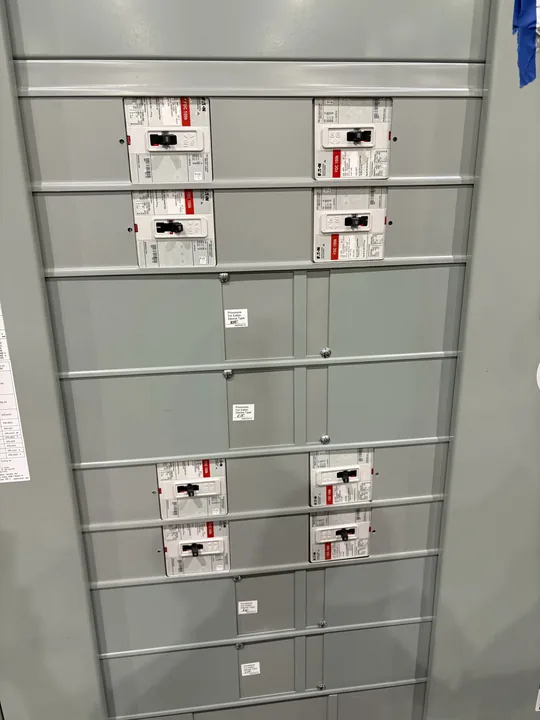
We review qualifying Eaton, Cutler-Hammer, Westinghouse, and Bryant circuit breakers across current and legacy families, including documented BR, CH, Series C, Series G, Power Defense, and Magnum equipment. Exact labels and family history are required because the names span many generations.
Eaton, Cutler-Hammer, Westinghouse, and Bryant labels can reflect different eras and product families.
BR, CH, Series C, Series G, Power Defense, and Magnum are not one interchangeable category.
Original labels, date codes, revisions, and documentation help resolve legacy naming.
Quantity, model consistency, completeness, condition, packaging, and demand shape the decision.
Circuit Breaker Buyer reviews qualifying Eaton, Cutler-Hammer, Westinghouse, and Bryant families when the exact labels and condition are documented.
No assumption should be made from the brand alone. Keep families separate and document each exact catalog number and marking.
Qualifying documented legacy units may be reviewed, but age, family, identity, completeness, condition, demand, and safety concerns all matter.
Stop and check for visible damage, recalls, or unsafe conditions before handling. Follow current manufacturer instructions and use appropriately qualified electrical professionals and the authority having jurisdiction for any removal, testing or installation.
We review qualifying Eaton, Cutler‑Hammer, Westinghouse and Bryant breakers for possible purchase. Submissions that align with the current review scope and include clear documentation move forward to purchase review; submission is not an acceptance or offer. Provide accurate identification and straightforward condition details so the evaluation can be completed efficiently.
This page provides seller guidance for identification, documentation and lot preparation. It is informational and not an endorsement, authorization, or instruction on installation or compatibility. Use the sections below to understand exactly what details to include, what photos help, and how to organize lots for a smoother commercial evaluation.
The current review scope for this page includes Eaton, Cutler‑Hammer (original Series C examples), Westinghouse, and Bryant (Magnum examples). We review original manufacturer‑marked molded‑case, bolt‑on, and similar breaker types from these families when they meet our documentation and condition requirements. Rebranded or privately relabeled units without verifiable original markings are not considered.
Examples referenced here are illustrative of families we evaluate; inclusion on this page does not imply authorization or endorsement by the manufacturers. Sellers should present the original nameplate or catalog marking and any factory date codes or lot stamps so family and model can be confirmed during review.
Provide the unit’s visible manufacturer name or logo and the full catalog or model number exactly as stamped or printed on the nameplate. Also include the ampere rating, frame size or frame marking, trip type (thermal‑magnetic, electronic trip, etc., only as marked), interrupting rating or AIC marking, and any date codes or lot stamps visible on the breaker body or label.
If a breaker has factory modification tags, aftermarket stickers, or partial labels that obscure original information, disclose that in the submission and show clear photos of the affected area. Missing or altered nameplate information slows review and may result in a conditional request for more evidence instead of a purchase review outcome.
Describe condition using straightforward categories: New‑in‑box (original sealed packaging), New surplus (unused but not in original sealed packaging), Used functional (previously installed and appears to operate normally), Used non‑functional (visible mechanical/electrical failure or known to be unserviceable), and Damaged/unsafe (burn marks, cracked insulation, exposed conductors). Disclose visible damage, previously repaired components, missing parts, or any evidence of internal overheating.
We do not perform on‑site safety inspections or compatibility checks as part of an initial submission. Do not include energized testing steps in your description. If you know units are subject to a manufacturer recall or service action, disclose that information and provide the manufacturer recall or replacement table reference if available.
Include clear, well‑lit photos that show the breaker’s nameplate or label, the front and side profiles, the connection terminals, the trip mechanism area, and any damage or modification. One close‑up of the full model/catalog marking and one overview photo of the lot (if multiple items) are required. Avoid photos that hide markings with tape, marker, or dirt—clean the area gently to reveal original printing before photographing.
Organize lots by family and by identical catalog number. For mixed lots, create separate groups by manufacturer and model. Label each group in your submission and include a brief count and condition summary for each group. Proper organization reduces back‑and‑forth and helps support a faster commercial evaluation.
Commercial buyers typically look for lots with clear provenance (original markings and date codes), consistent condition, and useful quantities. Larger numbers of identical, serviceable breakers from the same family and model attract more interest. Older mixed lots or units with unclear markings can still be reviewed but often require additional documentation and may have limited commercial appeal.
Factors that influence buyer interest include commonly used ampere ratings, intact nameplates, absence of visible thermal damage, and demand patterns for the manufacturer family. Document factory packaging when available, and note any accessory parts such as handle ties or mounting hardware that accompany the breakers.
If you believe any unit may be subject to a manufacturer recall, service bulletin, or replacement program, disclose that immediately in your submission and provide the exact manufacturer recall or replacement table reference if you have it. Sellers are expected to identify such issues in writing so they can be considered during review. We may consult manufacturer recall/replacement tables and other relevant sources as needed for purchase evaluation.
Replacement and compatibility statements must follow manufacturer‑provided tables and guidance. We do not make installation, replacement, or compatibility determinations on this page. Challenger‑related safety content is handled separately and is not combined with the families listed here. Always stop and refer to original manufacturer instructions and use appropriately qualified electrical professionals and the authority having jurisdiction for installation and safety decisions.
To submit for review, prepare a single submission per lot group with the required identification fields, condition summary, and the photo set described above. A website submission is a request for purchase review only. It is not an appraisal, offer, acceptance, safety inspection, compatibility determination, purchase order, pickup commitment, or shipping authorization.
Include contact details and any provenance or purchase documentation you have. After you submit, we may request additional information. Providing complete, honest documentation up front reduces delays and helps support a thorough commercial evaluation.
Gather the identification details, condition notes, and photos described on this page and submit your lot for purchase review. We review qualifying items for purchase; complete submissions get faster evaluation.