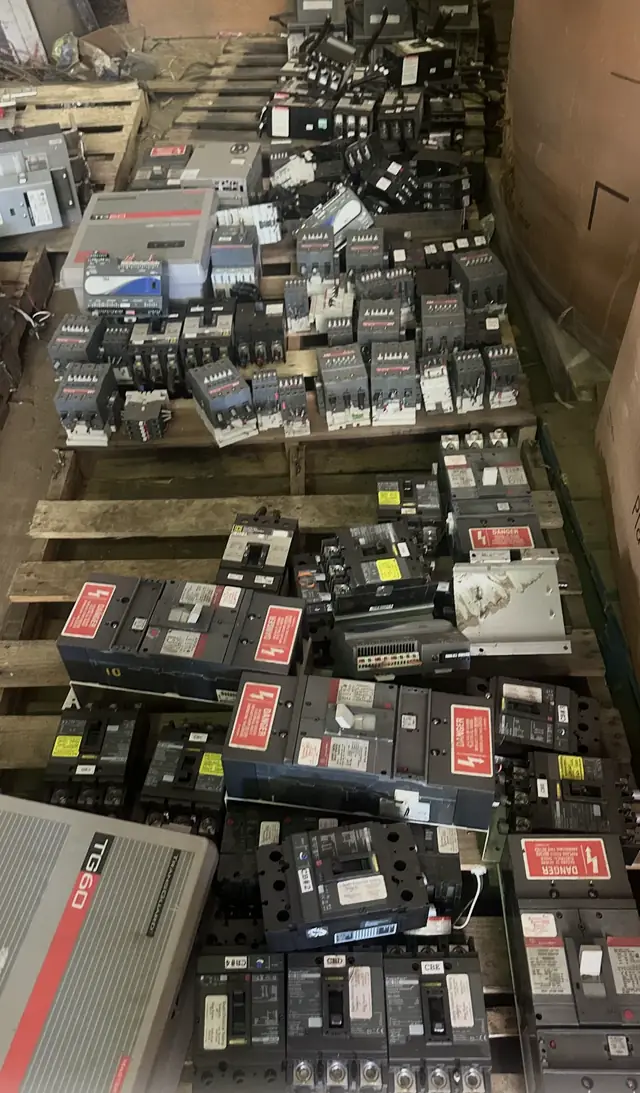
If a breaker shows signs of overheating, oil leakage, broken handles, or altered nameplates, stop and involve a qualified electrical professional. Submitting items for review is not a safety clearance or purchase commitment.
What we review and why original Series G labels matter
We review qualifying Eaton Series G molded-case circuit breakers for potential purchase. Submissions that retain original Series G labels and readable nameplates allow faster identification and a more accurate purchase evaluation. Retaining original labeling helps confirm model family, trip type, and any factory-applied options without relying on partial or ambiguous markings.
Submitting units for review does not guarantee purchase. Each submission is reviewed against our current scope and identification references; a unit may be declined for reasons including missing labels, evidence of unsafe alteration, or mismatch with the Series G family. No affiliation with Eaton is implied and no product authorization is claimed—this is a buyer review process for surplus, used, and serviceable units that meet stated identification and condition expectations.
- We accept submissions for review for Series G family breakers bearing EG, JG, LG, NG, or RG prefixes.
- Original Series G nameplates and intact label fields speed the review.
- Submissions without labels may still be reviewed but typically take longer and carry higher uncertainty.
Exact identification fields to include
Provide complete identification details from the breaker’s nameplate and any adjacent labels. Precise identification fields are essential to distinguish Series G breakers from other Eaton or aftermarket products and to determine whether the unit falls within our scope for purchase review.
If a nameplate is partially obscured, include high-resolution images and a written transcription of every legible field. Submitted data is compared to current Series G references during review; the clearer and more complete the identification, the fewer follow-up questions and the faster a potential purchase can be evaluated.
- Model or type designation (full string as shown on the nameplate)
- Frame or catalog number, if present
- Trip unit type (e.g., thermal-magnetic, electronic) as listed
- Interrupting rating and listed voltage
- Serial number, date code, and any factory option codes
Honest condition language we need
Use straightforward, objective condition descriptions. Describe whether the breaker is new surplus, installed but removed, used with unknown function, or parts-only. Avoid subjective value statements; instead report observable conditions such as mechanical damage, corrosion, oil stains, or evidence of arcing.
Units in a broad range of commercial conditions may be submitted for review, but condition affects value and acceptability. Units marked “tested functional” are reviewed differently from “untested” or “parts only” items. Be explicit about what testing, if any, was performed and by whom. Do not represent a submission as safety-checked unless a qualified electrical professional performed an inspection following current manufacturer instructions.
- New surplus (uninstalled) — note original packaging if available
- Removed-in-good-order — list last known service context if known
- Untested used — specify removal reason if known, e.g., retrofit
- Parts-only or visibly damaged — describe damage clearly
Photos and documentation that speed review
Photographs are the most helpful element you can provide. Include crisp, well-lit images of the front faceplate, the full nameplate, the rear or terminal side, any trip unit, and close-ups of serial numbers or date codes. Photos that show the entire unit in scale (with a ruler or coin for reference) reduce ambiguity.
Attach any available documentation such as manufacturer instruction sheets, original purchase invoices, maintenance tags, or test records. If you reference the current Series G catalog for option codes or frame definitions, include the relevant excerpt or a clear note. Do not submit documents that imply manufacturer authorization or misstate origin.
- Front face and handle position (wide shot and detail)
- Close-up of the full nameplate and all stamped fields
- Rear / terminal side showing lug condition
- Any trip unit or auxiliary device labeling
- Related paperwork: instruction sheet, test tag, maintenance record
How to organize lots and prepare commercial submissions
Organize similar breakers into lots by part number family, condition, and label completeness. Grouping like units together (same model prefix, same condition) shortens review time and clarifies commercial fit. Clearly mark lot quantities and provide a single point of contact for lot-level questions.
When preparing items for transport, crate and package units to help prevent damage. Packaging guidance is distinct from acceptance: submitting items or preparing them for shipment does not constitute a purchase order or authorization to ship. Arrange any transport only after receiving confirmation and instructions from the buyer you are working with.
- Create lots by exact model designation and condition tier
- Provide quantities and serial number lists where available
- Label pallets or crates with lot ID and a simple contents list
- Do not ship without receiving buyer confirmation and instructions
Safety limits, red flags, and legal disclaimers
Stop and seek a qualified electrical professional if you observe burnt insulation, a rotten-egg or chemical smell, oil stains, broken handles, or modified trip mechanisms. No electrical or installation guidance is provided here; follow the manufacturer’s instructions and consult the authority having jurisdiction for any removal or handling involving energized equipment.
A submission is not an appraisal, offer, acceptance, safety inspection, compatibility determination, purchase order, or shipping authorization. All reviews are conditional and subject to verification. Submitted information and images may require additional documentation or inspection before any commercial transaction is considered.
- Red flags: missing or altered nameplate, smoke/heat damage, evidence of internal arcing
- Do not submit units with unknown contaminant exposure without declaring it
- All safety or operational determinations require qualified personnel and manufacturer instructions
How to submit for review and what to expect next
To begin, gather identification fields, condition notes, high-quality photos, and any supporting paperwork and upload them via our submission form or email contact. Include lot organization details and your preferred contact information. Submissions that include original Series G labels and clear nameplate photos typically move through review more quickly.
Our review process may include technical, commercial, and legal checks. This page is intended to provide general identification and safety-limits guidance. Receipt of your submission initiates a conditional review; it does not create a contract. If a potential purchase is considered, we may request verification steps and provide next instructions specific to the lot under consideration.
- Include full nameplate transcriptions and serial number lists where possible
- Attach clear photos and any test or maintenance records
- Organize like models into single lots and note quantities
- Expect follow-up questions; final decisions are conditional on verification