Stop and seek a qualified electrical professional if you find signs of overheating, burning, severe corrosion, or structural damage. Follow current manufacturer instructions and local authority requirements before testing or reinstalling equipment.
How we review Siemens QP-family breakers
We review qualifying Siemens QP, QPH, HQP and QS breakers for potential purchase. That means we look for original manufacturer identification, intact nameplate ratings, and clear condition reporting before a buyer decides whether to extend an offer. Submitting items starts a purchase review; it is not an automatic sale or acceptance.
This page explains exactly what helps us evaluate QP-family equipment faster: where to find original labels, which rating fields matter most, how to photograph and group parts, and the condition descriptions that reflect commercial resale or reuse limits. Use the guidance here to speed evaluation and avoid unnecessary delays.
What we review: series and limits
We accept submissions of Siemens-labeled QP, QPH, HQP and QS circuit breakers and accessories where original markings are present. Examples include molded-case circuit breakers in the QP family, QPH versions with higher frame ratings, and HQP or QS variants as marked by the manufacturer. Items without original Siemens, ITE, or Murray identification are harder to evaluate and may be declined.
We do not offer blanket purchase commitments for every item in these series; qualifying equipment may be submitted for purchase review. The presence of an original label and readable rating fields is a primary criterion; without that, a buyer may decline or request further inspection, which can reduce value or prevent purchase.
- Siemens, ITE, or Murray original nameplate required
- Molded-case breakers, accessories, and matching handles/frames considered
- Damaged, unlabeled, or heavily modified devices are less likely to qualify
Exact identification fields we need to see
The single best piece of evidence for a QP-family breaker is the original label or nameplate. On that label we rely on exact fields rather than model interpretations: catalog or catalog number, ampere rating (A), pole count, frame size, interrupting rating commonly shown as kA or kAIC, trip style or trip unit, and any manufacturer date code or lot marking. Photograph and list these exact fields; they are the primary ratings sources for our review.
If a breaker carries a secondary marking—such as an ITE or Murray cross-reference—capture that too. Where separate components are present (stabs, handles, auxiliary switches), photograph their part numbers and markings as well. Exact label information reduces back-and-forth and prevents mistaken assumptions about rating or intended application.
- Catalog number (exact characters) — the primary identifier
- Ampere rating and pole count (e.g., 2-pole, 3-pole)
- Interrupting rating (kAIC) and frame size
- Trip type/trip unit identification and any factory date code
Condition descriptions we expect — speak honestly
Describe condition precisely. Useful categories are new-old-stock (unused with original packaging and labels), like-new (installed briefly, fully functioning, minimal wear), serviceable used (operated in service but with normal wear), and defective/damaged (mechanical damage, missing parts, or corrosion). Avoid vague terms such as “works” without supporting photos or testing information; a seller’s description should match visible evidence.
Report signs that affect safety or commercial reuse: melting, smoke marks, severe corrosion, cracked housings, broken trip levers, or missing nameplates. If the item was removed from a live panel due to a fault, stop and confirm that a qualified electrical professional handled any removal; do not provide technical removal instructions. These conditions usually reduce marketability and may preclude purchase.
- New-old-stock: original packaging and intact label
- Like-new: minimal wear, full label legible
- Serviceable used: functional but shows wear; note any repairs
- Damaged/defective: photo and honest description required
Photos and lot organization that speed appraisal
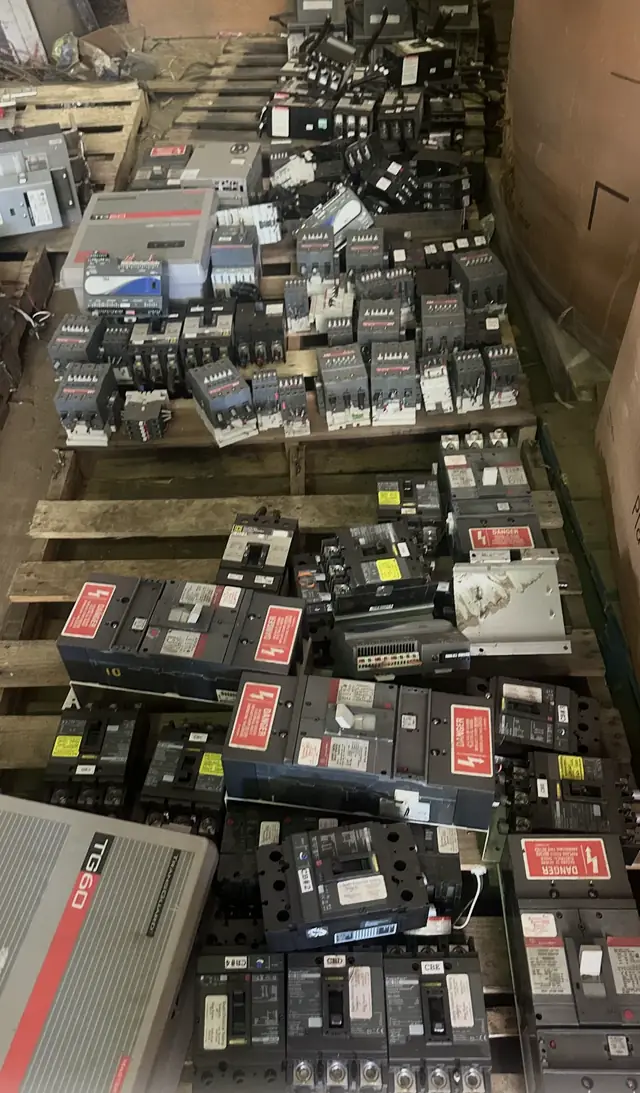
Provide clear photos showing both sides of the breaker, close-ups of the label/nameplate, pole faces/stabs, trip lever, and any accessory parts. A single overview photo of the lot helps, plus one labeled close-up per distinct part number or condition class. Good photos eliminate guesswork and reduce the need for return questions.
When submitting multiple items, group like units into lots and give each lot a short identifier (Lot A, Lot B). For mixed lots include a count and a short summary of the label fields represented. Well-organized lots with consistent photos and counts let a buyer form a quicker and fair decision.
- Full unit front and back
- Close-up of original nameplate and catalog number
- Close-up of stabs/terminals and trip lever
- One overview photo per lot plus labeled close-ups
Commercial fit and valuation factors we consider
Value is based on exact label ratings (ampere, kAIC, frame), demand for the specific catalog number, condition, and volume. Breakers with complete original labels and common commercial ratings in good condition are easier to evaluate. Rarer catalog numbers or those with unclear markings may require additional inspection and typically draw lower offers or be passed on.
Accessories, original packaging, and larger consistent lots can increase buyer interest. Conversely, items showing field modification, missing nameplates, or electrical damage reduce the chance of purchase. We use the original nameplate and label information as the primary source for ratings rather than assumptions from appearance alone.
- Original label ratings are the primary valuation source
- Consistent lots and accessories can increase interest
- Missing or altered labels reduce market value
How to submit — the next step
To start a review, prepare photos, a short lot list with catalog numbers and counts, and an honest condition summary. Submitting does not constitute an appraisal, offer, acceptance, safety inspection, or shipping authorization. After we review your submission a buyer may request more photos, clarification, or an inspection before any formal offer.
If you need help identifying label fields before submission, collect readable photos and a buyer will help interpret visible nameplate data as part of the review. For safety reasons, stop and consult a qualified electrical professional if you see evidence of overheating, smoke damage, or other hazardous conditions before handling or moving the parts.
- Prepare photos and a concise lot list with exact catalog numbers
- Provide truthful condition descriptions and highlight defects
- Submit items to begin a purchase review — no offer is guaranteed