Equipment we review
- Siemens QP, QPH, HQP, and QS families
- SENTRON 3VA molded-case breakers
- SENTRON 3WA and 3WL air breakers
- Documented legacy I-T-E and Murray breakers
Submit qualifying circuit breakers for purchase review. Provide original product labels, clear photos, and any recall or successor documentation to speed evaluation. A submission is not an offer or acceptance.
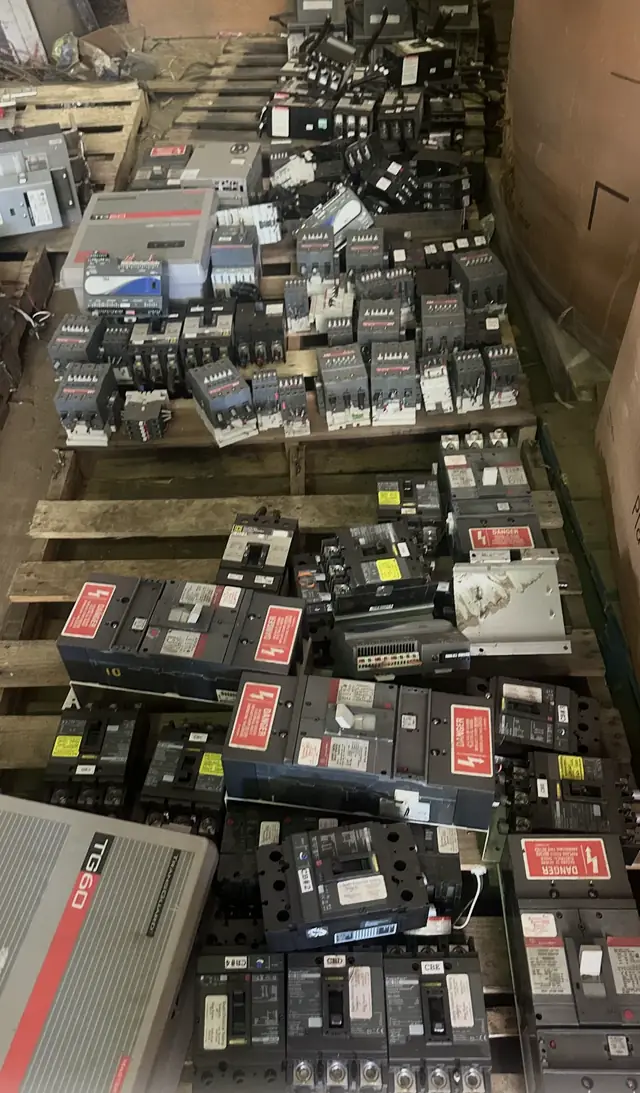
We review qualifying Siemens, I-T-E, and Murray circuit breakers, including documented QP-family branch breakers, SENTRON molded-case and air breakers, and selected legacy equipment. Complete original markings are required because brand history alone does not prove model identity or compatibility.
Branch, molded-case, air, and legacy families require different identification details.
I-T-E or Murray naming should be documented from the actual item, not inferred from appearance.
Trip units, cradles, mounting hardware, accessories, and packaging can affect commercial fit.
Accurate counts and consistent model groups reduce uncertainty in mixed lots.
Circuit Breaker Buyer reviews qualifying Siemens, I-T-E, and Murray equipment nationwide when exact labels, quantity, condition, and photos are supplied.
Qualifying model-consistent lots may be reviewed. Include every suffix, pole and amp rating, packaging status, count, and label photo.
No. Historical brand relationships do not establish a listed replacement or compatible installation. Use current manufacturer documentation and qualified review.
This page does not provide installation, testing, or removal instructions. Follow the manufacturer’s current instructions and use appropriately qualified electrical professionals and the authority having jurisdiction when handling electrical equipment.
We review qualifying Siemens, I‑T‑E and Murray circuit breakers for possible purchase. This page explains the identification fields, label evidence, condition descriptions, lot organization, and the specific recall or successor documentation that helps determine whether an item appears to meet our current purchasing criteria.
A submission to our site initiates a non-binding review only. Submitting photos, labels and documentation makes review faster, but submitting items does not guarantee a purchase, pickup, payment timing, or acceptance. The review outcome is conditional and depends on the information you supply.
We accept submissions of seller-marked equipment from the Siemens, I‑T‑E and Murray families for purchase review when the items appear to align with our current purchasing criteria. These criteria describe the models, label formats, and documented histories we are currently prepared to evaluate. If your equipment falls outside these criteria, it may still be submitted, but expect additional follow-up and a slower review.
Common manufacturer-marked family names and legacy labels that can accelerate review include QP, Q‑Line, 3VA, 3WA and other legacy I‑T‑E or Murray labels. Listing these family names here is for identification only and does not imply interchangeability, compatibility, or any manufacturer endorsement. We require the original product labels or equivalent manufacturer markings to verify eligibility against our current criteria.
To evaluate a breaker quickly, provide clear, legible images and the exact label fields. Include the catalog or part number, frame size, amp rating, trip curve/type, trip unit number (if printed), serial or date code, and any UL or other safety agency markings visible on the product label. Original QP/3VA/3WA or legacy manufacturer labels are especially useful during verification.
If the breaker has accessories or non-original mounting hardware, photograph those attachments separately and note whether they were factory-installed or added later. Avoid removing permanent labels to improve legibility; instead photograph them as found. The more complete and accurate the identification fields, the fewer questions will be needed during review.
Use clear, factual condition descriptions rather than ambiguous or subjective terms. Describe whether the item is new-surplus in original packaging, installed-removed with last known operating status, tested by a third party (identify the tester but do not claim results), or sold as parts-only. Note any visible damage such as corrosion, cracked housing, burn marks, missing handles, or broken tripping mechanisms.
Include dates and simple service history where available, for example the last documented maintenance or decommission date. If a breaker was removed because of a suspected fault, disclose that. Honest, specific condition statements reduce the likelihood of later clarification requests and make review faster and fairer.
If you’re offering multiple breakers, group them by exact catalog/part number and label condition. Create a simple manifest that lists item quantity per part number, visible serial or date-code ranges, and a primary photo for each SKU. Packing similar items together and labeling boxes with a part number reduces handling and speeds evaluation for commercial sellers.
For mixed lots, include a lot-level summary and attach representative photos for each line in the manifest. If items are not yet separated, describe approximate counts and explain whether serials or date codes are available. Clear lot organization and a concise manifest enable faster confirmation against our current purchasing criteria.
If you have manufacturer recall notices, service bulletins, or official successor-part documentation that relates to the units you’re selling, attach scanned copies or legible photos. Original product labels (for example QP, 3VA, 3WA or other legacy markings) combined with any relevant recall or successor documentation enable a focused review against current purchasing criteria and help clarify traceability.
Providing this documentation does not imply a recall has been cleared or that the item is automatically acceptable. Any recall or successor evidence will be considered as part of the evaluation. Please do not alter manufacturer documentation; submit the originals or clear scans so the exact statements and dates can be reviewed.
After you submit photos, a manifest and documentation, we review the submission under a conditional, non-binding process. We may request clarification, additional photos, or shipping details before providing a non-binding purchase quote. A submission is not an appraisal, acceptance, purchase order, shipping authorization, or payment guarantee.
If the item(s) appear to meet our current purchasing criteria and the information is confirmed, we will follow up with next steps. If additional documentation is required, expect questions about labeling, quantity, date codes, or recall/successor evidence. Clear initial documentation reduces back-and-forth and shortens the review timeline.
Do not attempt energized testing, removal, installation, or any work on live electrical equipment unless you are a qualified electrical professional authorized by the authority having jurisdiction. If an item shows signs of overheating, arcing, smoke, or structural compromise, stop and document the condition with photos. Always follow the manufacturer’s current instructions and use appropriately qualified personnel for any handling or testing.
When you’re ready, prepare clear photos of product labels, a simple manifest for lots, and any relevant recall or successor documentation, then submit through our contact form. Submitting materials starts a non-binding review under a conditional process. We will review the documentation and reply with any follow-up questions or a potential quote.
Ready to submit? Gather clear photos of the product label, a manifest for quantities, and any recall or successor documentation. Use the submission form to start a non-binding review under current purchasing criteria. A submission does not guarantee purchase.