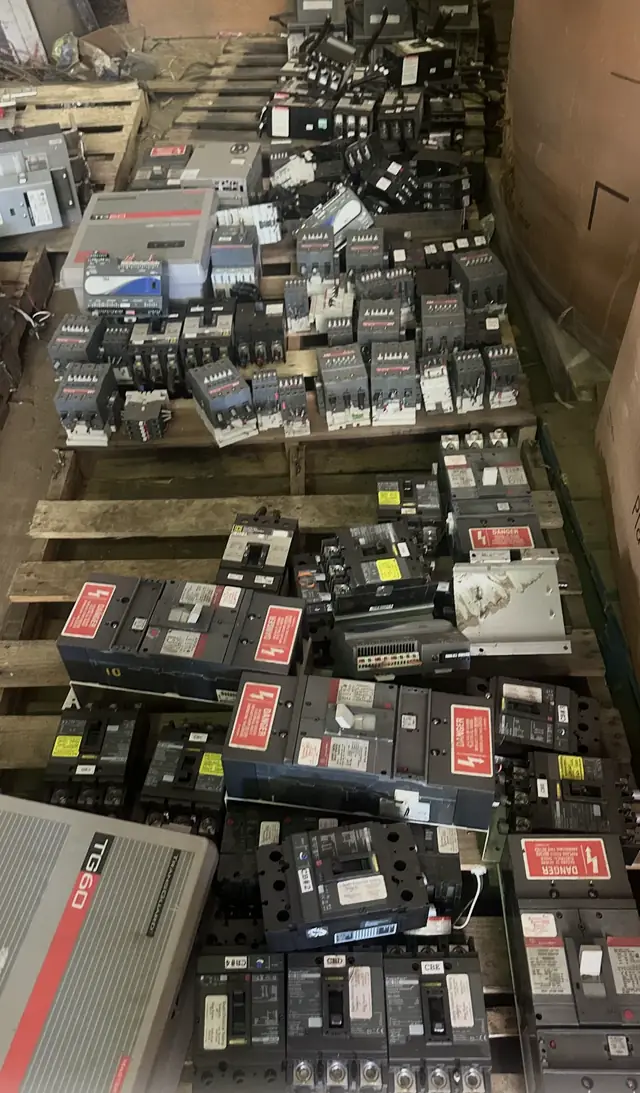
Do not energize or attempt live tests unless performed by qualified electrical professionals. Stop if you find charring, oil, or mechanical damage and document those conditions for your submission.
What we review and why ICCBs are a distinct category
We review qualifying insulated‑case circuit breakers (ICCBs) for purchase consideration. Submissions that meet our documentation and condition guidelines receive an initial screening; qualifying equipment may be invited for further evaluation. This page is specific to ICCBs — factory‑separable trip units, insulated enclosures, and draw‑out cradles that are common in low‑voltage power distribution — and explains the fields and evidence helpful for assessing commercial fit.
ICCBs are different from molded case or power circuit breakers in construction and commercial treatment. Because ICCBs often include interchangeable trip units, factory cradles, and removable accessories, accurate identification and clear photos let us assess reuse and parts value without initial in‑person inspection.
- We review submissions for conditional purchase; not every submission leads to a purchase.
- Clear nameplate and cradle photos help speed initial screening.
- ICCBs are a separate category due to removable trip units and accessory value.
How to identify insulated‑case circuit breakers
Key identification fields are the breaker nameplate, frame designation, trip unit model, interrupting rating (kAIC), rated current, and whether the breaker is fixed or draw‑out (cradle). Capture the full nameplate including manufacturer, model or catalog number, electrical ratings, and serial number. If the breaker uses a replaceable trip unit, photograph the trip unit label as well as the frame label — both contribute to valuation.
Other helpful details include the presence of the original draw‑out cradle or transfer carriage, accessory modules (electronic trip, shunt trip, auxiliary switches), and any factory tags or stickers. When model series may be visually similar across manufacturers, an undistorted close‑up of the label is often the deciding factor for preliminary acceptance.
- Photograph the complete nameplate and a close crop of the model/serial fields.
- Note frame size and whether the trip unit is removable or integral.
- Show cradle part numbers or stamped identifiers where present.
Honest condition language and common defects to flag
Use precise, non‑judgmental condition language when describing ICCBs. Helpful terms include “cosmetic rust or paint loss,” “mechanical draw‑out action intact,” “trip unit present but untested,” or “missing accessory(s) listed.” Do not assert that equipment is safe to operate or that it meets any code or performance standard; state only what you can observe and document.
Call out visible damage and warning signs. Examples that warrant caution include bent frames, cracked insulating covers, burned or pitted contacts, missing handle latches, or heavy corrosion on the cradle rails. If a breaker shows oil, charring, or melted plastics, stop and note those signs in the submission; those conditions materially affect safety and commercial value.
- Describe mechanical action (e.g., draw‑out movement) but do not claim functional testing unless documented.
- Flag missing trip units, broken trip levers, or detached accessories.
- Note environmental damage such as corrosion, water intrusion, or fire exposure.
Volume and value evidence we use for review
Provide documentation that supports lot size and provenance to speed evaluation. Useful documentation includes asset inventories showing counts and serial ranges, original purchase invoices, equipment disposition lists, and maintenance or refurbishment records that reference model and serial numbers. Photographic evidence that shows multiple units in the same condition is valuable when you offer a lot.
Original crates, factory cradles, or bulk packaging photos are helpful because they demonstrate handling and storage. We do not require every piece of paperwork up front, but clear indication of volume and origin helps determine whether additional review steps are appropriate. Submissions without supporting evidence may require more questions before a preliminary decision.
- Inventory lists with model numbers and serial ranges accelerate lot review.
- Photographs of multiple units together show consistency of condition across the lot.
- Original cradles or factory packaging examples can increase commercial interest.
Technical distinctions that affect commercial value
Understand the difference between frame size and trip unit ratings. Two breakers can share a frame but have different electronic or thermal trip modules; trip modules are frequently the higher‑value component because they can be reused or sold separately. Fixed ICCBs and draw‑out designs also carry different market value due to interchangeability and handling characteristics.
Interrupting rating, trip type (thermal‑magnetic vs electronic), and accessory configuration (e.g., motor operators, communication modules) influence marketability. Brand and series matter: OEM‑marked units with intact nameplates and serviceable trip units are more likely to qualify for purchase review than unidentified or heavily modified assemblies. These distinctions help determine commercial fit for resale or parts markets.
- Frame vs trip unit: trip modules can have independent value.
- Draw‑out cradles broaden resale options.
- Accessories and communication modules can improve commercial fit.
How to photograph ICCBs for a fast, accurate review
Provide a set of clear, well‑lit photos: a full unit shot, a tight crop of the nameplate, images of the trip unit label (if separate), close‑ups of the cradle or draw‑out mechanism, and pictures that show any defects you reported. If offering multiple units, include a group photo that shows the lot and at least one representative close‑up from another unit to confirm consistency.
Avoid obstructed or heavily shadowed photographs. Use high resolution so text on nameplates is legible when zoomed. If original packaging or cradles are available, photograph the packaging labels and cradle identifiers; these often confirm part numbers that matter to buyers and reduce follow‑up questions.
- Essential photos: full unit, nameplate close‑up, trip unit label, cradle detail, and any defect evidence.
- Include a scaled reference (ruler or common object) when size may be unclear.
- Group shots of the lot demonstrate consistency across multiple units.
Safety limits, warnings, and required professional steps
Stop and seek professional help if you observe signs of electrical failure such as charring, melting, oil leaks, or a smell of burnt insulation. Do not attempt removal or energized testing unless performed by appropriately qualified electrical professionals following current manufacturer instructions and the authority having jurisdiction. Physical handling of ICCBs can expose stored energy or damaged insulation hazards.
When preparing equipment for shipment or inspection, use qualified personnel for de‑energized disconnection, labeling, and packaging. Our review is based on visual and documentary evidence; any onsite testing or disassembly should be performed by trained staff retained by the seller. We do not provide installation, removal, or safety advice beyond advising you to use qualified professionals and follow applicable manufacturer and local authority guidance.
- Stop and report if evidence of thermal damage, oil leakage, or smoke exists.
- Use appropriately qualified electrical professionals for disconnection and handling.
- Our review does not replace a safety inspection or in‑field testing by qualified personnel.
Next step: how to submit for review and what a submission is not
To begin, submit clear photos, an inventory or count, nameplate close‑ups, and any supporting documents that show lot provenance or purchase history. Include a short, honest condition statement and list of included accessories or missing parts. Submissions that meet our documentation criteria are eligible for preliminary review; qualifying equipment may be invited for follow‑up questions or additional evaluation.
A website submission is not an appraisal, offer, acceptance, safety inspection, compatibility determination, purchase order, pickup commitment, or shipping authorization. Submitting information for review does not obligate either party; further steps, including any inspection, testing, and agreement on terms, are required before any transaction or removal is considered.
- Submit: clear photos, inventory counts, nameplate close‑ups, and provenance documents.
- Expect follow‑up questions for lots with mixed conditions or incomplete documentation.
- Submissions do not create purchase or pickup commitments.