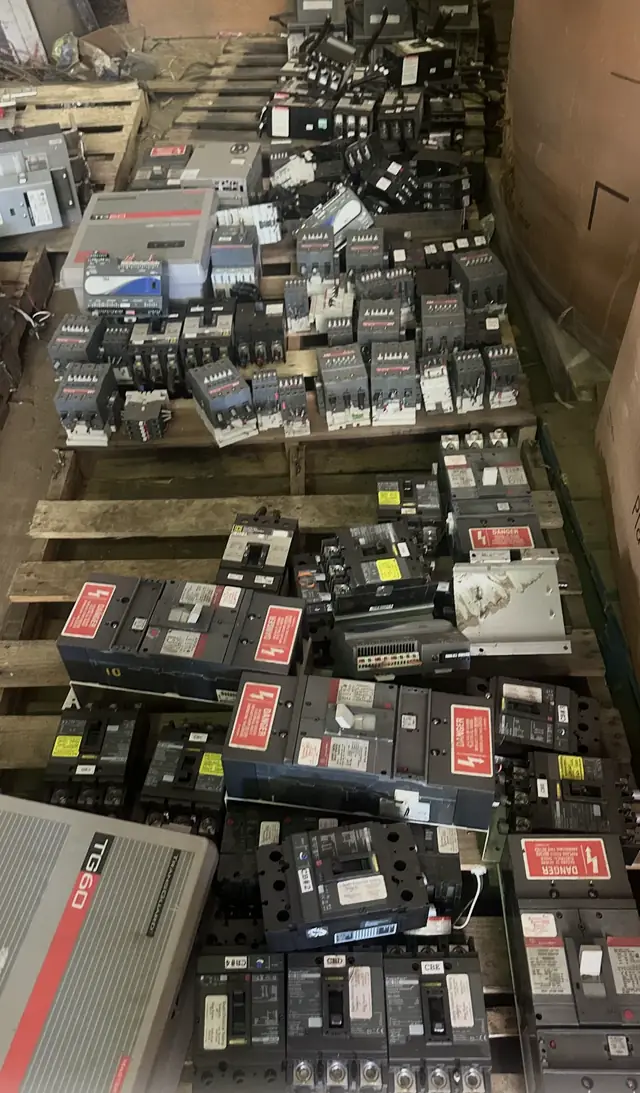
Stop if you observe leaking oil, hissing gas, damaged seals, or unknown pressurized ports. Do not open caps, valves, or sealed housings. Follow the breaker manufacturer’s current instructions, and use properly qualified electrical and environmental professionals and the authority having jurisdiction for removal, testing, transport and disposal. A website submission is not an inspection, purchase order, or authorization to handle regulated materials.
How we work with legacy medium‑voltage breakers
We review qualifying legacy medium‑voltage breakers for purchase consideration. This page is an identification hub: use it to determine how to document your equipment and which details matter during initial review. Submitting information starts a review process; a website submission is not an appraisal, offer, acceptance, inspection, purchase order, or shipping authorization.
Because legacy breakers cover several interrupting media and age ranges, initial review focuses on identification, condition, and known regulated materials. Legacy oil‑filled and SF6‑insulated breakers may require additional review before any purchase decision is considered. Do not assume oil or SF6 units will be accepted until that review is complete.
- Submit accurate nameplate photos and serial numbers for fastest review
- Document whether the breaker was factory new, installed and later removed, or in long‑term storage
- Flag any known oil or SF6 content at submission
Primary manufacturer history and why it matters for ID
Many legacy medium‑voltage breakers carry nameplates and type codes from manufacturers with long production histories. Knowing common makers and how they labeled equipment helps confirm ratings and service records during review. Recognizing typical nameplate locations and serial formats reduces back‑and‑forth and speeds evaluation.
Common historic manufacturers include large legacy names whose tooling and part numbering influenced later designs. Manufacturer names and model codes are identification aids only; they do not imply authorization, endorsement, or universal compatibility for every application. Record the manufacturer nameplate exactly as marked and include any auxiliary product labels or factory tags found nearby.
- Typical names often seen on legacy MV breakers include ABB, Siemens, GE, Westinghouse, and ITE; list the manufacturer exactly as shown on the nameplate
- Note factory tag fields: model/type, frame size, continuous amp rating, short‑circuit interrupting rating (kA), year of manufacture, serial number
- If a maker’s logo is missing or obscured, a clear close‑up of stamped castings, bus connectors, or nameplate rivet pattern can help identification
Identifying air‑magnetic, oil and SF6 breakers
Air‑magnetic breakers typically have visible contact assemblies and arc chutes and are often labeled as 'air' or 'air magnetic' on the nameplate. Oil breakers usually have oil reservoirs, sight gauges, or sealed housings with filler caps; the medium is indicated on some tags. SF6 breakers are usually enclosed in gas‑tight housings with pressure indicators, gas valve ports, or nameplate mention of sulfur hexafluoride. Always record nameplate wording rather than relying on external appearance alone.
Do not attempt any intrusive actions—do not open gas valves, drain oil, or remove seals—when identifying the medium. For gas‑insulated equipment, note gas pressure gauges and external valve locations in photos. For oil‑filled units, note filler caps, sight glasses, and any external piping. For air‑magnetic types, document arc interrupter shape and accessible trip assembly labels.
- Capture a full‑frame photo showing the breaker within its cubicle or frame to show context
- Provide close‑ups of the main nameplate, trip unit, and any filler or service ports
- List any tags, paint marks, or plant identification stickers and their exact wording
Honest condition descriptions sellers should use
Use precise, neutral condition language. Common categories that aid review are: new‑surplus (unused, original packaging), installed and safely removed (show removal documentation), used serviceable (operational prior to decommissioning), non‑functional or parts only, and contaminated (evidence of oil leaks, corrosion, or gas breaches). Describe operational history factually—don’t infer serviceability from external appearance alone.
When in doubt, include a brief chronology: installation date or year of manufacture, last known service or overhaul, and reason for removal. If repair records, overhaul tags, or factory test data (type and date) exist, submit copies. Avoid making claims about field compatibility or suitability for reuse; the review assesses commercial interest, not installation safety or code compliance.
- New‑surplus: indicate packaging intact and state storage conditions
- Installed and removed: provide removal date and who performed removal (licensed contractor or plant staff), if known
- Non‑functional/parts: list visible defects and whether internal components were removed
Photos, paperwork and lot organization that speed review
Organize items by model and condition before photographing. For single units, include a set of consistent photos: full unit in place, front nameplate close‑up, trip unit, connection points, and any filler or valve ports. For lots, group identical models together and label each piece with a temporary ID (photo of ID next to unit) so reviewers can refer unambiguously to an item in your list.
Provide available paperwork—factory data, maintenance records, dielectric or contact resistance tests if present, and MSDS for fluids or gases. If documentation about prior oil sampling or SF6 monitoring exists, include it. Do not provide hazardous samples or open equipment for testing; instead share laboratory reports or sealed‑unit documentation if available.
- Suggested photo set for each unit: overall, nameplate, visible connections, filler or valve area, and accessory or trip-unit labels visible without opening or disassembling the equipment
- Supply a parts list for non‑functional units and serial numbers where present
- Label lot sheets clearly with model, serials, quantity, physical dimensions and weight estimates
Regulated-material considerations for oil and SF6 equipment
Oil-filled and SF6-insulated breakers can involve environmental, transport, and liability requirements. When a submission indicates potential oil or SF6 content, additional environmental and transport review may be required before any purchase decision is considered. Do not assume these units will be accepted. When documenting, note any visible filler valves, sight gauges, pressure indicators, or nameplate descriptions of the interrupting medium.
These items may require additional documentation or third-party testing before any purchase consideration. Do not handle, transport, drain, vent, open, or dispose of equipment based on website information. Follow current manufacturer instructions and use qualified environmental and electrical professionals and the applicable authorities.
- Record the exact label language or visible indicators concerning oil or SF6 without disturbing the equipment
- Do not tamper with seals, valves, reservoirs, gauges, or gas compartments
- If available, include safety data sheets, prior test reports, environmental records, or qualified third-party documentation
Commercial fit and how to submit for review
Commercial fit is determined by the breaker’s model, condition, supporting documentation, quantity, and the results of any required environmental review. Submitting accurate lists and photos enables an initial commercial screening. Remember that submission is a request for review only; it is not an inspection, purchase order, or shipping instruction.
To start, prepare a lot sheet: list each unit with manufacturer/model, serial number, nominal voltage and continuous amp rating, physical condition category, and whether oil or SF6 is present. Attach the suggested photo set and any available service or test paperwork. After submission, you may receive confirmation and next‑step guidance. Do not dismantle or drain units unless directed by qualified environmental professionals and the authority having jurisdiction.
- Prepare a single PDF or spreadsheet with your lot sheet plus photos for the fastest response
- Requests for clarifying photos or paperwork may follow for equipment with oil, SF6, or uncertain environmental status
- Submission does not commit either party to a transaction; further evaluation and approvals are required