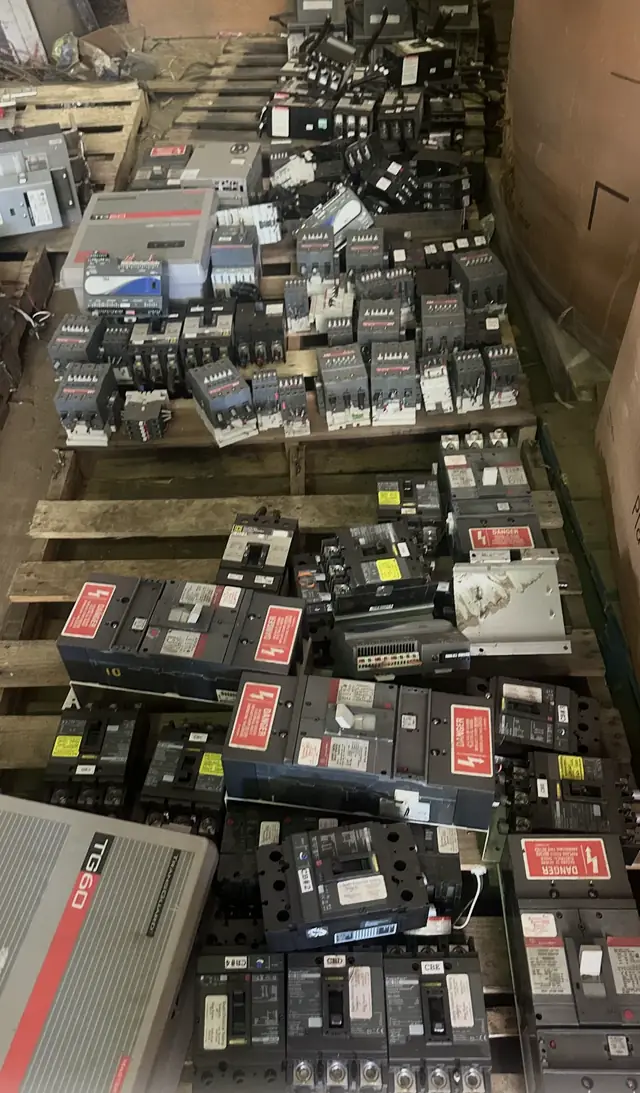
Stop and get help if you see burn damage, melted insulation, or stressed terminals. Follow current manufacturer instructions and use appropriately qualified electrical professionals and the authority having jurisdiction for any removal, testing, or installation. Do not rely on photos alone for safety decisions.
Why we buy motor circuit protectors and motor-protection breakers
Motor circuit protectors (MCPs) and motor‑protection breakers are used in motor circuits. Depending on the specific device and manufacturer, some provide short‑circuit protection only (often labeled as MCPs), while others integrate overload functions and, when equipped, capabilities related to conditions such as single‑phasing or ground fault. Always refer to the device label and the manufacturer’s documentation to understand what protection a given unit provides and how it is intended to be applied. These products are distinct from general‑purpose branch breakers because some devices specify a trip class and may use thermal‑magnetic or electronic trip units sized for motor service.
We review qualifying MCPs and motor‑protection breakers for potential purchase. Submitting equipment starts a review process; it is not a commitment to buy. Our assessment considers original markings, manufacturer documentation, documented condition, and whether the device is being represented as a purpose‑specific protector rather than a generic magnetic‑only unit. Clear, complete information helps our reviewers compare labels to published data and determine whether an item aligns with our intake criteria.
- We do not treat magnetic-only starters or protective relays as equivalent to purpose-designed motor circuit protectors for every application.
- If the label shows a trip class or motor-specific trip curve, include those details when you submit.
Qualifying motor-protection equipment we review
Typical candidates for review include frame‑type MCPs, molded‑case motor‑protection breakers with integral trip units, and multi‑function motor‑protection breakers with adjustable electronic trip settings. We review used, surplus, and obsolete units that retain original markings and can be documented. Units submitted for review should be consistent with industrial motor‑protection use rather than ad‑hoc magnetic starters or time‑delay devices not intended as motor protectors.
Not every item is purchased. Qualifying items usually have intact nameplates, readable part and catalog numbers, and verifiable trip‑unit information. Devices marked only by hand or missing key identification may be reviewed but require stronger supporting evidence such as original datasheets, catalog pages, or inspection photos that make the identification traceable to a specific model and rating.
- Examples of qualifying items: MCPs, motor-protection breakers with adjustable thermal/electronic trip units, combination starters with certified motor protection.
- Non-qualifying or conditional: devices marketed as general branch breakers when no motor trip curve or trip-class marking is present.
How to identify MCPs and document original markings
Original marking comparison is essential. When you prepare a submission, photograph and list the nameplate and cast‑in markings exactly as they appear. Important identification fields include manufacturer, catalog or part number, frame size, trip unit type (thermal‑magnetic or electronic), current setting range, trip class or curve, interrupting rating, series or date code, and any revision or suffix codes. Capturing the full, legible label and any molded markings supports an evidence‑based match to published literature.
Where available, supply the manufacturer’s datasheet, wiring diagram, and original installation label. Reviewers use those documents to compare physical markings to published specifications; a close match tends to make review faster and strengthens consideration for purchase. If you do not have manufacturer documents, note series codes and provide high‑resolution photos showing serial numbers, cast logos, and setting dials so an evidence‑based comparison can be made without assumptions.
- Identification fields to capture: manufacturer, catalog/part number, trip-unit type, adjustable ampere range, trip class/curve, frame size, interrupting rating, serial/series/date codes.
- Photographs: full nameplate, close-up of trip unit settings, front profile, and terminal/connection areas.
Honest condition language, useful photos, and test documentation
Describe condition candidly. Use objective terms such as New‑Open Box, New Surplus (unused), Serviceable Used, Corroded/Spalled Finish, Damaged Terminals, Missing Accessories, or Uncertified Repairs. Avoid speculative claims about field suitability or safety—condition statements help prioritize items for further inspection. If devices have been bench‑tested, include a clear summary of what was done and attach test reports from qualified technicians; test reports are not required but may support stronger commercial consideration when they clearly identify the unit tested.
Photos are critical. Include multiple, well‑lit images: the entire front face showing the nameplate; a close‑up of the nameplate and any stickers; internal trip unit and mechanism (when accessible without disassembly); terminal areas showing lug condition; and mounting hardware. If you have factory packing, include packaging photos and quantity counts. Do not publish or send energized‑testing video or instructions; note only that functional tests were performed by qualified personnel and provide the resulting report if available.
- Use objective condition terms; avoid saying "works fine" without test evidence.
- Attach any available factory test certificates, maintenance records, or third-party inspection reports.
Lot organization, labeling, and shipment preparation
For larger quantities, organize items into logical lots by manufacturer, catalog number, and condition. Clearly label each lot with the part number, quantity, and primary condition note. When identical units are grouped, note variations such as different date codes, accessory packs, or missing parts. Grouping like‑for‑like allows reviewers to assess samples efficiently, reduces clarification requests, and helps prevent mismatches between labeling and photos.
Package units to help prevent damage in transit. If you plan to ship for review, use internal padding to protect exposed terminals and nameplates; document the packaging with a photo before shipping. A website submission is not a shipping authorization—do not ship items until instructed and until you have documentation of accepted terms. The intake review may request additional images, serial lists, or manufacturer datasheets before any final decision.
- Label lots with: manufacturer, catalog/part no., quantity, condition, and lot ID.
- Photo a representative sample plus detailed images for one device per lot.
What affects commercial fit and value
Valuation reflects the device’s documented identity, demand for that manufacturer and model, condition, and accessory completeness. Original marking comparison and manufacturer documents help establish provenance and lower perceived risk. Devices with intact nameplates, up‑to‑date series codes, and available datasheets are typically prioritized during review because their attributes can be verified quickly and consistently.
Special features may influence interest: adjustable electronic trip units, higher interrupting ratings, and models commonly used in industrial motor control centers often draw greater attention than generic or magnetic‑only units. Conversely, missing trip modules, heavy corrosion, or non‑original repairs reduce commercial fit. Submission is a review process; providing thorough, accurate evidence speeds decisions and reduces requests for clarification.
- Positive value drivers: clear original markings, manufacturer datasheet, functioning trip unit, and accessory completeness.
- Negative value drivers: missing nameplate, unverified repairs, corrosion on terminals, and absence of manufacturer literature.
How to submit items and what to expect next
Start with a single organized submission using our inventory form and include the identification fields, condition descriptions, high‑resolution photos, and any manufacturer documents. Submissions are reviewed before any purchase decision. This review is evidence‑based and may result in follow‑up questions or a request for additional information or a sample inspection—not an immediate purchase order.
A submission is not an appraisal, offer, acceptance, safety inspection, compatibility determination, purchase order, pickup commitment, or shipping authorization. If a physical inspection or sample is requested, follow current manufacturer instructions and use qualified electrical professionals for any de‑energization and removal. After review, we will contact you with the next steps if the items meet our intake attributes and commercial criteria.
- Prepare one submission per lot with clear ID fields and photos.
- Expect evidence-based review and possible requests for additional documentation or a sample inspection.