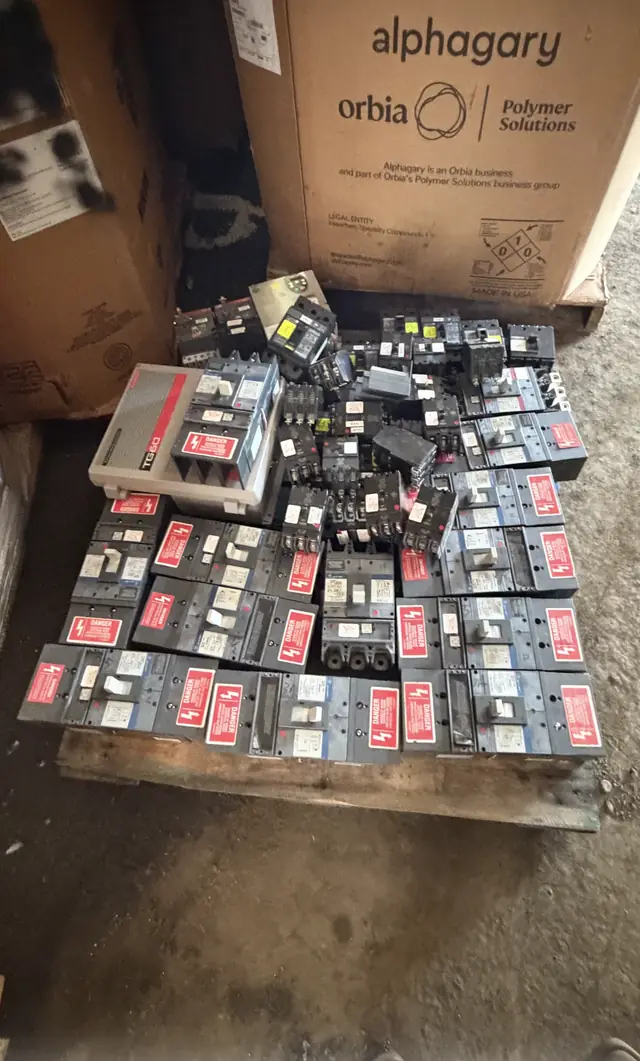
Stop if you find signs of overheating, arcing, or contamination. Follow current manufacturer instructions and engage qualified electrical professionals and the authority having jurisdiction for removal, testing, and handling. This page is informational and not a substitute for on-site inspection.
What we review and why 'obsolete' matters
We review qualifying obsolete and discontinued circuit breakers for purchase consideration. Declaring an item obsolete does not guarantee it will be bought; it only indicates the part is no longer used in your operations and you want it evaluated for possible resale, reuse, or reclamation.
Obsolete can describe several situations: a manufacturer has superseded a part, a product line is no longer stocked, or your own facility has migrated to a newer platform. Use the obsolete scope described below when preparing submissions so reviewers can clearly see which items you consider out of service.
- We review only qualifying items submitted through the requested process
- Obsolete does not mean recalled, safe to re-use, compatible, or guaranteed valuable
- Every submission is evaluated independently on identification, condition, and market fit
How to identify obsolete and discontinued breakers — exact fields to capture
Accurate identification speeds review. Photograph and list every breaker with the same set of fields so reviewers can match parts to lifecycle references and demand indicators. Useful identification fields include manufacturer name exactly as printed, catalog or part number, series or family name, frame size, trip rating (amps), interrupting rating (AIC), accessory part numbers, and any date codes or serial numbers on the nameplate.
If a legacy label is worn, include close-up photos that show legible fragments and describe what is missing. Capture the panel or assembly label if the breaker was shipped as part of a factory-panel set; that context can change how a part is evaluated. Provide original packaging or manuals when available — these are helpful when the breaker line has been discontinued.
- Manufacturer name and exact catalog/part number
- Frame size and trip rating (A, B, C, etc. or numeric amp value)
- Interrupting rating (interrupting capacity/AIC) and accessory codes
- Date code, serial number, and any factory lot markings
- Example legacy label fields: MANUFACTURER | CAT. NO. | FRAME | RATING | INT. RATING | MFG DATE
Honest condition language we expect from sellers
Use plain, accurate descriptions that match physical evidence. Consistent, clear condition language helps reviewers and supports faster decisions. Common, useful categories include: New-Old-Stock (unused in original packaging), Like-New (installed but no electrical service life claimed), Used-Tested (installed and tested to a stated procedure), Used-Untested (no electrical testing has been performed), Missing-Parts, and Damaged (describe the damage).
When you say “tested,” briefly note what was done and by whom; testing performed by qualified professionals is informative, but do not include engineering, installation, or energized-testing instructions in your submission. If breakers were removed from service, note any signs of arcing, overheating, contamination, or mechanical deformation — these are red flags for safety review.
- New-Old-Stock — unopened original packaging
- Like-New — cosmetically clean, no electrical service life claimed
- Used-Tested — list test type and result without giving instructions
- Used-Untested — disclose unknown operational history
- Damaged — describe internal/external damage and missing components
Photos, documentation, and lot organization that speed evaluation
High-quality photos are often the fastest way to move a submission through review. For each part or lot include: a clear photo of the entire breaker, a close-up of the nameplate, detail photos of any damage or missing accessories, and a photo of group quantity that shows consistent condition. If breakers are part of a panel or assembly, photograph the panel label and mounting context.
Documentation that reduces review time includes original data sheets, installation manuals, purchase invoices showing manufacturing date, and manufacturer lifecycle notices if you have them. Assemble like items into lots and provide a simple CSV or spreadsheet with one row per unique part number that lists quantity, condition, and the identification fields noted above.
- Essential photos: whole unit, nameplate close-up, damage close-up, serial/date code
- Helpful docs: data sheet, manual, original invoice, end-of-life or discontinuation notices
- Organize lots by exact part number and condition; include quantity and a single inventory file
How we assess commercial fit for obsolete breakers
Commercial fit means there is an active or latent interest in the part based on market need, common replacement programs, or support for legacy equipment still in service. Factors that matter include the exact catalog number, documented condition, available quantity, and supporting documentation that confirms identity and storage context.
We do not assume universal compatibility. Physical fit does not prove suitability for a particular application. Reviewers compare submitted identification fields to available references and observed market needs. Where items are explicitly labeled as “obsolete” and accompanied by an inventory list, that declaration can speed scope assessment because it clarifies what you intend to remove from service and offer for review.
- Demand depends on exact catalog/part number and documented condition
- Larger, well-documented lots often move faster through review
- Provide a written obsolete scope with the lot to clarify intent
Safety limits, red flags, and what we may decline
We do not accept items that show unremediable hazards, contamination, or structural damage that prevents safe handling or storage. Stop and engage a qualified electrical professional to inspect any breaker with signs of overheating, melting, arc damage, evidence of moisture intrusion, or foreign contamination such as asbestos, PCBs, or biological hazards. Do not attempt energized testing or removal beyond safe de-energized procedures performed by qualified personnel.
Evaluations may decline parts for reasons including missing critical identification, unknown or unsafe storage history, or physical alterations that obscure original markings. A website submission is not an appraisal, offer, acceptance, safety inspection, compatibility determination, purchase order, pickup commitment, or shipping authorization.
- Red flags: melted plastics, arcing marks, internal carboning, signs of water or chemical exposure
- If unsure, stop and engage a qualified electrical professional before moving parts
- We may decline items lacking clear identification or with safety-compromised condition
Prepare your submission and what happens next
Collect identification fields, photos, and documentation as described above. Create an inventory list that marks which parts you consider obsolete, using consistent terms across the file. Upload your photos and inventory file using the submission method on this site or include them via the listed contact channel.
After submission, reviewers will verify identification and condition from your materials and may request additional photos or testing information. Timelines vary and a submission is not a purchase commitment. If a part is of interest, a reviewer may follow up to clarify lot details, acceptance terms, and logistics. Prepare lots for secure transport and label each box with the inventory reference so follow-up inspections are faster.
- Bundle like parts, attach inventory tags, and include a single spreadsheet with lot counts
- Label boxes with your inventory reference to match photos and documentation
- Expect follow-up questions; submissions that include full documentation move faster