Stop and consult a qualified electrical professional if equipment is energized, shows signs of arcing, contamination, or structural damage. Follow current manufacturer instructions and do not rely on submission for safety clearance. Submitting items for review does not constitute an appraisal, offer, acceptance, inspection, or shipping authorization.
What we review and why original labels matter
We review submissions of legacy I‑T‑E and Murray breakers and related components for possible purchase. “Qualifying for review” means items that clearly display original manufacturer labels or markings, have identifiable catalog or type numbers, and fall within our legacy scope. Submitting items begins a purchase review only; it is not an appraisal, offer, acceptance, safety inspection, or authorization to ship or remove equipment.
Original labels and intact nameplates are the primary evidence used to confirm model lineage, factory options, and ratings. When labels are legible, catalog numbers and frame/trip details can be compared to known successor listings and published service bulletins. If a label is missing or obscured, include supporting photos and any paperwork you have; items without sufficient identification will require additional steps and may not qualify for purchase review.
- We only accept submissions for review — not all reviewed items are purchased
- Original manufacturer labels speed identification and eligibility checks
- Legible catalog/type numbers, amp rating, and trip unit markings are essential for review
Exactly what identification fields to show
For each breaker, include the complete set of visible identification fields: manufacturer name as stamped or printed, catalog/type number, frame rating, interrupting rating, ampere rating, number of poles, trip unit designation (thermal, magnetic, electronic), date or lot codes, and any UL/CSA listing marks. These fields allow a match to known legacy families and potential successors; partial or ambiguous markings typically require more photos or paperwork.
If you have factory or shipping tags, order paperwork, panel schedules, or installer labels that reference model numbers or successor part numbers, include scans or photos. If you possess a manufacturer or distributor bulletin that lists replacements or superseded numbers, attach that document. We do not substitute testing for original markings: clear, original identification is the most effective way to advance a review.
- Manufacturer name, full catalog/type number, and amp rating
- Frame/interrupting rating and number of poles
- Trip unit code, date/lot codes, and listing marks (UL/CSA)
- Supporting paperwork or successor bulletins if available
Use honest, specific condition language
Describe condition precisely: new in box (NIB), new surplus (open box), like‑new, used working, used non‑working (repairable), parts only, or scrap. Avoid vague terms such as good or fair without supporting photos. Note if breakers were removed from a decommissioned panel or from service and whether they were exposed to moisture, heat, or contamination.
When listing defects, be specific: cracked case, worn or broken handle, missing hardware, rusted or pitted contacts, evidence of arcing, or burned odor. If breakers have been bench‑tested by qualified personnel, state that and attach any available test reports, but do not include procedures. Clear, consistent condition descriptions reduce back‑and‑forth and help determine whether a purchase review can proceed.
- Standardized tags: NIB, new surplus, like‑new, used working, repairable, parts‑only, scrap
- List concrete defects and any environmental exposure
- Attach test reports if available (statement only — not a safety inspection)
Photos sellers must include and how to organize lots
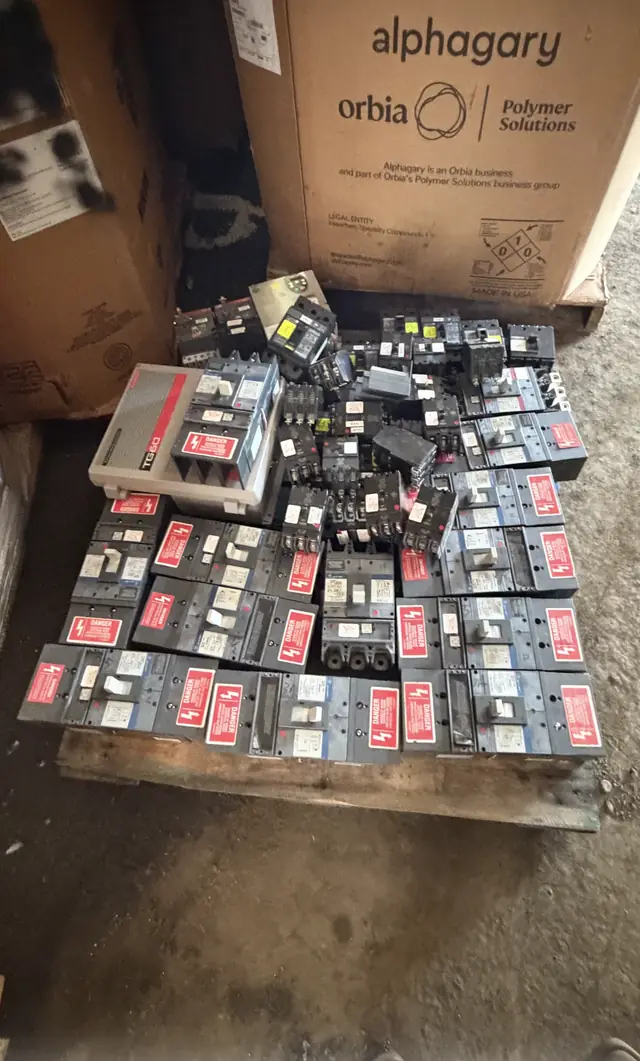
Provide high‑resolution photos of each breaker from multiple angles: full‑unit view, close‑up of the nameplate/label, handle or trip lever, trip unit or accessory area, terminal/bus connection side, and any visible damage. Use a neutral background and include a ruler or coin for scale. For lots, provide representative photos plus one clear shot of the full lot showing quantity and condition consistency.
Organize inventory into clear lots: same model/catalog number, same trip rating, and same condition should be grouped together. List exact counts per lot and indicate whether breakers are individually boxed or loose. For mixed‑condition lots, split into sub‑lots rather than combining disparate items; mixing increases inspection time and may reduce interest. Accurate photo sets and consistent lot organization are the fastest route to a substantive review.
- Full‑unit and close‑up nameplate photos are essential
- Include terminal/bus side and any visible damage
- Group identical items into lots with exact counts
- Provide representative lot photos and a scale reference
Approved legacy scope and exact successor/recall documents
We review submissions of legacy equipment that clearly falls under the I‑T‑E and Murray families as marked on original labels. Types commonly reviewed include molded‑case circuit breakers, bolt‑on and draw‑out frames, thermal‑magnetic trip units, and breakers with electronic trip modules when the unit can be positively identified. Qualifying for review does not imply approval for reuse or installation; purchase review is separate from any fitness‑for‑service determination.
If you have manufacturer successor lists, supersession tables, service bulletins, or official recall documentation that relates an identified legacy part to a successor model or service advisory, include those documents. Exact successor or recall sources can speed review and help assess market interest, but providing such documents does not imply clearance, compatibility, or endorsement. Supplied sources are considered as part of the purchase evaluation only.
- Commonly reviewed: molded‑case, bolt‑on, draw‑out, thermal and electronic trip units
- Original label required to establish legacy lineage
- Include any manufacturer successor lists, bulletin PDFs, or recall/source documents you have
How we evaluate commercial fit (no pricing promises)
Commercial fit reflects condition, identification clarity, lot size, and secondary‑market demand. Large, uniform lots with clear original labels and minimal damage typically move through review faster than small mixed lots or items lacking documentation. We assess supply and demand and may proceed at our discretion; submitting items does not bind either party to a transaction.
Price discussions occur, if at all, only after inspection and verification. We may request additional photos, paperwork, or an opportunity to view high‑value lots in person. Any valuation or offer arises from a purchase review process and is conditional. Documentation such as successor bulletins and original purchase records can improve confidence and may affect commercial interest, but they do not guarantee purchase or price.
- Commercial fit factors: condition, identification, lot size, and market demand
- Large, consistent lots typically receive faster reviews
- No price quotes until post‑inspection and verification
Next steps: how to submit items for purchase review
To start a purchase review, gather clear photos, a full parts list with catalog numbers and quantity by lot, and any supporting documents such as successor bulletins or removal paperwork. Use the submission page at /sell-siemens-ite-murray-breakers to provide those materials and a short description for each lot. Submitting is the start of a review and not a purchase order, pickup authorization, shipping instruction, or permission to remove equipment.
Our evaluation process may include technical and commercial review; additional legal or product‑safety review may apply as needed. Expect follow‑up questions and requests for more information. For safety, stop and consult a qualified electrical professional if you encounter energized equipment, signs of arcing, contamination, or structural damage during preparation. We do not advise on removal or reinstallation, and accepting items for review is not a safety clearance.
- Gather photos, catalog numbers, counts, and any successor or bulletin documents
- Submit materials via /sell-siemens-ite-murray-breakers to begin review
- Expect follow‑up requests; submission is not a purchase or pickup authorization