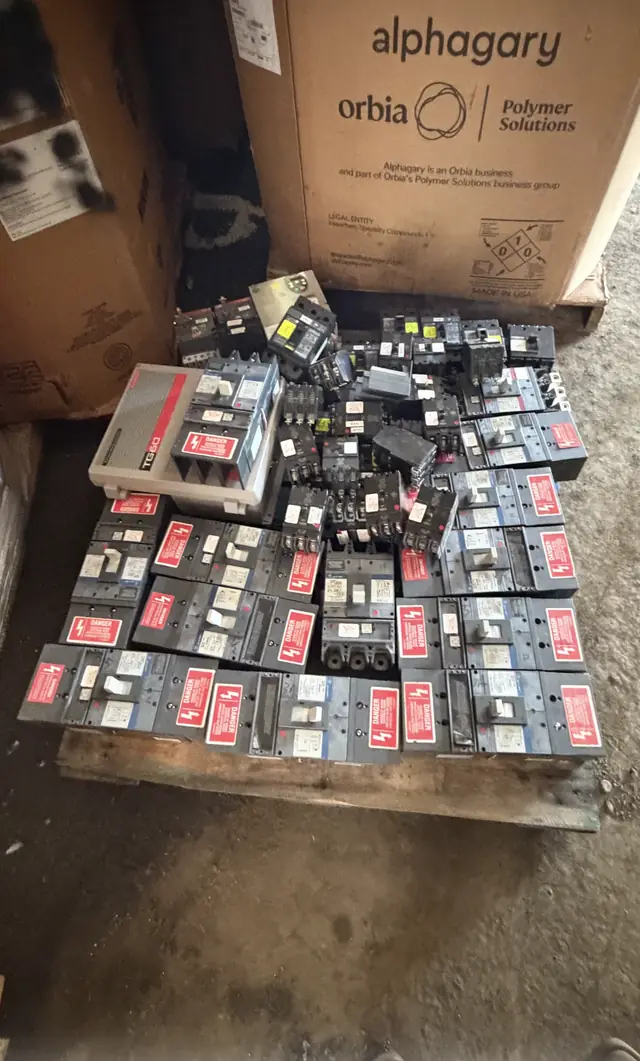
Stop and notify a qualified electrical professional if you see burn marks, melted insulation, exposed live parts, or other safety hazards. Follow current manufacturer instructions and use appropriately qualified personnel and local oversight for testing, removal, and reinstallation. A website submission is not a safety inspection or authorization to remove energized equipment.
How we review busway, bus duct and bus plugs
We review qualifying busway systems, lengths of bus duct, and removable bus plugs for possible purchase. Submitting complete identification and good original photos helps us determine whether an item falls within our reviewed scope and helps our reviewers evaluate condition and commercial fit. Submissions that meet the evidence requirements described here may be selected for a more detailed review.
A website submission is not an appraisal, offer, acceptance, safety inspection, compatibility determination, purchase order, pickup commitment, or shipping authorization. Providing the specific documentation and photos described below can speed the review process but does not guarantee a purchase. If an item advances, we will outline any requested next steps.
Busway scope we review and what to include
We consider for review a range of busway-related equipment, including plug-in busway sections, tap-off units, lengths of enclosed bus duct, and removable bus plugs. Items from both insulated and non-insulated designs and common commercial configurations may be submitted; however, only submissions with verifiable identification and condition evidence are reviewed. Do not assume submission equals sale.
When preparing a submission, treat each distinct product type as a separate line item. For example, list continuous run sections, individual plug-in sections with tap positions, and loose bus plugs separately. Provide the evidence fields listed below for every line; missing nameplate or rating information can slow or block evaluation.
- Plug-in busway sections (with removable bus plugs)
- Fixed or enclosed bus duct sections and couplers
- Individual bus plugs and tap-off assemblies
- Accessory items closely tied to the busway (e.g., bus supports, bolted joints) when documented
Exact identification fields we need
Every submitted item should include the manufacturer name exactly as shown on the nameplate or label, the catalog or series number, and the ampere rating. Also provide phase count and pole/way information, nominal voltage and frequency if available, and the serial number or manufacturing date when present. Clear documentation of these fields is the baseline for evaluation of capacity and potential reuse value.
If the nameplate is missing, note any stamped castings, printed serial tags, or packaging labels that bear maker or model clues. Absence of a legible rating plate reduces the speed and certainty of the review and may require additional information from the owner. Do not rely on photos alone to prove suitability for reuse or interchange; nameplate evidence is essential.
- Manufacturer name exactly as on plate
- Catalog/series or model number
- Ampere rating and phase count
- Voltage and nominal frequency (if shown)
- Serial number or date code
- Length, module/tap spacing, and plug positions
Original photos we require and how to take them
Original, unedited photos are required for each submitted line item. Include at minimum a full-run view that shows the item in place, a clear close-up of the manufacturer nameplate and ampere rating, and close-ups of any removable plugs, couplers, or damaged areas. Photos taken on-site are most helpful because they show mounting, connection ends, and any surrounding equipment that affects removal logistics.
Useful supplementary photos include a close-up of serial numbers, pictures of bus plug contacts and interior plug assemblies, images of end terminations, and a shot showing scale (for example, a ruler or a person at safe distance). Avoid speculative captions about condition or fit; instead, label photos with the item line number and the specific area shown so reviewers can match images to the identification fields you provided.
- Full-length view of each section in place
- Nameplate close-up clearly legible
- Close-ups of bus plugs, plug housings and contact faces
- End terminations and coupling areas
- Any visible damage or corrosion at 2–3 angles
Honest condition descriptions and safety limits
Describe condition plainly using standard terms such as New, Like-New, Good, Serviceable, Salvage, Rusted, or Missing Parts, and include whether the equipment has been energized in service recently. Be explicit about repairs, modifications, or missing components. Honest, specific condition notes reduce back-and-forth and help determine whether an item should proceed to detailed evaluation.
Stop and seek a qualified electrical professional if you observe burn marks, melted insulation, heavily corroded conductors, exposed live parts, or other obvious safety hazards. Do not attempt energized testing or removal unless done by appropriately qualified personnel and with any required oversight. We will not accept safety conclusions from photos alone; our review is conditional and requires owner confirmation of de-energized status before any removal planning.
- Use concise, specific condition labels
- Disclose repairs, field modifications, or missing parts
- Flag safety hazards and do not attempt energized tests
- Owner confirmation of de-energized status may be required
Lot organization, packaging and logistics evidence
Organize submissions into logical lots before you contact us. A lot can be a contiguous run of busway, a set of identical plug-in sections, or a pallet of loose bus plugs. For each lot, provide the identification fields and photos described above and a clear count of pieces, approximate total weight if known, and any special lifting or handling constraints visible in photos.
Document how items are staged for removal and shipping: show access routes, loading area photos, and any specialized hardware or rigging required. Do not imply pick-up or transport commitments in your submission—logistics details simply help estimate feasibility and move items toward a formal review if the technical evidence is sufficient.
- Group identical items into single lots
- Provide piece counts and approximate weights
- Photograph staging area, access routes and lifting points
- Note required handling equipment if obvious from photos
Commercial fit, limits and next steps
Commercial fit depends on maker, ampere rating, configuration and documented condition. Submissions with clear nameplate evidence and complete photo sets are prioritized because reviewers can evaluate marketability more quickly. Items with missing or ambiguous identification may require additional information, which can extend review times or limit purchase potential.
To submit, compile your lot list, attach the required photos and identification fields, and follow the submission link or contact method on this page. Submitting materials sets the review in motion; if an item advances, we may request additional information and outline next steps. Remember that a submission is not a purchase; any offer, if made, would follow technical and logistics review and owner confirmation of any required safety conditions.
- Clear nameplates and photos speed review
- Missing identification may require additional information
- Submission may trigger follow-up for added evidence
- Any offer, if made, would follow technical and logistics review