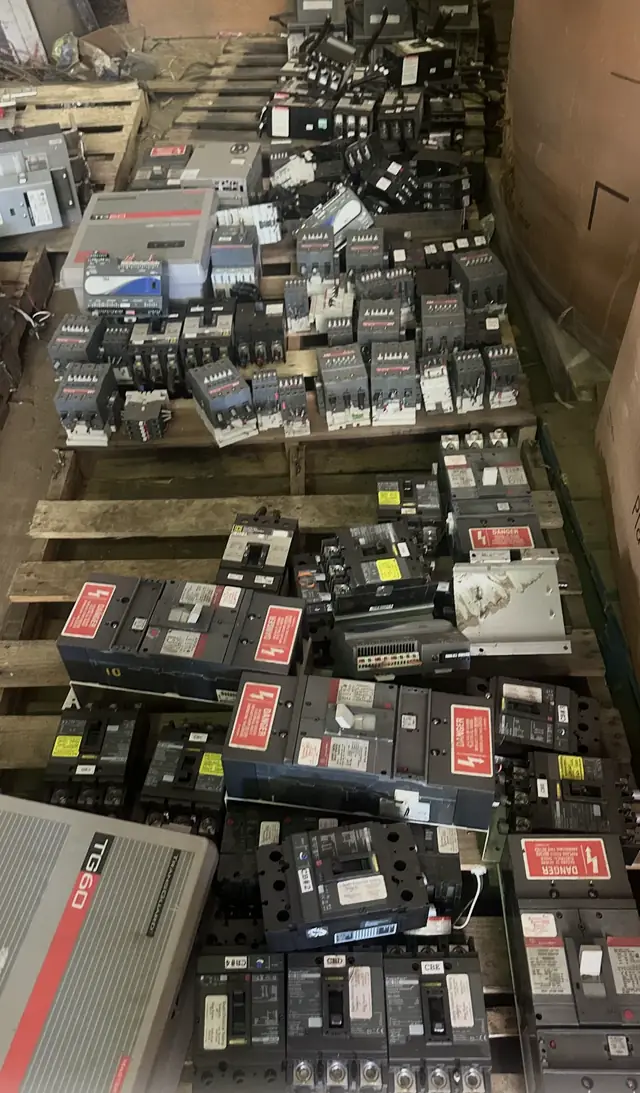
If you find burn marks, melted insulation, exposed conductors, or other signs of electrical damage, stop work immediately and consult a qualified electrical professional and the authority having jurisdiction. Do not perform energized testing for identification or sale.
What we review and how to present equipment
We review qualifying contactors and motor starters for purchase consideration. If you have surplus, new-surplus, obsolete, or used industrial contactors and motor starters, gather identification and condition details so we can evaluate quickly. Submissions with clear nameplate data, coil voltage, and part numbers can shorten review time.
We do not guarantee purchase of any item. A submission is a request for conditional review; items that appear to meet our scope and condition notes may be taken forward for price consideration after review by our team. Do not ship equipment unless requested in writing.
Brand and type scope — what we commonly review
We routinely review a broad range of contactors and motor starters from commonly used industrial manufacturers. Typical brands and designations we evaluate include, for example, Allen-Bradley/Rockwell Automation style frame contactors, Siemens motor contactors, Schneider Electric TeSys contactors, Eaton and Cutler-Hammer contactors, GE industrial contactors, and Square D motor starters. Listing brand names helps locate the correct nameplate and part-number format but does not imply manufacturer authorization.
Type coverage includes AC power contactors, DC contactors, combination motor starters with overload relays or electronic overloads, IEC-style contactors (small-frame to large-frame), NEMA style starters, and control contactors used in motor control centers. We also review contactor accessories such as auxiliary contact blocks, mechanical interlocks, and thermal or electronic overloads when sold as a complete assembly.
- AC contactors (single- and three-phase)
- DC power contactors with control coils
- Motor starters with built-in overload protection (thermal or electronic)
- IEC and NEMA frame sizes and MCC buckets
- Control contactors and auxiliary devices when included
Exact identification fields we need
Clear identification is the single most helpful item you can supply. Provide full manufacturer name as printed on the nameplate, the complete catalog or part number stamp (for example formats such as 100-C09, LC1D09, 3RT10, or 890 series), coil voltage and type (24V AC, 120V AC, 24V DC, 250V DC, etc.), and the rated main contact current or horsepower. If a printed serial or build code appears on the nameplate include that too.
Also include the contact arrangement (e.g., 3P+N, 2NO+2NC), the number and type of auxiliary contacts, the overload model or part number if fitted, and any frame or size designation. When possible, note the original application (pump, compressor, conveyor) and whether the unit was idle or in regular service; this context helps estimate expected wear but is not required.
- Manufacturer and exact catalog/part number as on nameplate
- Coil voltage and AC or DC designation
- Rated current (A) or motor horsepower (HP) at specified voltage
- Contact configuration and number of poles
- Auxiliary contacts, interlocks, and integrated overload model
Condition and completeness criteria we look for
Completeness matters. We prioritize assemblies that include the original overload relay or electronic overload, any auxiliary contact blocks, mounting hardware or baseplate, and intact nameplates. Units missing mechanical components, key covers, or with detached parts will require documentation and will be harder to evaluate. Rebuilt or repaired units can be reviewed when the repair history and replacement part documentation are provided.
Condition descriptions should be candid. Common issues that materially affect review include heavy pitting or erosion on main contacts, melted or deformed housings, missing coils, broken mechanical linkages, and signs of arcing or burn marks on nameplates. Moderate surface corrosion on frames is common, but severe corrosion affecting mechanical fit or nameplate legibility reduces the likelihood of a successful review.
- Preferred: intact nameplate, original overload/electronic overload, mounting hardware
- Acceptable with documentation: rebuilt units, replaced coils, serviced contact sets
- Deal-breakers: missing nameplate and part number, melted housings, broken contact bridges
- Note visible damage and provide repair/service records when available
Photos and lot organization that speed review
Provide clear, well-lit photos as a first step. For each distinct part number, include a front view showing the full nameplate, a close-up of the nameplate to read manufacturer data, one or two photos of the contactor from the side to show frame size, and pictures of the coil and auxiliary contacts. Include at least one image showing the unit’s functional side (terminals, contact pads) so wear and contact condition can be assessed visually.
If you have multiple identical items, group them in a single lot photo and provide a count. Organize lots by exact part number and condition (unused, used-good, used-worn, repaired). Label each lot in your submission so we can match the photos to the written identification fields. Well-organized lots and consistent photo sets reduce back-and-forth questions and can speed review.
- Must-have photos: full nameplate, nameplate close-up, terminal/coil view, side profile
- Group identical parts and state quantity per lot
- Include dated photos and any repair/service labels where present
- Avoid sending blurred or poorly lit images
Safety limits and what we will not do
Do not perform energized testing or live checks for the purpose of sale photos or descriptions. Please avoid any activity that requires live field tests to obtain identifying data; such testing is outside our review scope.
We do not provide installation, compatibility, or safety determinations. If you see melting, smell burning, find exposed wiring, or encounter damaged insulating parts, stop and consult a qualified electrical professional. The authority having jurisdiction and original manufacturer instructions remain the final reference for installation and safe use.
- Stop and call a qualified electrical professional if you see burn marks, melting, or exposed conductors
- Do not energize equipment for discovery or photo purposes
- We do not determine field suitability, code compliance, or installation instructions
How to submit items and what to include
To start a submission, assemble the lot details: manufacturer, full part number, coil voltage, rated current/HP, quantity, condition class, and the set of required photos. Include any available service or repair documentation, date codes, and the original purchase or surplus context if known. Provide a contact email and phone so follow-up questions can be answered.
Once submitted, our team reviews qualifying items. A submission is not an appraisal, offer, pickup commitment, or safety inspection. If an item appears to fit our scope and condition notes, we may follow up with next steps. Do not ship equipment unless requested in writing.
- Submission checklist: nameplate photos, part number, coil voltage, rated current/HP, quantity
- Document any repairs or replacements and include photos of replaced components
- Label lots clearly and provide a single contact for follow-up
- Wait for written instructions—do not ship equipment before receiving them