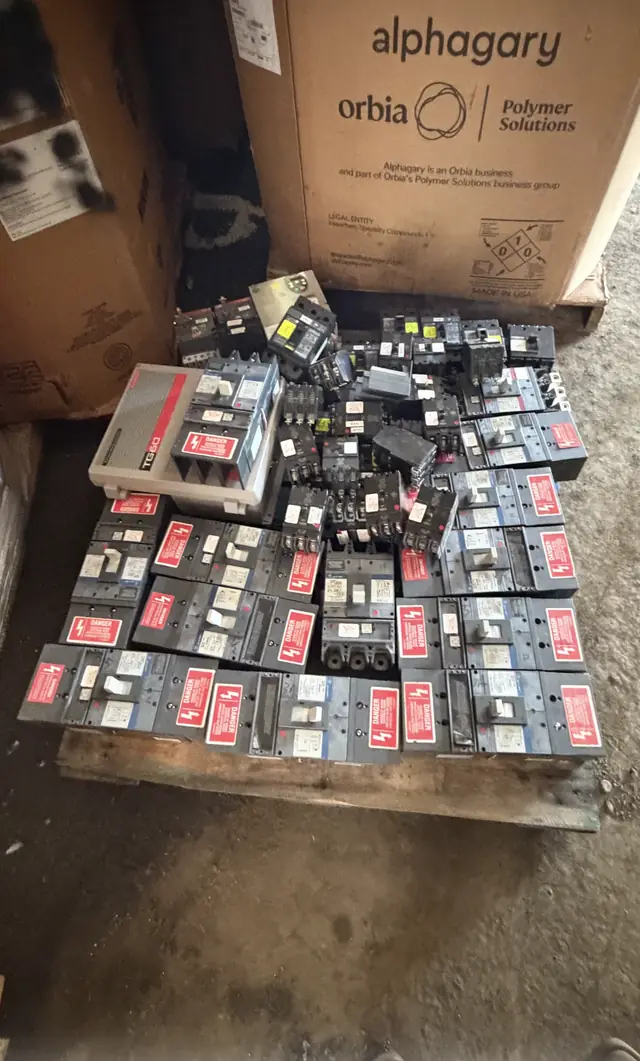
Stop if you see burn marks, melted components, or unknown damage. Follow current manufacturer instructions and use appropriately qualified electrical professionals and the authority having jurisdiction for any removal, testing, or installation. A submission is not a safety clearance or inspection.
How we evaluate fuse submissions
We review qualifying electrical fuses for potential purchase. That review considers the type of fuse, clear identification, observed condition, packaging, quantity, and commercial demand. Submitting complete, well-documented lots helps us make an informed purchase decision faster.
Submitting fuses begins with documentation—not shipping. Gather high-resolution photos, a concise inventory list, and any available test or traceability data. After our review we may follow up with questions, request additional photos, or ask for an on-site inspection; a submission does not guarantee an offer.
Typical fuse scope — what we review
We consider submissions of many common industrial and commercial fuse types for review. Typical categories include low-voltage power and branch fuses (cartridge-style), time-delay and semiconductor fuses, blade and automotive-type fuses where they are sold as commercial lots, high-voltage expulsion and current-limiting types when accompanied by clear identification, and replacement fuses removed from decommissioned electrical equipment.
We do not conflate fuse products with fuseholders, circuit protectors, or circuit breakers. If you have mixed components, separate the fuses and submit them as distinct lots with their own identification and condition records. Qualifying parts may be submitted for purchase review; not every item submitted will be purchased.
- Cartridge power fuses (low-voltage, current-limiting)
- Time-delay and slow-blow fuses sold in commercial quantities
- Semiconductor fuses with clear part markings
- Blade-style fuses in bulk with traceable labeling
- High-voltage fuses only with full label data and documented service history
Exact identification fields and label examples to capture
Clear, legible label information is the most important factor in our initial review. When photographing fuse markings, capture the entire label and any stamped or molded markings on the body and end caps. If a fuse has a printed label and a molded part number, photograph both so we can cross-reference the details.
Below are the fields we need to read from labels or accompanying documentation. Provide these fields in your inventory spreadsheet where possible; if any field is not present, note it as blank rather than guessing.
- Manufacturer or brand name as printed
- Catalog or part number exactly as stamped or printed
- Ampere rating (A) and the tolerance/type (example: 30A, time-delay)
- Voltage rating (VAC or VDC)
- Interrupting rating or kA rating if shown
- Series or style code and physical dimensions (length/diameter)
- Date code, lot code, or manufacturing serial if available (helps traceability and age)
Condition language and packaging guidelines we use
Use plain, accurate condition descriptors. Helpful, consistent terms include: New in original factory packaging, New—open box (uninstalled), Used—serviceable (no visible damage), Used—cosmetic wear only, and Non-working/damaged. If you have service records, factory test certificates, or recent qualified test data, attach them to the lot documentation. Do not perform or report energized testing yourself; only supply test reports from appropriately qualified professionals if available.
Certain defects routinely disqualify items or significantly reduce value. Obvious thermal damage, melted end caps, arc marks, heavy corrosion on contact surfaces, or missing label information limit our ability to buy without further inspection. Photograph any signs of overheating and note whether the fuse was removed following an electrical failure or as part of routine replacement.
- Acceptable: unopened factory boxes, sealed trays, clearly labeled bulk packs
- Acceptable with documentation: new-open-box items with packaging included
- Unacceptable or needs explanation: fuse bodies with burn marks, severe corrosion, missing labels
- Label any non-working items clearly; we may request additional inspection for these lots
Photos to include and packaging best practices
Provide clear, well-lit photos that show label information, full length of the fuse, both end caps, and the lot as a whole. For packaged or boxed items, include a set photo of the sealed package and one of the package contents after opening. Close-ups should be in focus and large enough to read the smallest printed characters in a typical photo viewer.
Packaging and how kits are presented affect our review. Original factory packaging, sealed trays, or individually boxed fuses are preferred. If items are loose, secure them in grouped bags or trays with internal separators to prevent abrasion during handling. Use simple, protective layering; avoid loose piles where labels are obscured.
- Required photos: label close-up, full product length, both ends, lot overview
- Optional but useful: packaging seal photo, sample batch cross-section, any certificates
- Preferred packaging: unopened factory boxes or labeled bulk trays; avoid mixed lots without segregation
Lot organization and inventory fields that speed review
Organize items into lots by exact part number, rating, and condition. Each lot should have a short label you can include in photographs (a piece of paper with the lot name placed next to the items is sufficient). Count quantities accurately and indicate whether the count is exact or an estimate. If you are submitting multiple of the same part, bundle or band them together and photograph the bundle with its label.
A simple electronic inventory spreadsheet accelerates our evaluation. Include one row per lot and columns for the key identification fields, quantity, condition grade, packaging type, and whether any test documentation exists. If different lots share the same part number but differ in condition or date code, list them separately.
- Lot tag example fields: lot name, part number, amp/voltage, quantity, condition
- Include a column that flags items with missing label data
- Indicate whether items are sold as-is or have associated documentation/test reports
What we evaluate commercially — demand, traceability, quantity
Beyond identification and condition, we assess commercial fit. That means judging whether there is market demand for a specific fuse type, whether the labeling provides traceability that buyers require, and whether your quantities make a lot practical to resell. Large, clearly labeled lots of common ratings and series are more likely to result in purchase interest than a small mix of obscure or incomplete items.
We also consider logistical factors such as packaging quality and whether items are pallet-ready or require re-packaging. Our review process balances technical traceability and commercial resale potential. Again, submission is the start of a review; it does not constitute a commitment to purchase.
- High commercial fit: clear labels, traceable part numbers, multiple units of common ratings
- Lower commercial fit: one-off parts without labels, unknown date codes, or small mixed lots
- We may request additional photos or sample inspections for borderline lots
Next step — submission checklist and how to start
To begin, compile your photos, create a simple inventory spreadsheet with the identification fields above, and separate items into clearly labeled lots. If you have factory seals, original boxes, or test documentation, include photos or attach the documents. When everything is ready, submit your materials through our online form for review. A submission initiates our evaluation; it is not an offer or purchase order.
After you submit, we may ask clarifying questions, request additional photos, or arrange a sample inspection for high-value lots. Provide a contact for quick follow-up and be prepared to re-package or consolidate lots if requested. If you have questions about what to include before submitting, compile a representative set of images and inventory details and reach out through the submission route described on our site.
- Submission checklist: clear label photos, full-length images, both ends, lot overview photo
- Inventory spreadsheet: one row per lot with part number, amp, voltage, quantity, condition
- Attach any test certificates or original packaging photos where available