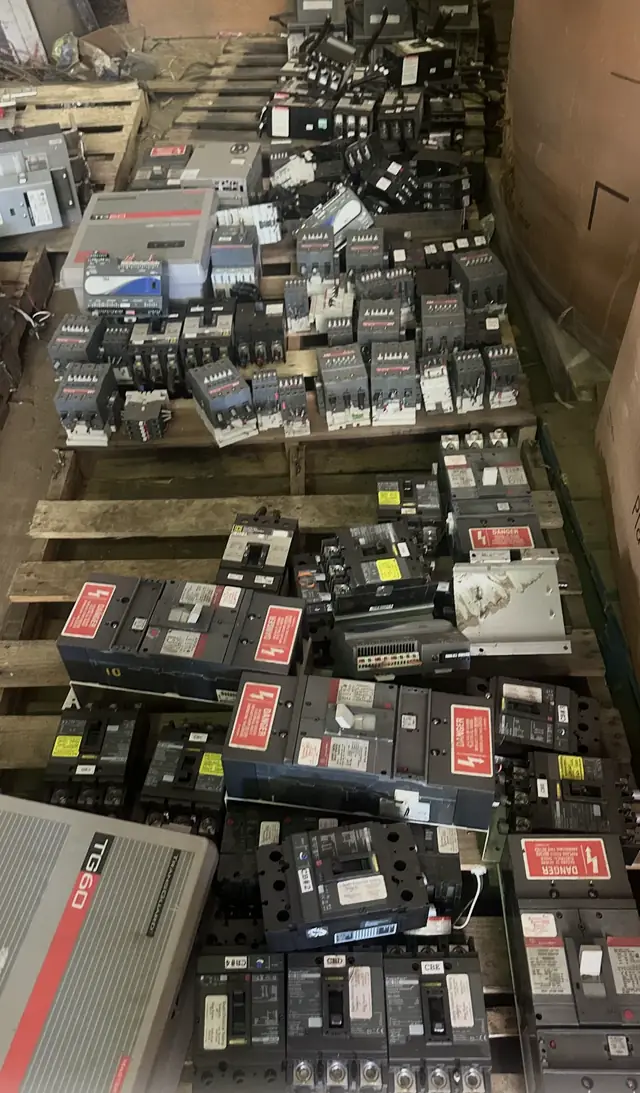
Stop if a unit shows signs of arcing, burning, heavy corrosion, or damaged insulation. Do not attempt energized testing or field modifications to produce evidence. Follow current manufacturer instructions and use appropriately qualified electrical professionals and the authority having jurisdiction for all safety, inspection, removal, and installation activities. A website submission is not an appraisal, offer, acceptance, safety inspection, compatibility determination, purchase order, pickup commitment, or shipping authorization.
How we review safety switches
We review qualifying safety switches and electrical disconnects for purchase. This page explains what types of equipment we consider, the specific identification and condition evidence we require, and how to present units so our reviewers can assess commercial fit efficiently. Submitting items does not guarantee purchase; it initiates a conditional purchase review.
If you have surplus, surplus-new, used, or obsolete safety switches, include documentation and photos that demonstrate identity and condition. Safety switches are commonly found in industrial, commercial, and utility settings; our interest is determined by model, condition, and commercial demand. We do not provide field installation, electrical modification, or acceptance guidance—stop and consult qualified electrical professionals if any unit shows signs of damage, arcing, excessive corrosion, or other hazards.
Types and typical designations we consider
We review a broad range of safety switches and disconnect devices, including fusible and non-fusible safety switches, load interrupter switches, fused pullouts, and motor disconnects used in industrial and commercial distribution. Types we consider for review are units that remain in their original manufacturer configurations with intact identification labels and enclosures; units missing critical identification or with undocumented aftermarket modifications may require additional evidence to be considered.
When preparing a submission, identify the device type and intended application as best you can. Useful descriptors include whether the unit is fusible or non-fusible, voltage and current ratings stamped on the nameplate, short-circuit rating or interrupting capacity if listed, whether it is pawl- or handle-operated, and if it is a disconnecting means designed for motor circuits. Providing this high-level type information helps our reviewers determine whether the items align with current buyer demand.
- Fusible safety switches and pullouts
- Non-fusible safety switches and disconnects
- Load-interrupter switchgear and motor disconnects
- Industrial and commercial panel-mounted disconnects
Label and enclosure evidence we require
Accurate identification starts with the nameplate or label. We require clear, legible photos of the manufacturer nameplate or rating label showing model number, catalog number (if present), voltage and amperage ratings, short-circuit rating or interrupting capacity if listed, and any series or date codes. If the nameplate is missing but other stamped or cast identifiers exist, include close-up photos of those markings and a written description of what they indicate.
Enclosure information is equally important: photos should show the front, sides, back, and interior components where accessible. If interior photos are needed, have a qualified professional take them only after equipment is confirmed de-energized and safe to access. Do not open enclosures yourself. Record enclosure style (NEMA or similar designation if present), door/latch condition, visible corrosion, paint markings, and any labels indicating UL, CSA, or other test marks. These details form the basis of identity and documentation evidence for our commercial review.
- Photos: full unit, all sides, nameplate close-up, interior component close-ups
- Photos of handles, shafts, latches, and any accessory blocks or fuses
- List any missing labels, replaced parts, or aftermarket additions
Condition and completeness criteria we use
Honest condition descriptions speed review. Use straightforward terms such as new surplus, new-in-box, like-new, serviceable used, cosmetically worn, or non-functional as observed. Note visible defects such as rust, pitting, broken handles, missing fuse clips, melted insulation, or evidence of overheating. If you cannot determine internal condition safely, state that testing was not performed and avoid energizing or modifying units to find faults.
Completeness matters for commercial value. Include counts of mounting hardware, internal fuse holders, door gaskets, handle assemblies, and any included accessories like fuse kits or replacement parts. Units missing critical components are often acceptable for parts or refurbishment but should be listed separately from complete serviceable units to avoid delays in evaluation.
- Condition examples: new-surplus, serviceable used, needs parts/repair
- List missing components separately (fuses, handles, bolted connections)
- Flag prior repair evidence or aftermarket modifications
Useful photos and lot organization
Good photos reduce back-and-forth. Provide clear, well-lit images on a neutral background that show the entire unit, the nameplate, and any damage. When shipping or offering multiple units, group identical items in a single photo and provide a separate image of any unique serial or tag information. If units are in crates or pallets, include an overall photo of the pallet with a visible count and labeling to show lot composition.
Organize lots logically: separate complete serviceable units from parts, group by model number, and number items in photos to match a submitted inventory list. Label each lot with a simple identifier and include that identifier in all related photos and descriptions. Practical lot organization helps our reviewers and potential downstream buyers evaluate whether a purchase or offer is commercially viable.
- One clear photo per side plus close-up of nameplate for each model
- Group identical units and include a single representative interior photo
- Provide a numbered inventory list that matches the photos
How commercial fit and valuation are determined
Commercial fit depends on type, demand, condition, and documentation. Our reviewers consider whether the units are common replacement models, obsolete but in-demand for legacy equipment, or better suited for parts inventory. Units with complete nameplate evidence, internal components intact, and minimal corrosion generally attract stronger commercial interest; incomplete or heavily damaged units are typically routed to parts or recycling options and may still be considered depending on market demand.
Be explicit about provenance and quantity. Large, uniform lots of identical, well-documented safety switches are easier to evaluate and often receive more favorable attention than small mixed lots with missing labels. Including information about original application (without implying code or installation guidance) helps us gauge who might use the equipment and whether it fits current buying priorities.
- Complete, documented units are higher priority
- Large uniform lots move through review faster
- Obsolete models may be valuable if documentation and demand exist
How to submit and what to expect next
To start a purchase review, submit a clear inventory list and the photos described above through our contact path. Include counts, model/designation information, and honest condition notes for each lot. We review submissions on a case-by-case basis; submitting materials begins a commercial review but does not constitute an appraisal, offer, acceptance, safety inspection, compatibility determination, purchase order, pickup commitment, or shipping authorization.
After submission, our reviewers will evaluate the materials and may request additional photos or clarification. If a purchase review proceeds, we will communicate next steps for any further evaluation and logistics. Do not attempt energized testing or field modifications to produce additional evidence; if more detail is needed on condition or identity, arrange for appropriately qualified electrical professionals to inspect equipment in place.
- Submit: inventory list, per-unit photos, and condition notes
- Label lots and keep units accessible for inspection if requested
- Do not perform energized testing to obtain additional evidence