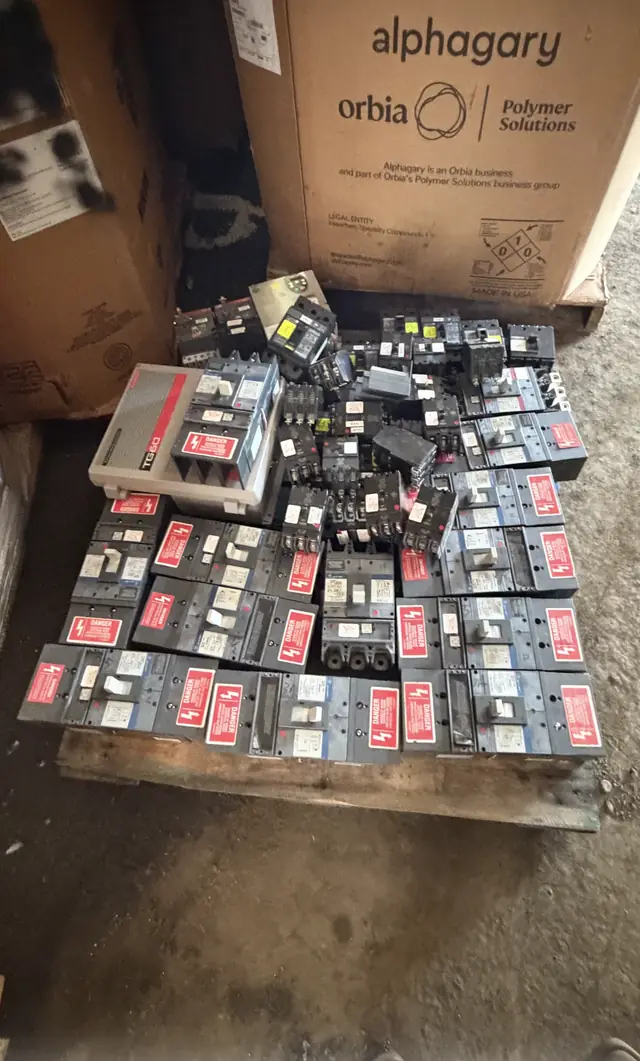
Do not attempt energized work to obtain identification or photos. Follow manufacturer instructions and use appropriately qualified electrical professionals and the authority having jurisdiction for safety-related actions.
What we buy and how we review submissions
We review qualifying automatic transfer switches (ATS) and manual transfer switches (MTS) for possible purchase. This includes common commercial and industrial designs such as enclosed switchgear-mounted units, standalone transfer boxes, bypass-isolation assemblies, and generator-control-integrated transfer systems when the original nameplate and control evidence are provided. Submitting items begins a review process; it is not a guarantee of purchase.
Your submission should clearly show the equipment you have, its condition, and the ratings that matter. Evidence of ratings and control type accelerates review. Because suitability into a specific electrical system depends on many variables beyond a sales review, we do not determine field compatibility, installation fitness, or system engineering on this page. Generator duty is an application for many transfer switches, but exact system suitability is outside a sales review.
- We accept both automatic and manual transfer devices for review — qualifying items only.
- Provide nameplate evidence and control/rating details to speed evaluation.
- Submission starts a review; it is not an appraisal, order, or safety inspection.
How to identify a transfer switch — exact fields we need
Use the original nameplate or manufacturer label as the primary identification source. Key fields we look for are manufacturer name, model or catalog number, serial number, rated operational voltage, rated frequency (if shown), continuous current rating in amperes, short-time or interrupting rating if marked, control type (automatic, manual, or automatic with bypass), and any auxiliary control modules or communication cards shown on the label. Photographs of the nameplate at readable resolution are essential because they provide the factual evidence we use to start valuation.
If the nameplate is missing or unreadable, provide alternative identification: clear photos of the control compartment showing wiring diagrams or stickered part numbers, close-ups of major components such as contactors, breakers, or motor operators, and any paperwork you have (installation labels, factory packing lists, or service tags). Be explicit in your submission about which unit is which when you have multiple similar pieces — include serial numbers and a count for each model.
- Essential nameplate fields: manufacturer, model/catalog, serial number, voltage, amperage, control type.
- Include photos of control modules, breaker modules, and any factory wiring diagrams.
- If the nameplate is missing, show close-ups of internal component tags and any service stickers.
Condition categories and defects that affect review
Describe condition honestly using specific terms: new surplus (unused in original packaging), like-new (minimal signs of storage handling), used serviceable (evidence of prior service with intact nameplate and enclosure), repaired/reconditioned (note who performed work and include documentation), or damaged (describe physical damage). We evaluate based on the evidence you submit; clear, accurate condition descriptions combined with photos reduce back-and-forth clarifying questions and help us determine whether a unit proceeds to purchase review.
Stop and consult a qualified electrical professional if you encounter safety-related warning signs before moving or photographing equipment. Examples of signs that may limit acceptance include heavy corrosion with pitting, evidence of overheating or fire, water immersion or significant moisture penetration, missing or illegible nameplates, or mechanical components that are visibly broken. We may ask for additional inspection details when those warning signs appear; providing repair records or maintenance logs can help.
- Acceptable evidence: readable nameplate, intact enclosure, no obvious fire or water damage.
- Higher-value condition: original packaging, factory markings, and service documentation.
- Limit acceptance: severe corrosion, melted components, missing critical parts, or soaked interiors.
Photos and documents we need — exact examples
Include a clear set of photos for each unit. Minimum recommended shots: a full-frame image of the assembled switch, a close-up of the original nameplate, internal wiring and control compartment, the transfer mechanism or motor operator, any auxiliary breakers or contactors, and the unit’s serial number tag. When the unit is part of a larger assembly — for example, a bypass-isolation frame or integrated generator control panel — include wide shots showing the entire assembly and close-ups of any removable modules.
Attach any related documentation you have: sales invoices, factory submittals, maintenance tags, or commissioning reports. When submitting multiple units, use a simple spreadsheet or labeled PDF that maps photos to serial numbers and quantities. Good photographic evidence reduces inspection questions and speeds the commercial review process.
- Essential photos: entire unit, nameplate, internal control wiring, transfer mechanism, serial tag.
- Include documentation: invoices, service records, submittals, and wiring diagrams if available.
- When submitting lots, label each file with model and serial number to avoid confusion.
How to organize lots and prepare for shipping or pickup
Group units by model and by condition to make quick comparisons possible. Create a simple manifest that lists manufacturer, model, serial number, condition category, quantity, and any missing parts or accessories. For large quantities, palletize identical items together and label pallets with manifest references so reviewers can match photos and paperwork to physical pieces. Accurate manifests reduce the time needed to confirm what you have and whether it qualifies for purchase review.
When packaging or staging units for shipment, secure loose parts and close or fasten doors and handles to avoid transit damage. Note gross dimensions and weight for oversized assemblies so logistics can be assessed, and photograph pallets or stacks as part of the submission. We do not provide shipping or pickup commitments on this page; use these steps to make handling easier for whoever will inspect or move the equipment.
- Group by model and condition; provide a manifest mapping serial numbers to photos.
- Palletize identical units and label pallets with manifest references.
- Document dimensions and weight for large assemblies; photograph pallets before shipment.
What drives commercial fit and value
Key elements that influence value include the rated amperage and voltage, the transfer mechanism (automatic motor operator, manual lever, bypass-isolation capability), the presence of factory accessories (control modules, communication cards, auxiliary contacts), and the readability of the original nameplate. Manufacturer and model series matter because some series retain demand longer; age and documented maintenance or refurbishment history are also important. Provide as much factual evidence of those attributes as you can — that evidence is what we base preliminary valuations on.
Obsolescence, missing parts, or unclear control evidence reduce value because buyers use ratings and control details to match equipment to needs. If equipment was configured for a specific generator or control system, note that in your submission but understand that proving compatibility for a particular installation requires more engineering than a commercial review provides. Submitting any calibration, test reports, or refurbishment receipts you have will help commercial assessment, but keep in mind submission does not guarantee purchase.
- Value drivers: readable nameplate ratings, control type, factory accessories, and manufacturer/model.
- Support value with maintenance records, test reports, and refurbishment documentation when available.
- Items missing key components or with unclear control evidence typically receive lower initial interest.
How to submit and what happens after you send information
Prepare your submission using the manifest, photos, and documentation described above and submit through the contact form or upload portal. Include contact information, general location, and whether items are staged for pickup or require disassembly. Submitting information starts our review process; it is not an appraisal, offer, acceptance, safety inspection, purchase order, or authorization to ship. We may request additional photos, more detailed documentation, or an in-person inspection before any purchase conversation proceeds.
For safety: do not attempt energized work to obtain photos or serial numbers. If labels are hidden behind live wiring or enclosed components, use a qualified electrical professional to safely access them and follow manufacturer instructions and the authority having jurisdiction. If you see burn damage, strong odors of combustion, or standing water, stop and have competent personnel verify the condition before moving the equipment.
- Submit a manifest, photos, and documentation through the upload portal or contact form.
- Submission is a review request only; we may ask for clarification or an inspection.
- Use qualified personnel to access equipment safely; do not take photos of energized components yourself.