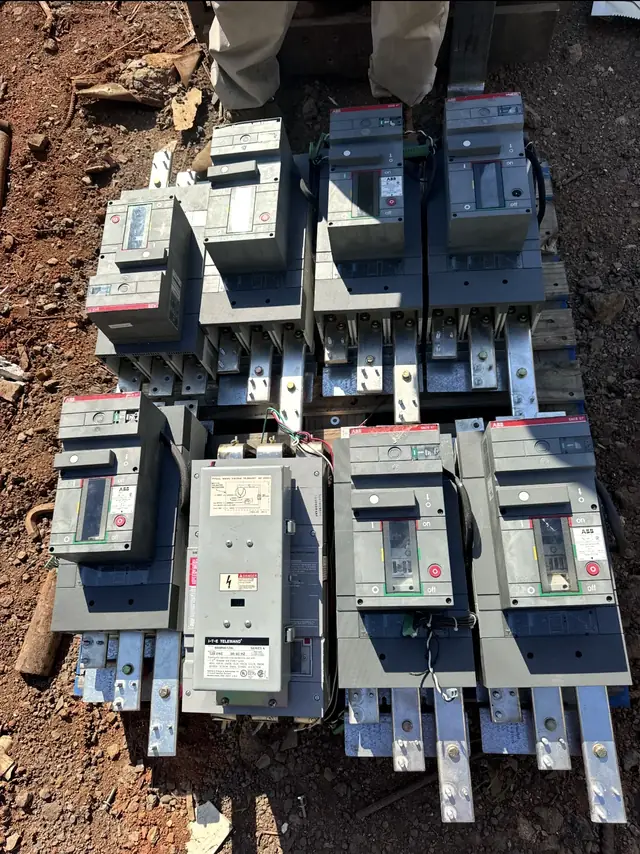
If you observe overheating, arcing evidence, exposed conductors, or unknown internal damage, stop and seek qualified help. Do not perform energized work or testing without following current manufacturer instructions and applicable authority requirements.
What we review and how we evaluate submissions
We review qualifying seller-marked EntelliGuard, Spectra, WavePro and AKR circuit breakers and associated trip units for potential purchase. Submitting equipment for review does not create a purchase order or inspection; it starts a commercial evaluation based on the information and labeling you provide. Manufacturer names appear only to identify item families. No manufacturer authorization, endorsement, or compatibility claim is implied or represented.
Clear, complete identification and condition details improve review speed and accuracy. Items with intact original labels and legible documentation are typically evaluated more quickly. Where a unit lacks readable identification, we may request additional photos or relevant literature to establish model, rating, and configuration. Response time varies with clarity of information and market interest.
- Seller-marked GE and ABB items in the listed families are considered for review.
- Submission initiates an evaluation; it is not a commitment to purchase.
- Intact original nameplates and labels materially improve review speed and accuracy.
Exact identification fields to include
Provide the exact text from every visible nameplate, label, and stamped marking. Useful identification fields include model or catalog number, type designation (including any trip-unit family), manufacturer label text, complete amperage rating, short-circuit interrupting rating (kAIC), frame size, serial number, date code, and any firmware or software tags on digital trip units.
If present, include notes about prior-generation or legacy labeling that indicates model lineage. When possible, transcribe the full nameplate text in your submission to supplement photos. If a label is partially damaged, indicate which fields are unreadable rather than estimating or substituting terms.
- Model/catalog number and frame size
- Amperage rating and kAIC (interrupting rating)
- Serial number and date code
- Trip unit family and firmware/version tags
- Any legacy or cross-reference markings on the labels
Honest condition descriptions that matter
Use plain, specific condition terms such as new-unused, new-surplus, used-serviceable, cosmetically damaged, repaired, or requires repair. Describe visible issues precisely—bent handle, dented frame, missing accessory covers, cracked plastic, rusted brackets, scuffed terminals—instead of broad descriptors like “good” or “working.” If an item was removed after a fault or event, state that fact without interpreting the cause.
If a unit has been repaired or modified, disclose what was changed and include any associated documentation. Units with undocumented internal work or missing factory components frequently require additional clarification, which can slow evaluation and affect commercial interest.
- Use specific categories: new-unused, new-surplus, used-serviceable, repaired, or nonfunctional
- Note any history of tripping, fault exposure, heat discoloration, or odor of overheating
- Disclose any undocumented repairs, internal modifications, or missing hardware/covers
Photos and documentation we need
High-resolution, well-lit, straight-on photos accelerate review. Include the main nameplate and every accessory or trip-unit label. If the breaker includes a digital trip unit or display, add a photo of any firmware/version screen and the text displayed when the unit is unpowered or in a default state. Avoid harsh reflections; use a neutral background and, when size is unclear, include a ruler or reference object in the frame.
Provide overall shots showing the entire unit and mounting interface, then add close-ups of critical details: handle position and markings, accessory modules, connector types, and any stamped or engraved identifiers. If available, attach original purchase documents, calibration or test records, and manufacturer datasheets for the same model. These materials help confirm identification and configuration.
- Mandatory: clear, readable photos of the main nameplate and any trip-unit labels
- Helpful: overall unit, handle, accessory modules, connectors, and any stamped IDs
- If available: purchase records, calibration/test documentation, and datasheets
Organizing lots and preparing multiple units
For multiple items, group identical or closely similar units by model, frame size, and condition. Separate OEM-configured units from units with third‑party modifications or non-factory accessories. Organizing by consistency allows buyers focused on specific configurations to evaluate more efficiently.
Label each lot clearly with a count, a concise condition summary, and representative photos. For mixed lots, call out meaningful differences (for example, two units with one firmware version and three with another). Do not ship equipment until you receive specific instructions; a submission and evaluation are not shipping or pickup authorizations.
- Group by model, frame size, configuration, and condition
- Provide counts, concise lot summaries, and representative photos
- Do not ship items until specific instructions are provided
Commercial fit and demand indicators
Buyers prioritize different attributes. Panel builders and integrators often value intact original nameplates and known firmware; refurbishers may prefer units suitable for their own downstream testing; end-users sometimes seek exact replacement frames or trip units. Legacy labeling and prior-generation references can be helpful where facilities rely on older documentation, so include any such details when available.
Buyer interest in AKR, EntelliGuard, Spectra, and WavePro varies by condition, configuration, documentation, and timing. Providing readable labels, firmware/version information, and clear photos helps assess commercial suitability more quickly. Remember that submission begins an evaluation process; not all items will be accepted for purchase.
- Intact nameplates, known firmware, and clear service history support faster evaluation
- Legacy markings can help buyers maintaining older systems
- Demand depends on supply, condition, configuration, and documentation
How to submit and what to expect next
Prepare the ID details, condition notes, and high‑resolution photos described above, then use the submission form on the parent page to upload your materials. Submissions are reviewed case by case, and you may receive follow‑up questions or requests for additional documentation. A submission does not represent an appraisal, offer, acceptance, or shipping authorization.
This page provides general identification and submission guidance only. For safety or compliance questions related to removal, installation, testing, or energized work, consult the current manufacturer instructions and a qualified electrical professional or the authority having jurisdiction.
- Collect complete nameplate transcriptions, condition notes, and required photos
- Upload materials via the parent page; follow‑up questions may occur
- For safety or installation questions, consult qualified professionals and manufacturer instructions