Stop if you see melting, charring, cracked or exposed parts, or heavy corrosion. Follow current manufacturer instructions and consult qualified professionals and the authority having jurisdiction as needed. A submission is not a safety inspection, purchase order, or authorization to ship.
What we review and the scope
We review qualifying GE THQL and ABB Q-Line residential-type thermal‑magnetic circuit breakers for potential purchase. Qualifying means the item is manufacturer‑marked as THQL or Q-Line, or carries clear model and series identifiers linking it to those families. Starting a submission begins a purchase review only. It is not an agreement to buy, a safety approval, or a determination of product suitability.
The scope centers on original‑manufacturer breakers with legible label data. Items represented as new‑surplus, unused, lightly used, or serviceable surplus can be submitted for review. Each submission is evaluated on its own merits, and outcomes may include acceptance, decline, or a request for clarification or additional information.
- Manufacturer‑marked THQL and Q-Line breakers with original label data
- Residential frame sizes in common single‑ or two‑pole configurations
- New surplus, unused inventory, like‑new serviceable units, and parts‑only
Exact identification fields to record
Record the visible label details exactly as printed. Key fields include manufacturer name (GE or ABB), series/family (THQL or Q-Line), catalog or model number, amperage rating, pole count, and any trip or interrupting details shown on the label. Note any date or lot code and the terminal style (screw, stab, or lug). Label information found on the sides or end caps is often essential for accurate review.
If a label is worn or partially missing, photograph every face of the breaker and capture any molded or stamped characters on the housing. Do not guess missing characters. Provide close‑ups of unclear areas so markings can be compared with known examples during review.
- Manufacturer and series (e.g., GE THQL, ABB Q-Line)
- Catalog/model number, amperage, and pole count
- Terminal type plus any date or lot code on the label or housing
Photos we need and how to take them
Provide clear, well‑lit images that show the full front label, both sides, the rear connection area, and the handle position. A high‑resolution close‑up of the front label is the single most important image. When available, include the original packaging or box and show any accessories, mounting clips, or retainers included with the breaker.
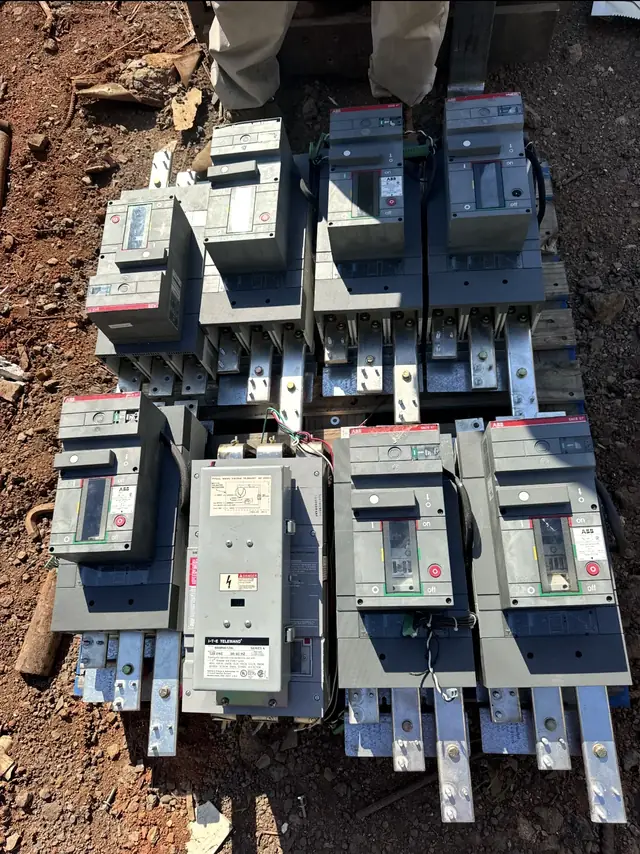
For lots, include representative close‑ups and at least one photo showing the whole group to confirm quantity and consistency. Use a plain, contrasting background. Minimize glare that can obscure stamped data, and add a common object for scale if labels are faint or components are small.
- Front label close‑up (high resolution)
- Side and rear profile shots showing terminals and housing
- Batch‑wide photo confirming quantity and consistency
Honest condition descriptions sellers must use
Use clear, non‑technical terms: new‑in‑box, new‑surplus, unused, like‑new, used‑serviceable, parts‑only, or damaged. Call out any observable issues such as missing screws, bent straps, cracked housings, corrosion, worn terminals, label loss, or modified handles. If there is discoloration, charring, or melted plastic, disclose it prominently and photograph it in detail.
Avoid asserting performance or safety without documentation. Do not describe a previously installed breaker as new. Only use terms like “certified” or “tested” when you can provide supporting documentation that is specific to the items offered. Specific, accurate condition notes reduce follow‑up and speed review.
- Common terms: new‑in‑box, unused, like‑new, used‑serviceable, parts‑only
- Disclose visible damage, modifications, and evidence of overheating
How to organize lots and what quantity info to provide
Group breakers so each lot is consistent by manufacturer, series, amperage, and pole count. Mixing THQL and Q-Line or combining multiple amp ratings in one lot slows evaluation and may prompt requests to separate items. For larger inventories, create practical lot sizes for handling and note the exact piece count on each lot label.
Include a brief inventory list with each submission: lot identifier, quantity, overall condition, and the core label fields for a representative unit in the lot. If some units differ (date codes, terminal types, handle color, or minor cosmetic variants), note those differences and show how many pieces are in each sub‑group.
- Make lots uniform by manufacturer, series, amp rating, and pole count
- Provide an itemized lot list: lot ID, qty, representative model/amp, condition
When THQL and Q-Line parts are a commercial fit
THQL and Q-Line breakers may be a fit for buyers who handle residential breaker inventory, panel rebuilds, or resale of surplus components. Items with clear labels, intact terminals, and consistent presentation are easier to evaluate. Larger, uniform lots of unused or like‑new stock are typically simpler to review than small assortments with mixed conditions.
Inclusion in a submission does not ensure purchase. Commercial fit depends on label clarity, condition consistency, lot size, and market interest at the time of review. Be prepared to provide additional photos, clarifying details, or provenance if requested to support evaluation.
- Stronger fit: clear labels, intact terminals, uniform lots, unused or like‑new
- Mixed or small lots may require extra documentation
Safety limits, red flags, and what to stop for
If you see signs of overheating (discoloration, melting, soot), cracked or exposed insulation, broken handles, missing hardware, or visible corrosion, stop and record those findings. Photograph these areas clearly and include them in the submission so potential concerns can be assessed during review.
Do not perform energized testing. Follow current manufacturer guidance, and rely on appropriately qualified electrical professionals and the authority having jurisdiction for any energized work, removal, or replacement decisions. A submission is not a safety inspection and does not establish compatibility or suitability.
- Red flags: charring, melted plastic, cracked housing, heavy corrosion, modified parts
- Do not perform energized testing; consult qualified professionals as needed
How to submit a clear request and the next step
To start a review, provide the manufacturer and series, catalog or model number, amperage, pole count, quantity, a concise condition summary, and the required photos (front‑label close‑up, side/rear profiles, and a batch photo). Also note where the items are located and any relevant packaging or pallet details. A submission is a purchase‑review request only, not an appraisal or shipping authorization.
After submission, we may ask follow‑up questions or request additional photos. If an offer is made, it will be based on the information provided and any subsequent verification. Organizing and labeling lots before you submit can help avoid back‑and‑forth and keep the review moving efficiently.
- Required fields: manufacturer, series, model/catalog, amp, poles, qty, condition
- Attach high‑resolution photos: label close‑up, side/rear, and batch overview
- A submission starts a purchase review; it is not a commitment to purchase