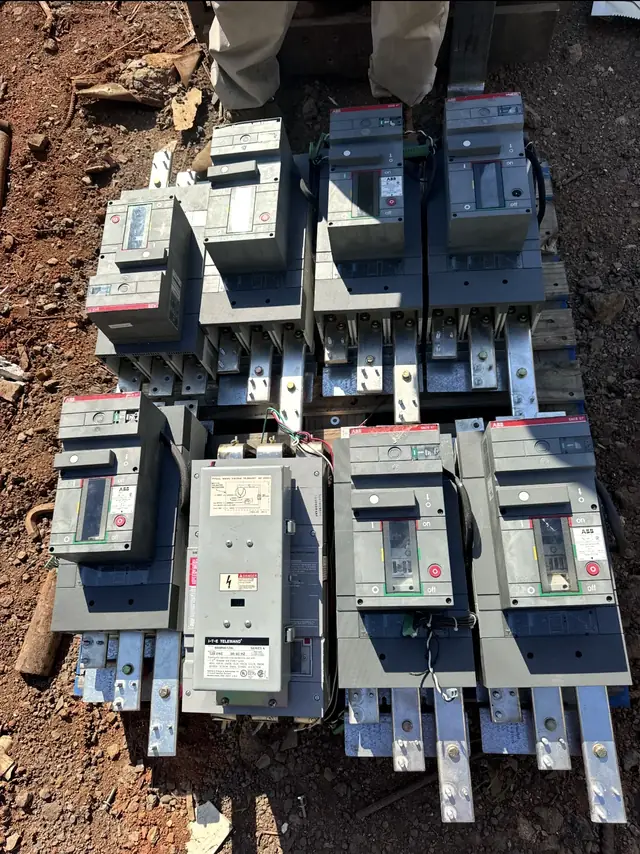
Stop and document any breakers showing burn marks, melted plastic, or corrosion. Follow the current manufacturer instructions and consult a qualified electrical professional and the authority having jurisdiction for removal, testing, or reuse. A website submission is not an appraisal, offer, acceptance, safety inspection, compatibility determination, purchase order, pickup commitment, or shipping authorization.
What we review and how to submit
We review qualifying ABB ReliaHome and GE PowerMark circuit breakers for purchase consideration. Submissions should include clear photos, accurate counts, and exact text from any manufacturer or third-party labels that reference ABB compatibility. Providing these items speeds evaluation; not all submissions will qualify for purchase.
A web submission is the best way to start. Use the parent sell page to provide model numbers, quantities, and photos. A submission is not an appraisal, purchase order, safety inspection, or authorization to ship—we will evaluate what you send and respond with next steps when items qualify for further review.
- We review qualifying residential and light-commercial breakers from the named series
- Submissions must include original labels and any ABB compatibility wording as printed
- Providing honest condition notes and organized lots improves review speed
How to identify ReliaHome and PowerMark breakers exactly
Accurate identification starts with the original label. Photograph and transcribe every line of the label exactly as printed—not paraphrased. Include the full model or catalog number, amp rating, pole count, trip type (thermal-magnetic, electronic), frame designation, and any date or lot codes stamped or printed on the housing.
If the label or packaging contains any ABB compatibility wording, copy that wording verbatim and include a close-up photo. Do not attempt to interpret or restate compatibility: we need the exact text as it appears so our technical review can assess the claimed interchangeability or accessory fit.
- Capture model/catalog number and any suffixes or revision codes
- Record amp rating and pole count (e.g., 1P, 2P, 3P, 4P)
- Transcribe and photograph any ABB compatibility text exactly as printed
Describe condition clearly: honest categories we use
Use straightforward, consistent language when describing condition. Common categories are: New/unused in original packaging, New-surplus (unused but packaging missing/damaged), Used-working (installed and removed, no visible electrical damage), Parts-only (missing internal parts or visibly damaged), and Unknown condition. Avoid ambiguous terms—give specifics such as 'no tripping history known' or 'handle damaged' when applicable.
Disclose visible damage, signs of overheating, corrosion, missing parts (mounting clips, handles), or repairs. If a breaker shows melted plastic, burn marks, or pitting on bus stabs, stop and do not attempt to reconnect it; note those observations in the condition field and include photos. Honest condition descriptions reduce back-and-forth and speed decisions.
- New/unused in original packaging
- New-surplus — unused but non-original or damaged packaging
- Used-working — removed from service with no visible electrical damage
- Parts-only or damaged — list specific defects
Photos and documentation we require
Good photos are essential. Provide high-resolution images that clearly show the complete label, front face, side housing, trip mechanism, and any date or serial codes. Include an overall shot of the lot or panel where the breakers were located so we can see mounting and accessory context. For packaged items, photograph the packaging with any labels intact.
Close-ups of bus stabs, connection points, and any ABB-compatibility statement must be sharp and legible. If a breaker has a detachable trip unit or accessory, photograph it both mounted and detached. Also attach any purchase invoices, packing lists, or manufacturer data sheets you have—these are helpful but not required.
- Full-unit shot showing front and profile
- Close-up of the original label and all text
- Close-ups of bus stabs, trip unit, and accessory interfaces
- Lot overview photo showing quantities and packaging
Organize quantities and prepare lots for review
Group breakers by exact model number and condition. Separate new-in-box items from used ones and label each box or pallet with a count and the model/catalog number. Mixed lots slow evaluation and lower commercial value; clear separation by model, frame, and condition speeds our technical and commercial review.
Provide a simple count sheet that lists each model, quantity, and condition category, and include the count sheet in the lot overview photo. If you have serial numbers or date codes, include a representative sample—do not send personal information. Well-organized lots typically receive faster responses and clearer next steps when qualifying.
- Keep identical models and identical condition together
- Label boxes/pallets with part number and quantity
- Include a count sheet in the lot photo for quick verification
Commercial fit, compatibility limits, and safety boundaries
Physical appearance or a label claiming compatibility does not guarantee suitability for a particular application. We will review any ABB compatibility wording you provide as part of our technical assessment, but acceptance for purchase is independent of any claimed interchangeability. We do not certify compatibility or authorize installation or reuse.
Never attempt installation, energizing, or in-field testing yourself for items you intend to sell without following current manufacturer instructions and consulting a qualified electrical professional and the authority having jurisdiction. If you observe heat damage, odor, or other warning signs, stop handling and document the condition with photos; do not provide attempted repair or rework information as a substitute for honest condition disclosure.
- Label claims are evaluated by our technical review, not accepted automatically
- Physical fit does not equal electrical suitability
- Follow manufacturer instructions and consult qualified professionals for any reuse
How to submit and what to expect next
When you are ready, assemble your photos, transcriptions of original labels (including any ABB compatibility wording exactly as printed), and a count sheet, then use the parent sell page to submit the lot details for review. Include your contact details and be prepared to answer follow-up questions about condition or provenance; clear information reduces delays. Remember that a submission is for review only and does not create a purchase obligation on either side.
After you submit, we will evaluate the provided documentation and respond with a request for clarification, a condition-based checklist, or instructions for next steps if the lot qualifies for further consideration. Do not ship items until you receive explicit instructions that detail how and where to send them—submitting a lot is not authorization to ship.
- Gather photos and exact transcriptions of original labels first
- Submit via the parent sell page with model numbers and counts
- Await our response before preparing shipment or disposal