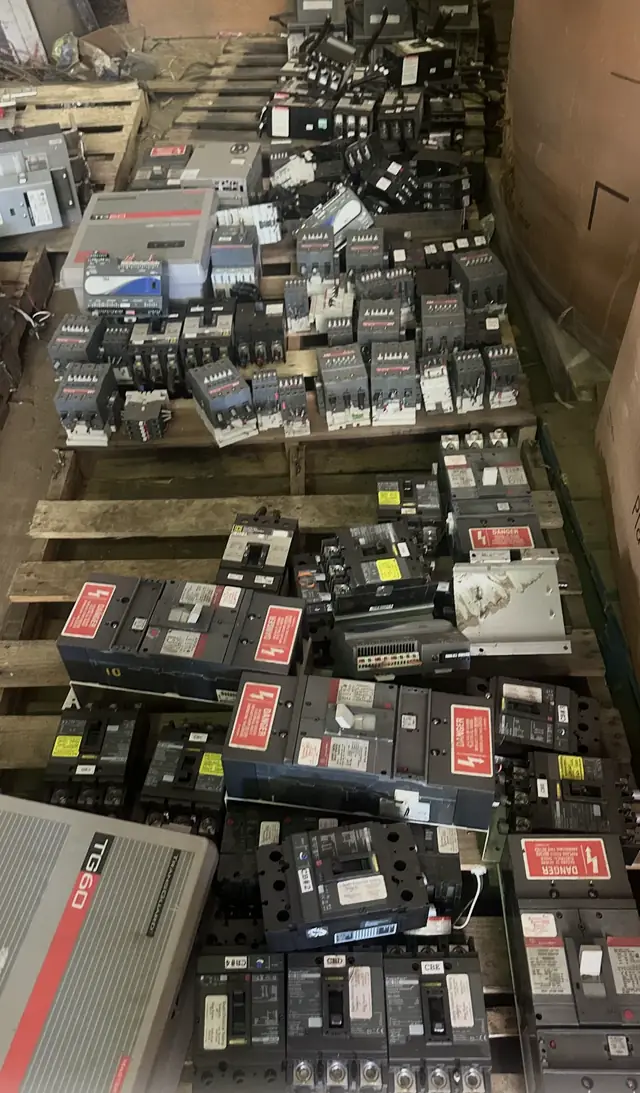
If a breaker shows burning, melted plastic, severe corrosion, water damage, or exposed live parts, stop and consult a qualified electrical professional.
What we buy and how this page helps
We review qualifying Pushmatic and Bulldog circuit breakers for potential purchase. This page helps sellers identify these legacy breakers, describe their condition clearly, and assemble photos and documents that support a smooth review.
Submitting items begins a conditional, commercial review only. It is not an appraisal, offer, acceptance, authorization, or instruction to ship. Reviews consider identification, visible condition, and basic safety-related concerns. Clear labels and honest descriptions improve review outcomes; unreadable labels or concerning damage may lead to no purchase.
Exact fields to use when identifying Pushmatic / Bulldog breakers
Capture the printed and stamped fields on the unit rather than relying on shape alone. Prioritize the original front label for brand name, catalog or part number, ampere rating, series/frame, date or lot codes, and any certification marks.
Physical features can support identification but are not definitive by themselves. Note handle style and body markings, and include any secondary stickers or shop tags. Archived manufacturer materials (including Siemens sources where relevant) can assist with obscure numbers but do not replace visible markings on the part.
- Front label text (brand, catalog/part number, amp rating)
- Date/lot codes and any stamped production numbers
- UL/CSA marks or other agency listings printed on the label
- Any patent numbers, factory codes, or secondary stickers
- Visible model numbers stamped or molded into the body
Honest condition language to use when listing or submitting
Use clear, consistent terms so reviewers can triage items quickly. Helpful categories include: New, Unused in Box (NIB); New Old Stock (unused, packaging may be absent); Functionally Unknown (no testing performed); Visibly Damaged; and Missing Parts.
Be explicit about missing pieces or modifications: clips, handles, screws, accessories, or labels. If any non-energized checks were performed, describe them plainly and include photos. Do not perform live electrical testing if you are not qualified.
- New, Unused in Box — original packaging intact and label legible
- New Old Stock — appears unused; packaging absent or open
- Functionally Unknown — no safe testing performed; label present
- Visibly Damaged — burned, melted, cracked, or corroded
- Missing Parts — broken clips, missing handles, or torn labels
Photos and documentation that materially speed review
Clear, well-lit photos reduce back-and-forth and improve the chance of a favorable review. Provide close-ups of the original front label, side and rear markings, date/lot codes, and certification marks. Include a close-up of the handle and mounting areas and a wide shot that shows the overall size and form factor.
Label detail is the most important element. If a label is scratched or partially missing, capture macro shots from multiple angles; partial numbers plus consistent physical features can sometimes confirm identity. Avoid removing labels or using solvents. If available, include photos of original packaging, manuals, job tags, invoices, or archived manufacturer spec pages as supporting documents.
- Close-up of front label showing brand, part number, and amp rating
- Rear and side stamping, casting, or printed marks
- Handle and mounting clip areas in detail
- Date/lot code and any patent or factory stamps
- Wide context shot showing overall size and mounting orientation
- Box, manuals, or archived Siemens spec sheets if available
How to organize lots and prepare a submission
Group inventory into lots of identical, clearly labeled parts. Organize by catalog/part number, amp rating, and condition. For mixed lots, provide an itemized list showing quantities per part number and condition category.
Use simple, consistent identifiers across photos and documents. If you submit photos only, include a spreadsheet listing part numbers, quantities, observable date codes, and a brief condition tag for each line. Do not ship items until you receive explicit shipping instructions from a buyer.
- Group identical part numbers and count per group
- Label each box with part number and quantity and photograph the label
- Include one inventory spreadsheet or packing list with submission
- Keep units physically matched to their listed condition
What typically makes a Pushmatic/Bulldog breaker attractive to buyers
Buyers generally favor units with readable original labels, complete part numbers, and consistent date codes across a lot. Unused or lightly handled items with intact labels draw more interest because identification is faster and more reliable.
Documentation such as original packaging, archived manufacturer spec pages (including Siemens references where relevant), and related procurement records improves traceability. Items with missing labels, visible heat or water damage, or aftermarket modifications require more scrutiny and may not be purchased.
- High interest: intact original label, matching lot/date codes, NIB or NOS
- Moderate interest: readable labels with mixed cosmetic wear
- Low interest: missing labels, heat/water damage, or modifications
Safety limits, purchase review boundaries, and how to submit
Reviews may consider safety-related concerns based on visible condition and available documentation, but this is not a substitute for inspection by a qualified electrical professional. Do not perform live electrical work unless you are qualified. Stop and seek help if you observe burning, melting, severe corrosion, or signs of overheating or water exposure. Follow current manufacturer instructions and applicable authority having jurisdiction for removal, testing, and handling.
To start a submission, gather the photos and documents described above and use the online submission form to upload images and your inventory list. A submission initiates review only; it is not an appraisal, purchase order, or permission to ship. You may receive follow-up questions or requests for additional detail or larger lot photos before any purchase decision.
- Do not energize parts to test condition if you are not qualified
- Stop if you observe burning, melting, or significant corrosion
- Submission is for review; wait for explicit shipping instructions