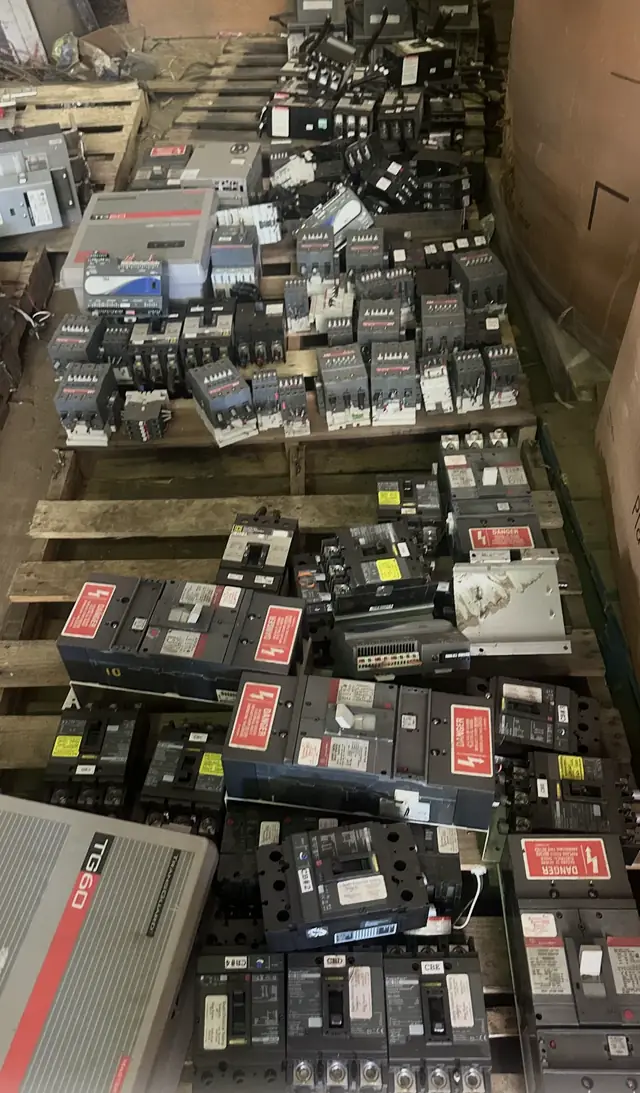
This page is informational. Do not perform energized testing or electrical removal yourself. Follow current manufacturer instructions and retain appropriately qualified electrical professionals and the authority having jurisdiction for any testing, removal, or installation. A website submission is not an appraisal, offer, acceptance, safety inspection, compatibility determination, purchase order, pickup commitment, or shipping authorization.
What we review and which legacy brands are consolidated here
We review qualifying legacy circuit breakers and associated electrical equipment for purchase consideration. Sellers should expect an initial review based on the identification fields, photographs, condition descriptions, and ownership documentation they provide. We consolidate common legacy labels and series so sellers can find the fields buyers use to evaluate older, out‑of‑production parts.
This page covers seller‑marked equipment associated with legacy labels such as Bryant, Crouse‑Hinds, T&B (Thomas & Betts), Wadsworth, Pushmatic and other historical names often found in older installations or salvage. Mentioning a brand here identifies the seller‑marked equipment only and does not imply manufacturer authorization, universal compatibility, or that every item bearing a legacy label will be accepted.
- We consider legacy molded‑case breakers, fusible switches, distribution panels, and factory‑installed breakers when properly documented.
- Not every item is purchased; submissions enter a review process.
- Brand names on this page identify seller‑marked equipment only and are used for identification, not endorsement.
Exact identification fields buyers need
Clear, contemporaneous label information is the quickest way to verify lineage. On the breaker or assembly, capture the model or series name, full catalog or part number, ampere rating, number of poles, trip style (thermal/magnetic descriptors when present on the label), and any date or lot codes. If the label includes a factory serial number, revision letter, drawing code, or internal assembly number, record those exactly as printed.
Other helpful fields are chassis or frame numbers, terminal type, mounting orientation, factory applied finish codes, and any markings that indicate the breaker was modified or reconditioned. Buyers use combinations of these fields to confirm that an older label matches the item being offered; missing or partially illegible fields slow review and can lower interest.
- Model/series and full catalog or part number (exact characters).
- Amp rating, pole count, and trip type markings.
- Date codes, lot/serial numbers, and revision codes.
- Frame/chassis numbers and terminal/mounting style.
Honest condition language every seller should use
Describe condition using precise, non‑speculative terms. Common, useful descriptors include new‑surplus (unused), factory‑reconditioned (when supported by paperwork), good working order (if you include provenance and have confirmation from a qualified technician), cosmetically damaged, missing parts, or unknown functional state. Avoid making performance or safety claims about legacy equipment; do not assert that a breaker will meet modern protective functions unless you provide test reports from a qualified electrical professional.
Indicate obvious physical problems and safety flags: cracked housings, exposed buswork, corrosion at terminals, signs of overheating, or evidence of prior modification. If you lack information about functional condition, state that plainly. Sellers should stop any attempt to operate or energize unknown devices themselves and rely on appropriately qualified electrical professionals for functional testing and verification.
- Use precise descriptors: new‑surplus, cosmetic damage, missing hardware, unknown functional state.
- Note visible safety flags: cracks, melted insulation, rust, burn marks, or aftermarket modifications.
- Do not assert performance or code compliance without documented, qualified testing.
Original label gallery checklist: photos that speed review
A gallery of clear photos is one of the fastest ways for a buyer to confirm label lineage. For each unique breaker or assembly include close‑up shots of any factory labels, full‑assembly photos to show mounting and accessories, and context shots that show serial numbers relative to the whole unit. When a label is partially worn, provide multiple angles and wider context so reviewers can reconcile worn characters with surrounding cast or stamped features.
Technical reviewers expect legible photographs: sharp focus, even lighting, minimal glare, and a neutral background. Avoid handwritten notes stuck over labels; instead, include a small, legible placard in the image that states the item’s lot number or photo reference. If you submit many identical items, include a representative sample gallery plus a single photo of the lot count and packaging.
- Close‑ups of every label and nameplate with readable characters.
- Full‑assembly photos showing mounting and associated hardware.
- Context photos showing serial numbers in relation to the unit.
- One representative item photo plus lot‑count photo for multiples.
Prepare lots for commercial review and pricing
Organize inventory into consistent lots by brand, model/series, condition, and quantity. Commercial buyers evaluate the ease of resale and reconditioning, so a lot with consistent part numbers and similar condition will generally be easier to review than mixed, single‑piece listings. For legacy brands, highlight quantity, repeatability, and any matching documentation that accompanies multiple pieces.
Label each lot clearly, include a count, and describe packaging or palletization. If you have functional test reports, repair logs, or batch reconditioning notes tied to a lot, include those as attachments in the submission. Remember that submission documentation is used to screen items for further review and does not constitute an offer or purchase agreement.
- Group identical model/series and similar condition together.
- Provide lot counts, packaging details, and representative photos.
- Attach any test reports, reconditioning records, or batch paperwork.
Owner policy expectations and safety limits
To advance a submission toward potential commercial consideration, sellers should document clear ownership or authorization to sell. Helpful documents include invoices, decommission or surplus notices, asset tags, and origin statements. Provide what you have; reviewers may request additional documentation to continue the process. Stating known history transparently reduces delays and helps align expectations.
Safety limits: do not perform energized testing or field modifications yourself. If an item exhibits warning signs—burning smells, severe corrosion, missing safety covers, or evidence of overheating—stop and consult a qualified electrical professional. Follow current manufacturer instructions where available and engage an appropriately licensed technician or the authority having jurisdiction for any electrical work, removal, or testing.
- Provide invoices, asset tags, decommission records, or transfer authorization when available.
- Owner documents help establish provenance; reviewers may request additional information.
- Stop if you see burn marks, melted components, extreme corrosion, or other safety warnings; use qualified professionals.
How to submit items for purchase review
Use our submission form to provide the identification fields, condition descriptions, label gallery, and ownership documentation described above. Include lot organization notes and any representative test or reconditioning records you have. Submissions are evaluated against demand, condition, provenance, and documentation; qualifying items enter a more detailed review. A submission is not an appraisal, purchase offer, acceptance, safety inspection, purchase order, pickup commitment, or shipping authorization.
If a submission passes initial screening, a buyer representative may request additional information or clarification. At all stages keep safety foremost: do not energize unknown equipment to produce a working test, and have any required functional testing completed by an appropriately qualified electrical professional. Clear, correct, and complete documentation speeds review and reduces the likelihood of follow‑up questions.
- Complete the online form with exact label fields, clear photos, and honest condition descriptors.
- Attach owner documentation and any available test or reconditioning records.
- Submissions are for review only; further contact may request additional information before any commercial decision.