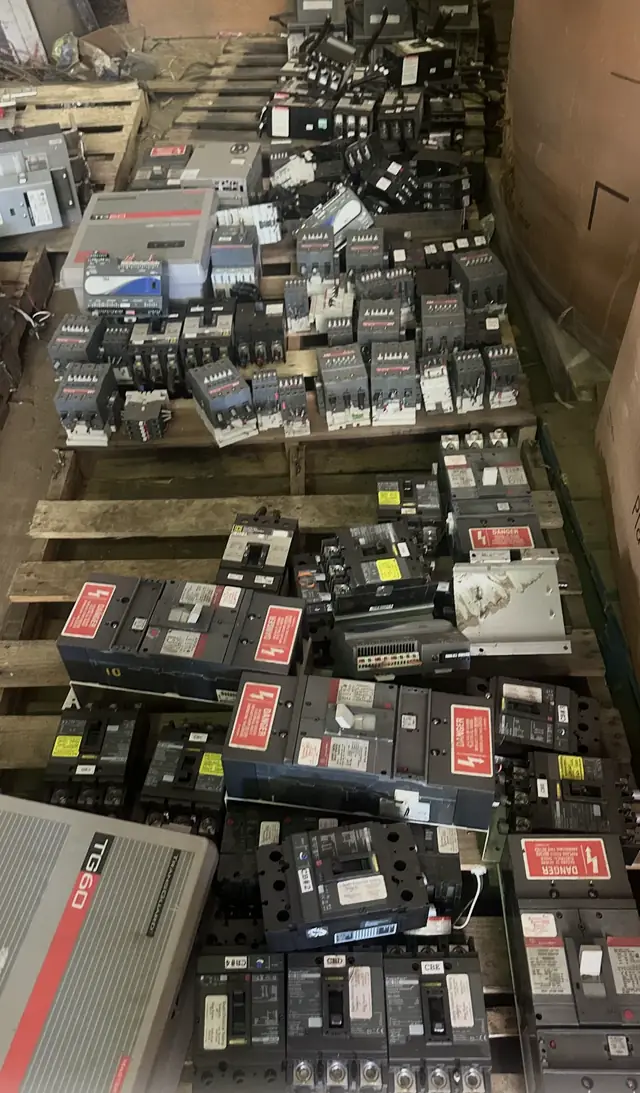
If you find burn marks, melted insulation, missing parts, or signs of overheating, stop handling the device and consult appropriately qualified electrical professionals. Always follow the current manufacturer instructions and the authority having jurisdiction. A website submission is a purchase review request only and not a safety inspection, approval, or installation guidance.
Why evidence matters: we inspect, not assume
We review qualifying circuit breakers for purchase, but we do not rely on physical fit or brand reputation alone when assessing compatibility with a particular panel. Our purchase review process begins with the same types of documentary and visual evidence an inspector or a product-compliance specialist would use: manufacturer instructions, any NRTL marking and associated test reports, and an exact match between the breaker’s catalog/part number and the panel nameplate listing.
This page explains how to collect and present those items of evidence. It also clarifies the difference between a breaker that is 'listed' for a specific panel and one that has only 'classified' information available. Those distinctions matter for commercial resale and for safe re-use; they affect whether the manufacturer explicitly certifies the breaker for use in a particular enclosure or whether third-party testing has established limited conditions of suitability.
- We review qualifying items submitted for purchase — submission is not an acceptance or inspection.
- Physical fit is useful but not sufficient evidence of compatibility.
- Manufacturer instructions and NRTL marks are primary evidence in a compatibility assessment.
Listed versus classified: what each term indicates about evidence
In practical terms for buyers and asset managers, a breaker that is described in manufacturer materials as 'listed for' a particular panel means the manufacturer’s documentation explicitly identifies that breaker model as acceptable for installation in that panel. That documentation — the written instructions, catalog data, or the panel’s own nameplate — is the top-level evidence used to determine compatibility in a purchase review.
A 'classified' designation generally appears where a breaker has been evaluated under a limited set of test criteria or where a testing laboratory has established constrained conditions of acceptability. Classified evidence may be adequate for certain uses but typically requires closer review of the testing scope and any limiting conditions.
- Listed: explicit manufacturer identification of the breaker for use in specific panels or panel models.
- Classified: limited-evidence acceptance, often tied to testing parameters or adapters.
- Documentation hierarchy matters: manufacturer instructions + panel nameplate are stronger than physical fit alone.
Exact identification fields to collect and submit
When you prepare equipment for a compatibility review, include the breaker’s identifying fields exactly as they appear on the product label and in any attached documentation. Reviewers rely on the literal text on nameplates and instruction sheets to match part numbers, catalog numbers, trip ratings, and NRTL marks against the panel’s list of acceptable breakers. Missing or ambiguous markings are the single biggest cause of delays in a purchase review.
Gathering complete identification details reduces back-and-forth and helps establish whether the breaker may be listed for the panel or only classified. The goal is to provide the same information an inspector would read without having to handle the device in person.
- Breaker label: manufacturer name, catalog/part number, serial or date code, ampere rating, trip curve (e.g., B, C, K), and interrupting rating (AIC).
- Panel nameplate: panel model, catalog numbers for acceptable breakers, and any listed breaker catalog numbers.
- NRTL mark photo: close-up of any mark (for example UL or similar) and any adjacent text.
- Documentation: instruction sheet, catalog page, or manufacturer bulletin that references the breaker-to-panel relationship.
Useful photos and lot organization for faster review
Photographs are often the fastest way to transmit key evidence. Provide clear, well-lit photos of the breaker label, the breaker from the front and rear, and the panel nameplate showing the authorized breaker list. For internal trip units or adjustable trip settings, include a photo that shows the setting plate or range. If you have the manufacturer instruction sheet or a catalog page, photograph or attach it as a PDF alongside the images.
Organize breakers into logical lots and document consistency within each lot. A lot can be based on identical catalog numbers, factory date code ranges, or identical condition. When breakers are grouped logically, reviewers can sample the supplied evidence and apply the same conclusions across the lot, which speeds the process and reduces the need for individual handling.
- Photo set per breaker: front (handle), label close-up, rear/mounting face, trip unit/settings (if adjustable).
- Panel photo: full nameplate showing model and any listed breaker numbers.
- Lot notes: number of pieces, catalog numbers, date-code range, and any observed variations.
- File types: high-resolution JPGs or PDFs; clearly named files (e.g., PanelNameplate.jpg, BreakerA_Label.jpg).
Commercial compatibility factors and common pitfalls
Commercial compatibility depends on more than whether a breaker snaps into the bus. Key mechanical differences — bus engagement style, stabs versus blades, breaker depth and rail spacing, and handle tie or shunt-trip interfaces — can vary between panels that look similar. Electrical differences such as trip curve, available interrupting rating, and whether the breaker contains integral GFCI/AFCI or electronic trip units also affect whether a breaker is acceptable for a particular installation and manufacturer listing.
Common pitfalls include accepting a breaker because it physically fits, ignoring a panel’s explicit list that names only certain catalog numbers, or overlooking limiting language in a classification report. For resale and re-use, the presence of a manufacturer listing or an explicit classification reference is what reviewers and inspectors will look for; undocumented substitutions create uncertainty and may reduce market value.
- Mechanical fit does not equal listed acceptance — always match labels and documentation.
- Check for required accessories: handle ties, filler plates, or mounting adapters that may be part of the listed assembly.
- Be aware of integral functions (AFCI/GFCI, electronic trip) that may be restricted by panel instructions.
Safety limits: when to stop and call a professional
Do not attempt energized testing, live interchange, or installation to confirm compatibility. If breakers show burn discoloration, melted insulation, corrosion, evidence of overheating, or missing internal parts, stop and record those conditions. Those items may be unsafe for re-use and require evaluation by qualified electrical professionals or product-compliance specialists who can perform appropriate de-energized inspection and testing under controlled conditions.
Follow the manufacturer’s written instructions and the guidance of appropriately qualified electricians and the authority having jurisdiction for any safety, removal, or re-installation activity. A seller’s submission to us is a purchase review request and not a safety inspection or installation clearance.
- Stop and document: smell of burnt insulation, visible overheating, crusted corrosion, or missing/plastic parts.
- Avoid energized fit trials — these create safety hazards and can invalidate traceability.
- Engage an appropriately qualified electrical professional for any removal, testing, or re-installation work.
How to submit breakers for our purchase review
To request a purchase review, assemble the identification fields, photos, and any available manufacturer documentation as described above. Create one submission per logical lot and clearly indicate the lot count, part/catalog number as shown on the breaker label, and a concise condition summary (for example: new-surplus in factory packaging; used, cleaned; used with corrosion on terminals). We review qualifying items for purchase; a submission starts that review but is not an acceptance, pricing, or pickup order.
Include contact information and preferred method to receive follow-up questions. Faster responses result when the submission contains both the breaker label photos and the panel nameplate or instruction sheet that allegedly lists that breaker. If you are uncertain about what to include for a particular lot, a short note describing the available paperwork will help us triage the submission for the appropriate technical reviewer.
- Submit per lot: catalog/part number as labeled, quantity, condition summary, and photo set.
- Attach any instruction sheets, catalog pages, or NRTL-mark photos you have.
- A submission is a request for purchase review only; it is not an inspection report, offer, or authorization to ship.