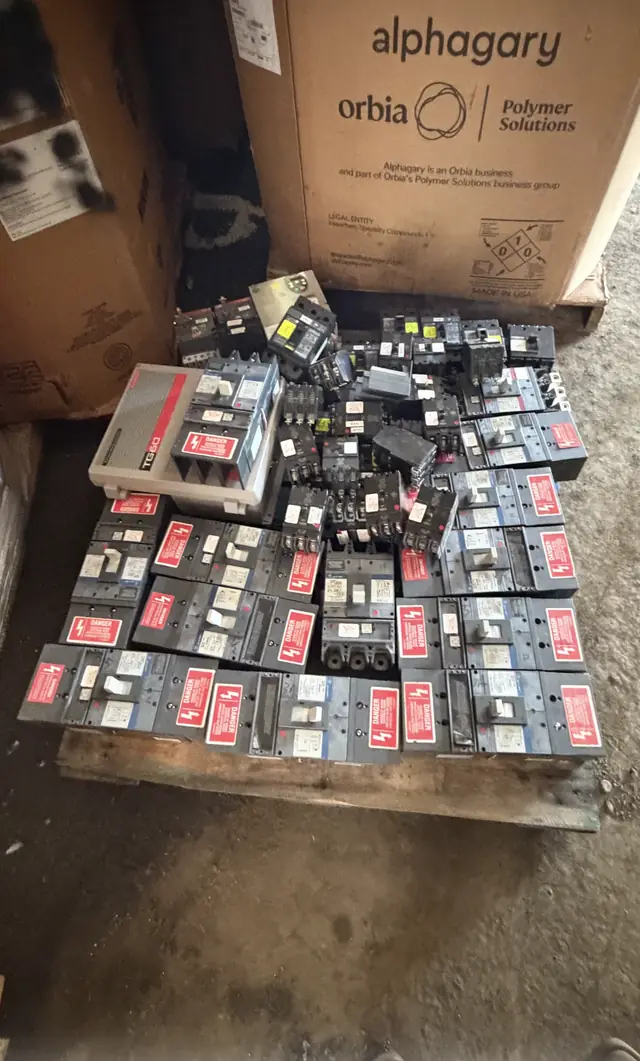
Stop and consult a qualified electrical professional if you encounter damaged or energized equipment. Follow manufacturer instructions and never attempt live testing for a sale.
Why the distinction matters and how we approach submissions
We review qualifying ground-fault devices and assemblies for purchase. This page is written to help you distinguish devices intended to protect people from electrocution from those intended to protect equipment or the electrical distribution system, and to explain what information helps us evaluate an item for purchase review.
Ground-fault terminology overlaps in everyday use, which creates confusion when buyers, sellers, and technicians try to identify what a device actually does. Read the label fields and collect photos before you submit: that information is the primary basis for a purchase review, not an energized test or an informal guess.
- We do not require energized testing; provide clear nameplate photos instead.
- This guide focuses on identification and commercial fit, not on installation or testing procedures.
- If a device has ambiguous markings, include manufacturer documentation or OEM labeling in your submission.
A concise terminology matrix — terms and what they mean in practice
Different abbreviations describe different protection goals. Below is an original terminology matrix to separate common terms and help you read product labels. Each line lists the common label or abbreviation, the primary protection intent, and where you typically find the device.
Use this matrix as an identification checklist when photographing and describing items. Manufacturer (OEM) labels and UL/third‑party marks are primary evidence of intended function; if you can capture those marks clearly in photos, it speeds review.
- GFCI (Ground-Fault Circuit Interrupter): Designed to protect people by sensing imbalance between conductors; commonly found in receptacles, portable devices, and some branch-circuit breakers.
- GFPE / GFP / Ground-Fault Protection of Equipment: Intended to detect ground-fault currents that threaten equipment or conductors; commonly applied at upstream breakers or feeders.
- EGF (Equipment Ground-Fault): A generic label sometimes used on switchgear or protective relays to denote equipment-focused ground-fault sensing.
- LSIG (Long-Time, Short-Time, Instantaneous, Ground): A breaker trip curve descriptor that indicates various trip elements including a ground-fault element; presence of this acronym alone does not define personnel protection.
How to identify devices intended for personnel protection
Devices that protect people from shock are labeled and marketed as ground-fault circuit interrupters or GFCIs. On nameplates and faceplates look for the GFCI designation, a manufacturer statement that the device provides personal protection, or language indicating protection against differences between line and neutral currents.
When photographing a candidate device, capture the front marking, the full nameplate, and any installation-specific labeling such as ‘GFCI protected’ stamped near a receptacle. Don’t attempt to perform trip tests yourself; leave testing to a qualified electrical professional following manufacturer instructions.
- Common locations: bathroom, kitchen, outdoors, portable equipment — receptacles and some breakers.
- Label clues: the word 'GFCI' or 'ground-fault circuit interrupter' on the face or nameplate; manufacturer instructions may describe 'personnel protection.'
- Photo checklist for personnel devices: face/receptacle, nameplate, mounting box, and any control buttons or test/reset markings.
How to identify equipment or system ground-fault protection
Equipment or system ground-fault protection devices are intended to limit damage to conductors and equipment by clearing ground faults selectively. These devices are often part of switchgear, distribution breakers, or protective relay schemes and are labeled to indicate equipment protection rather than personal protection.
Look for names such as GFPE, GFP, ground-fault protection, or terminology indicating 'equipment protection' on the nameplate and for trip characteristic descriptors. As with personnel devices, clear photos of the nameplate, model, and any reference drawings help establish intended use during a purchase review.
- Common locations: main distribution, switchgear, feeders, motor control centers.
- Label clues: 'Equipment ground-fault,' 'GFPE,' or mentions of protection of conductors or equipment rather than personal protection.
- Photo checklist for equipment protection: breaker face, nameplate, internal tag (if accessible and safe), and enclosure labels.
Why markings can be misleading and what to check on the nameplate
Some devices carry multiple labels or have trip elements that serve different purposes; for example, a breaker used in a system may include a ground-fault element but not be intended for personnel protection. Do not assume function from appearance alone. Read the exact text on the nameplate and any UL or OEM marking to determine intended function.
When markings are ambiguous, the combination of the device’s model designation, trip element descriptions, and the manufacturer’s published product literature is what clarifies function. Include photos of the entire label area, closeups of model numbers, and any accessory modules or trip units when you prepare a submission.
- Exact fields to capture: manufacturer name, model/part number, serial number, 'ground-fault' terminology, listing marks (UL/other), and rated voltage/ampere/interrupting ratings.
- If the face uses acronyms (LSIG, GF, etc.), photograph the trip unit or internal label where fuller descriptions appear.
- Do not rely on physical fit or connector type alone to determine whether a device is a personnel protector.
Prepare identification, honest condition notes, photos, and lot organization
We review qualifying items for purchase based on documented identification and condition. Provide a concise, honest condition description such as 'new surplus, never installed,' 'used in service, functional unknown,' or 'parts only with broken faceplate.' Honesty about condition shortens review time and helps us determine commercial fit.
Organize lots by device type and label. For each unique model or labeled function, submit the specific photos and nameplate information outlined below. A submission is not an appraisal or purchase order — it initiates a review. We will contact you if the item qualifies for further steps; do not ship devices until you receive explicit instructions.
- Essential identification fields: manufacturer, model/part number, catalog number, full nameplate text including any 'GFCI' or 'GFPE' wording, rated voltage and amperage, and listed safety marks.
- Condition notes: new surplus; used — cosmetic wear; used — removed from service; parts-only; damaged (describe).
- Photo set: full device face, close-up of nameplate, side and rear connection points, any accessory modules or trip units, and lot overview showing quantity and grouping.
Safety first: do not energize, do not test in place; next step for submissions
Do not remove devices from energized equipment or perform live testing for the purpose of a sale or identification. Stop if you find scorch marks, melted insulation, arcing evidence, or exposed conductors and have the situation assessed by a qualified electrical professional and the authority having jurisdiction. Follow manufacturer instructions when performing any inspection or maintenance.
If you have the documentation and photos described above, submit them through our contact process for a purchase review. Remember a submission is not a purchase agreement or safety inspection. We review qualifying items for purchase; providing the requested information is the best way to accelerate that review.
- If you see thermal damage, labeling that’s been defaced, or missing nameplates, disclose that in your condition notes and photos.
- Do not attempt to bypass or defeat any protective device to read a label.
- Submit photos and identification electronically; await review results before packing or shipping.