This page is informational only. Stop work if you encounter burning, arcing, smoke, or other dangerous conditions. Follow manufacturer instructions and contact a licensed electrician and your local authority having jurisdiction for permitting and inspection requirements.
Our role and the limits of this guide
CircuitBreakerBuyer reviews qualifying breakers and electrical equipment for possible purchase. This page is educational: it explains how permit and licensing answers are determined locally and how to prepare for an AHJ inquiry. A web submission to our team is not an appraisal, permit application, acceptance, inspection, or purchase commitment.
We do not give step-by-step installation, energized testing, removal, or lockout instructions. If you see burned components, arcing, melting plastic, smoke, or other signs of imminent danger, stop work immediately and contact a qualified electrical professional and the authority having jurisdiction for your location.
- We review qualifying items for purchase; submit identification and photos for review.
- This guide helps you gather the facts your local AHJ will need to decide on a permit.
- Consult a licensed electrician and your AHJ before attempting work.
Why there is no single national answer
Electrical permitting and the scope of licensed work are administered locally by building, electrical, or permitting departments. Municipalities and counties set permitting thresholds, homeowner exemptions, and which trades must perform electrical work. That means replacing a breaker that is permit-free in one place might require a permit or a licensed electrician in another.
Answers also differ by context: like-for-like replacements in the same panel are treated differently than upgrades to service equipment, changes that affect grounded circuits or protective devices, and work in commercial or multi-family buildings. Always treat any permit guidance as specific to the AHJ you contact for the address where the work will occur.
- Permits can depend on property type (single-family, multi-family, commercial).
- Service equipment and meter-area work is commonly treated more strictly than branch-circuit breaker swaps.
- Some AHJs allow homeowner-performed like-for-like replacement; others require licensed electricians for any change.
What identification fields and photos AHJs and electricians ask for
When you call an AHJ or consult an electrician they will want clear identification for the breaker and the installation. Useful label fields include: manufacturer name, catalog or model number, ampere rating (A), frame or interrupting rating (AIC or kA), trip curve if present (B, C, K, etc.), date or lot codes, UL/ETL listing marks, and whether the breaker is plug-on or bolt-on.
Good photos and condition notes speed decisions. Capture a photo of the breaker label close-up, an image showing the breaker installed in the panel with the panel directory, a wide shot of the panel location, and and—only when the equipment is de-energized and accessed by qualified personnel—close-ups showing the handle position, terminal areas, serial numbers, and any visible damage such as burning, corrosion, or broken shrouds. Use honest condition language: new surplus, used serviceable, worn terminals, heat discoloration, cracked housing, missing hardware.
- Label fields: manufacturer, model/catalog number, amp rating, AIC, date/lot code, listing mark.
- Photos: close-up of label, installed panel context, connection points, and any damage.
- Condition words: new-surplus, serviceable used, corroded, mechanically damaged, missing parts.
A short AHJ call script to get a clear answer
Use this script when you call your local building or electrical permitting office. Before calling, have the address of the property, the breaker label photo, and a description of the work ready. Record the date, time, name of the person you speak with, and any permit or reference number they give you.
Script: Introduce yourself, state the job location, describe the scope (for example, replace a single 20 A branch breaker like-for-like in an existing panel), ask whether a permit is required for that specific scope at that address, ask whether homeowner-performed work is allowed or whether a licensed electrician is required, ask how to apply if a permit is needed and what supporting documents or photos are required, and request an inspector contact or scheduling process.
- What to say first: "Hello, I have a question about replacing a circuit breaker at [address]."
- Key questions: "Is a permit required for a like-for-like replacement? Is a licensed electrician required?"
- Record: date/time, staff name, department, permit form or reference number, and any email or web link they provide.
Illustrative jurisdiction examples
General examples show how AHJ answers may vary. These scenarios are illustrations only; verify the actual requirements with the AHJ for the specific property. Example 1 — Paraphrased example: Local municipal permit office paraphrase — the staff member indicated a permit was typically required for service equipment changes and recommended contacting the inspector for confirmation on like-for-like branch breaker swaps.
Example 2 — Paraphrased example: County permitting office paraphrase — the staff member advised that many simple branch breaker replacements could fall under a homeowner exemption for single-family dwellings, but cautioned that electrical work in multi-family or commercial properties commonly required a licensed electrician and a permit. Example 3 — Paraphrased example: City electrical desk paraphrase — the staff member said paperwork and photos are usually required for permits and that the city requires inspections after certain types of breaker or panel work; they advised the caller to submit photos and the breaker label with the permit application.
- These are general illustrations, not records of actual inquiries or definitive rules.
- Always confirm the AHJ answer for the specific address and scope before starting work.
- Request written confirmation or an application number when a permit is required.
When to stop and call a qualified electrical professional
If any part of the breaker, bus, or panel shows signs of overheating, arcing, burning, melted insulation, loose or charred terminals, or if the breakers are fused or modified, stop and call a licensed electrician. Replacing a visibly damaged breaker without diagnosing the cause can create a serious hazard. Do not perform live work unless you are qualified and authorized to do so.
Follow the breaker manufacturer instructions, panel labels, and the AHJ’s direction. For safety and to meet permitting requirements, many jurisdictions require work to be performed or inspected by persons licensed to do so. If an AHJ requires a licensed electrician, arrange for one and provide them with the photos and identification fields you collected.
- Warning signs: odor of burning, discoloration, melted plastic, loose conductors, tripped breakers that won’t reset.
- If the breaker is part of service equipment, meter area, or a main lug replacement, err on the side of professional assistance.
- Permits and inspections exist to reduce risk; comply with AHJ and manufacturer guidance.
Next steps and what to submit
If the AHJ confirms a permit is required, prepare a concise submission: address, scope of work, photos described above, breaker label close-ups, panel labeling, and any product data or manufacturer cut sheets you have. If an AHJ accepts electronic submissions, attach clear photos and the AHJ’s required form. If a permit is not required, keep the AHJ contact notes with your project records.
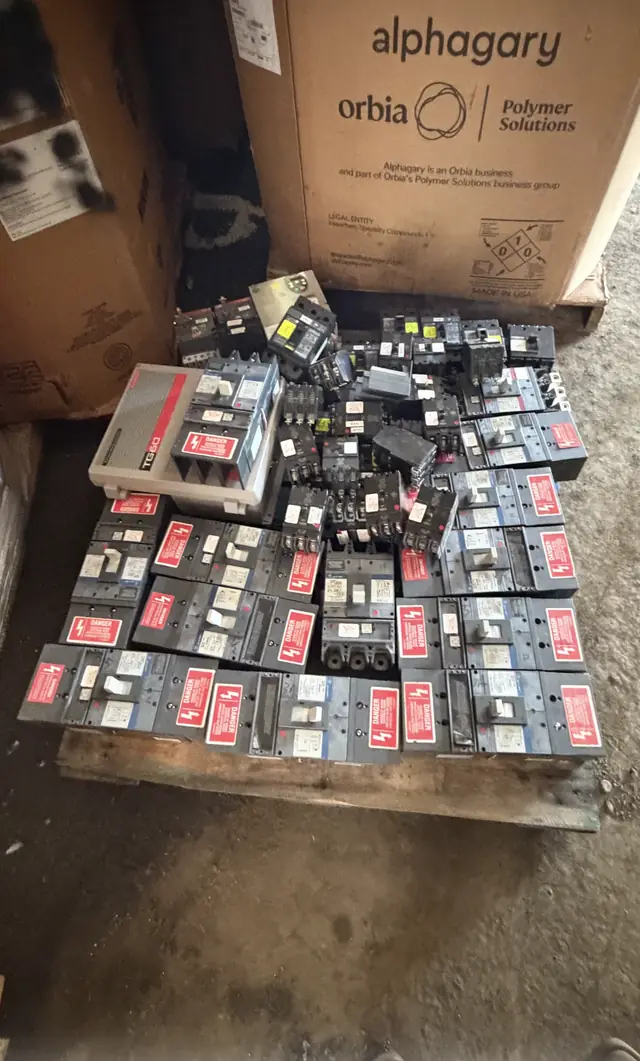
If you are also seeking to sell qualifying breakers, we review submitted equipment for potential purchase. Start by photographing the label and overall condition, include the identification fields listed earlier, and tell us the quantity and lot organization. A submission is not an appraisal or purchase commitment; we will review and respond with next steps if your breakers qualify.
- Prepare: address, scope, label photos, panel context, condition notes, and contact details.
- If a permit is required, ask the AHJ the preferred submission method and inspector timeline.
- To submit breakers for review, include label photos, quantity, and shipping or pickup constraints; submission is not a purchase agreement.