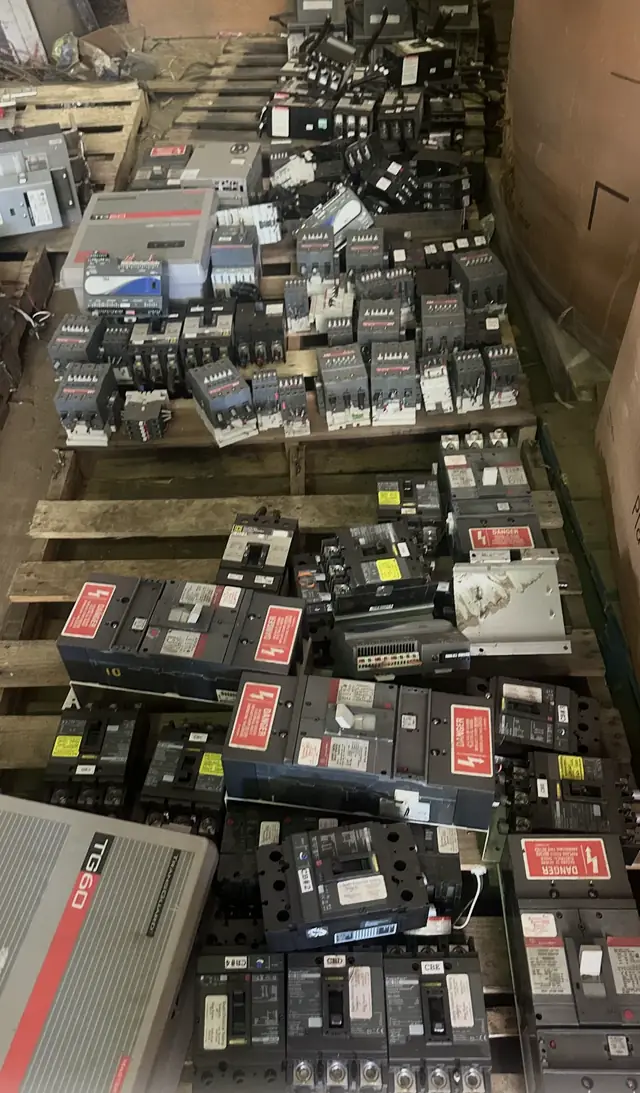
Follow manufacturer instructions and use appropriately qualified electrical professionals and the authority having jurisdiction for removal, testing, and installation. A website submission is not an appraisal, offer, acceptance, safety inspection, compatibility determination, purchase order, pickup commitment, or shipping authorization.
What this guide covers and our review intent
We review qualifying circuit breakers with thermal‑magnetic or electronic trip technology for possible purchase. This page explains the visual and plate‑level identifiers to record, the original trip‑unit examples and manufacturer documentation that shorten review time, and the exact submission fields we expect when you contact us.
This guide is focused on identification and submission—what to document and photograph. It does not give field‑setting, coordination, calibration, testing, removal, or installation instructions. For any on‑site work or energized testing, engage an appropriately qualified electrical professional and follow manufacturer instructions and the authority having jurisdiction.
High‑level differences between thermal‑magnetic and electronic trip units
Thermal‑magnetic trip units combine a bimetallic element for long‑time overcurrent protection and a magnetic element for short‑time or instantaneous fault interruption. Electronic trip units use solid‑state electronics and sensors to sense current and apply curve‑based protection; they often provide adjustable settings and diagnostic displays. For identification purposes, distinguishing whether the breaker’s trip function is mechanical or electronic is the critical first step.
Knowing which technology you have matters for resale grouping, documentation needs, and the kinds of original manufacturer literature we’ll request. Electronic trip breakers frequently include a removable electronic module, a part number plate or label for the trip unit, and sometimes a display or communication port. Thermal‑magnetic breakers typically have simpler trip‑unit markings and fewer electronic labels to capture.
- Thermal‑magnetic: mechanical trip elements, simpler labeling, fewer electronic markings.
- Electronic trip: trip unit module, part numbers, possible firmware/date codes, communication ports.
- Both types will have a main nameplate with frame size, ampere rating, and catalog/model numbers—capture these exactly.
Exact identification fields and original trip‑unit evidence to collect
Capture the breaker’s full nameplate and any trip‑unit module label exactly as printed. Useful fields to record are the manufacturer name as printed, catalog or model number, frame size, interrupting rating (kAIC or similar marking), ampere setting or range, serial number and date code, and any trip‑unit part or module number. For electronic trip units, also note firmware or revision markings, communication port labels (for example, RS‑485, Ethernet), and removable module identifiers.
Include original trip‑unit examples in your submission: clear, in‑focus photos of the trip‑unit module, the trip‑unit label close‑up, and the breaker nameplate. If you have manufacturer documentation—datasheets, instruction sheets, or product bulletin PDFs—attach them. These original items and documentation are often decisive during review because they show the trip technology, rated settings, and permitted accessories without relying on inference.
- Photo: full breaker front including toggle and enclosure context.
- Photo: close‑up of nameplate with catalog/model and serial number.
- Photo: trip‑unit module label (electronic module or printed trip marking).
- Record: manufacturer as printed, catalog/model, frame size, amp rating, interrupting rating, serial/date code, trip‑unit part number.
- Attach: manufacturer datasheet or instruction sheet when available.
Describe condition honestly and provide useful photos
Use straightforward condition categories and support them with photos. Helpful, non‑technical categories include New (in manufacturer packaging), Like‑new or Tested, Good serviceable, Parts‑only, and Unknown/Untested. Avoid subjective terms without evidence; instead describe visible wear, missing parts, or functional test history if available. If a breaker has been tested previously, add who performed the test and what documentation exists—do not describe test procedures.
Photographs are essential. Provide sharp, well‑lit images showing the nameplate, trip‑unit label, front face, side and rear (if accessible), accessory modules (shunt trip, undervoltage releases), and any physical damage such as burns, corrosion, or broken handles. Original trip‑unit examples and manufacturer labels should be legible in at least one close‑up image per item.
- Condition categories: New, Like‑new/Tested, Good serviceable, Parts‑only, Unknown/Untested.
- Photos to include: nameplate close‑up, trip‑unit close‑up, full breaker, accessories, obvious damage.
- If available, include paperwork that shows prior testing or repair history.
Organize lots and explain commercial fit
Group items by the attributes buyers review: trip technology, frame size, catalog number, and condition. Lots that mix thermal‑magnetic frames with electronic‑trip modules create extra work for reviewers and can slow or reduce interest. Label each lot clearly with a short manifest: part number, quantity, condition, and location.
State the intended commercial fit of each lot. For example, indicate whether items are spare inventory, surplus from decommissioning, units removed during a retrofit, or parts stock. Include documentation such as purchase invoices or decommissioning notes if they clarify origin and chain of custody. Do not include statements that imply certification, compatibility, or manufacturer authorization unless you can supply original documentation from the manufacturer.
- Organize by trip type, frame size, and condition for faster review.
- Provide a manifest: catalog/model, quantity, condition, and location.
- Note provenance: surplus, decommissioned, spares, repairs—attach supporting paperwork where available.
Submission checklist: what to send for a smooth review
When you submit items for purchase review, include a complete manifest along with legible original trip‑unit photos and any manufacturer documentation you have. Required items for each line on the manifest include manufacturer as printed, catalog/model number, frame and amp rating, serial or date code if present, and a condition statement supported by photos. Attaching a manufacturer datasheet or instruction sheet for each distinct model speeds verification.
Remember that an online submission is a request for review, not an acceptance or purchase order. After we receive your submission, additional questions may follow. Providing clear original trip‑unit examples, documentation, and accurate counts up front reduces back‑and‑forth and helps us evaluate the commercial fit more quickly.
- Manifest with part/model, quantity, and condition for each line.
- Photos: nameplate, trip‑unit label, full unit, accessories, and damage close‑ups.
- Attach manufacturer datasheets or instruction sheets when available.
Safety limits, red flags, and who should handle removal or testing
Stop if you observe signs of burning, melting, chemical contamination, missing protective covers, or exposed conductors. Those are red flags that require an appropriately qualified electrical professional and, where applicable, the authority having jurisdiction. Do not attempt energized testing, removal, or repair unless you are qualified and authorized to do so.
We will not treat a website submission as a safety inspection, compatibility determination, or authorization to ship. Disclose any known damage, repairs, or manufacturer service history. If you are unsure about a unit’s safety or condition, document the uncertainty and engage a qualified professional to assess and document the item before relying on its status for commercial decisions.
- Red flags: visible burning, melted insulation, chemical residues, missing covers, exposed conductors.
- Do not perform energized testing or removal unless you are a qualified electrical professional.
- A submission does not replace an on‑site inspection by a qualified person or AHJ review.